Women’s Health Equity Initiative

women smiling

The Society for Women’s Health Research (SWHR)’s Women’s Health Equity Initiative was launched in 2021 to raise awareness, educate the public and policymakers, and to address longstanding disparities in women’s health care access and outcomes. This initiative recognizes that achieving true health equity for women requires a nuanced understanding of the diverse experiences shaped by intersecting factors such as race, ethnicity, socioeconomic status, age, geographic location, and disability status, among others.

Women standing together

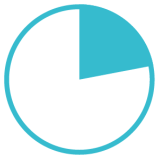
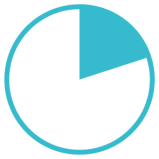
Sixteen percent of women report fair or poor health status, according to the Centers for Disease Control and Prevention (CDC)’s Behavioral Risk Factor Surveillance System (BRFSS).

These percentages are even higher among women of color.

8% pie chart

23%

Native American Women

22% pie chart

22%

Hispanic Women

20% pie chart

20%

Black Women

14% pie chart

14%

White Women

8% pie chart

8%

Asian Women

Pairing the statistics that illustrate disparities amongst women and between women and men alongside stories of patients, caregivers, researchers, and clinicians from a variety of health areas, we can begin to understand the gaps in women’s health outcomes and what equity would mean for the health of women.

This initiative acknowledges that women’s health equity is not just about biological differences, but also about addressing the social determinants of health that disproportionately affect diverse populations of women. These factors include economic inequality, caregiving responsibilities, gender-based violence, and systemic biases within health care and policy systems. By promoting an intersectional approach to women’s health care and research, we aim to create comprehensive solutions that address the complex web of factors influencing women’s health outcomes.

A message from Kathryn G. Schubert

SWHR President and CEO

Women’s Health Equity Initiative Goals:

  • Education and awareness concerning disparities in women’s health that persist across the lifespan

  • Intersectional research and solutions that address disparities in diagnosis and treatment

  • Sex differences research and representation of diverse populations of women in medical research

  • Improve access to quality health care for all women, with an intersectional lens on those subpopulations who experience the greatest challenges

  • Policy change to advance equity in the health of women

  • Measurement and evaluation of progress in addressing women’s health issues

Through these goals, SWHR aims to create a future where all women, regardless of their background or circumstances, have equal opportunities to achieve optimal health and well-being. We recognize that this is a complex, long-term endeavor that requires sustained commitment, collaboration, and innovation. By addressing both the biological and social aspects of women’s health, we strive to make meaningful progress towards true health equity.

Learn More About….

Alzheimer's Disease

Alzheimer’s disease is the most common form of dementia – a general term for memory loss and other cognitive abilities serious enough to interfere with daily life.

Learn More About Alzheimer’s Disease

Bone Health

Osteoporosis is a medical condition in which bones, especially of the hip, spine, and wrists, lose density and thickness, becoming weak and more prone to fractures.

Learn More About Bone Health

Cardiovascular Disease

Cardiovascular disease (CVD) – which broadly describes disorders that affect the heart and blood vessels – includes ischemic heart (or coronary artery) disease, stroke, heart failure, and arrhythmia. CVD is the leading cause of death among women in the United States and globally.

Learn More About Cardiovascular Disease

Maternal Health

Maternal health refers to the physical, psychological, and emotional well-being of a woman before, during, and after pregnancy.

Learn More About Maternal Health

Menopause

Menopause is defined as the point in time when a woman’s menstrual period has stopped for 12 consecutive months.

Learn More About Menopause

Previous focus areas of the Women’s Health Equity Initiative include: Lupus and Uterine Health.

SWHR will cover other issues in the future and continues to seek sponsors and health care stakeholders interested in supporting SWHR’s health equity work. Please reach out to the Development Team at development@swhr.org to learn more about partnering.