Guides & Toolkits
Half of all individuals employed in the US between the ages of 40 and 64 are women – the majority of whom have begun or completed the menopause transition.
Yet, according to the Employee Perspectives and Challenges Concerning the Transition of Menopause (EMPACT Menopause) Study, 61% of employees indicated there were no menopause-specific policies at their place of work, and another 1/3 of employees were unsure if resources were available to them. Similar figures were represented among supervisors’ knowledge of workplace policies about menopause.
An estimated $150 billion is lost in menopause-related productivity costs worldwide each year, according to Bloomberg. Supporting women during midlife and the menopause transition is vital for retaining talent, fostering career growth, and boosting economic development – all hallmarks of a competitive business.
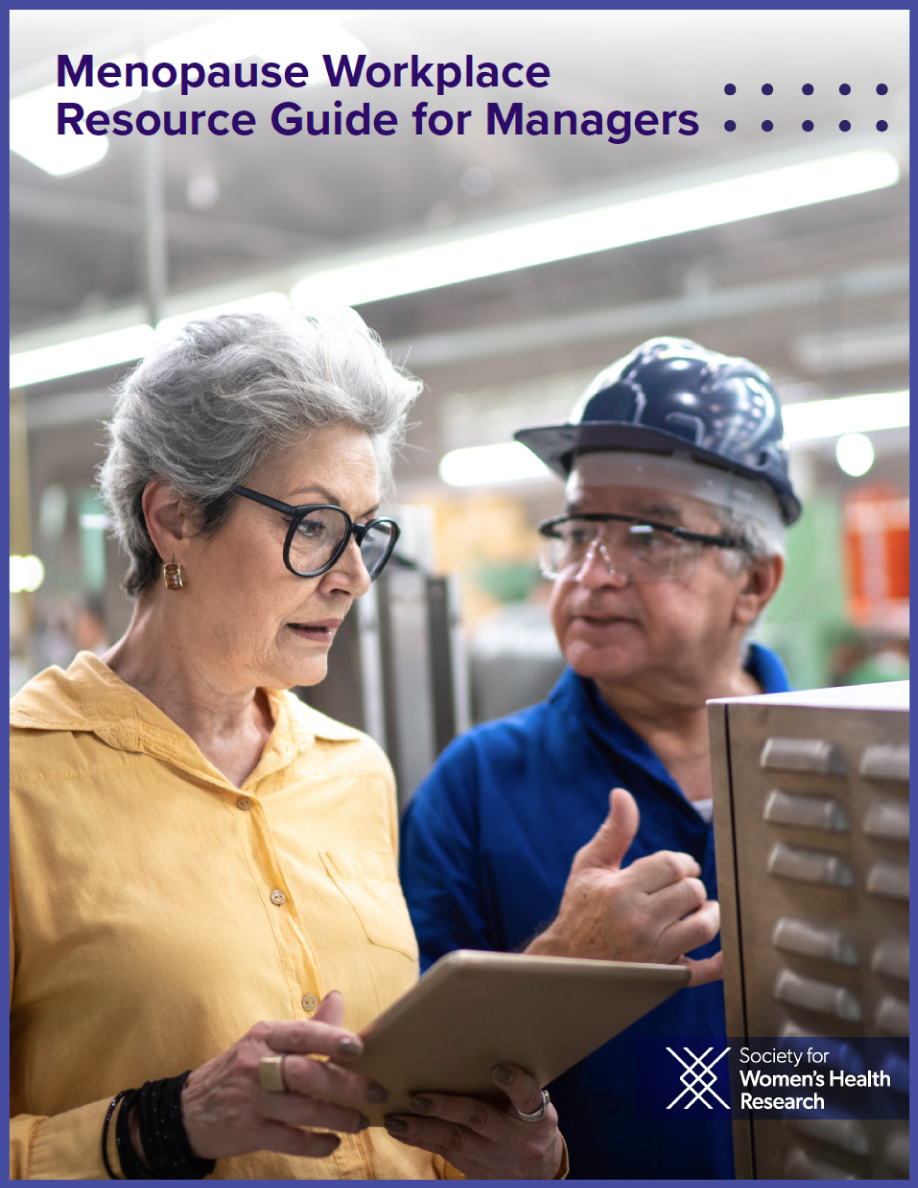
Employers are responsible for creating and maintaining a conducive and healthy work environment for all employees, including those experiencing menopause. The Menopause Workplace Resource Guide for Managers was created by the Society for Women’s Health Research (SWHR) to support employers and managers in understanding the menopause transition and fostering menopause-friendly workplaces.
Read more about the Menopause Guide for Women on the SWHR blog.

Regardless of their career goals, data shows that menopause can have far-reaching impacts on a woman’s career-related decisions: one in four women considered not pursuing or did not pursue a leadership opportunity due to the impacts of menopause; one in three women considered reducing or reduced their workload; and two in five women considered finding or found a new job, all according to the EMPACT Menopause Study.
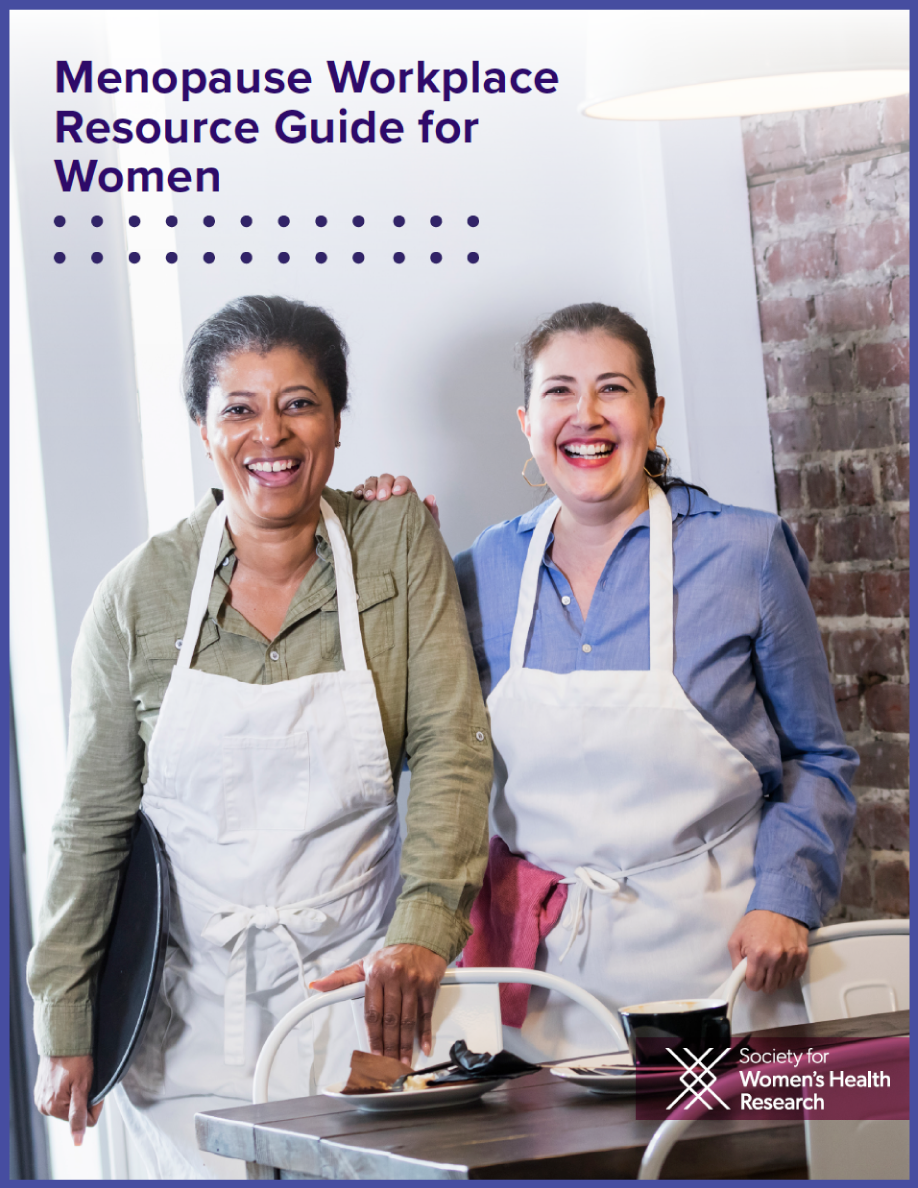
The Menopause Workplace Resource Guide for Women was created by SWHR to support women in the workplace as they go through the menopause transition.
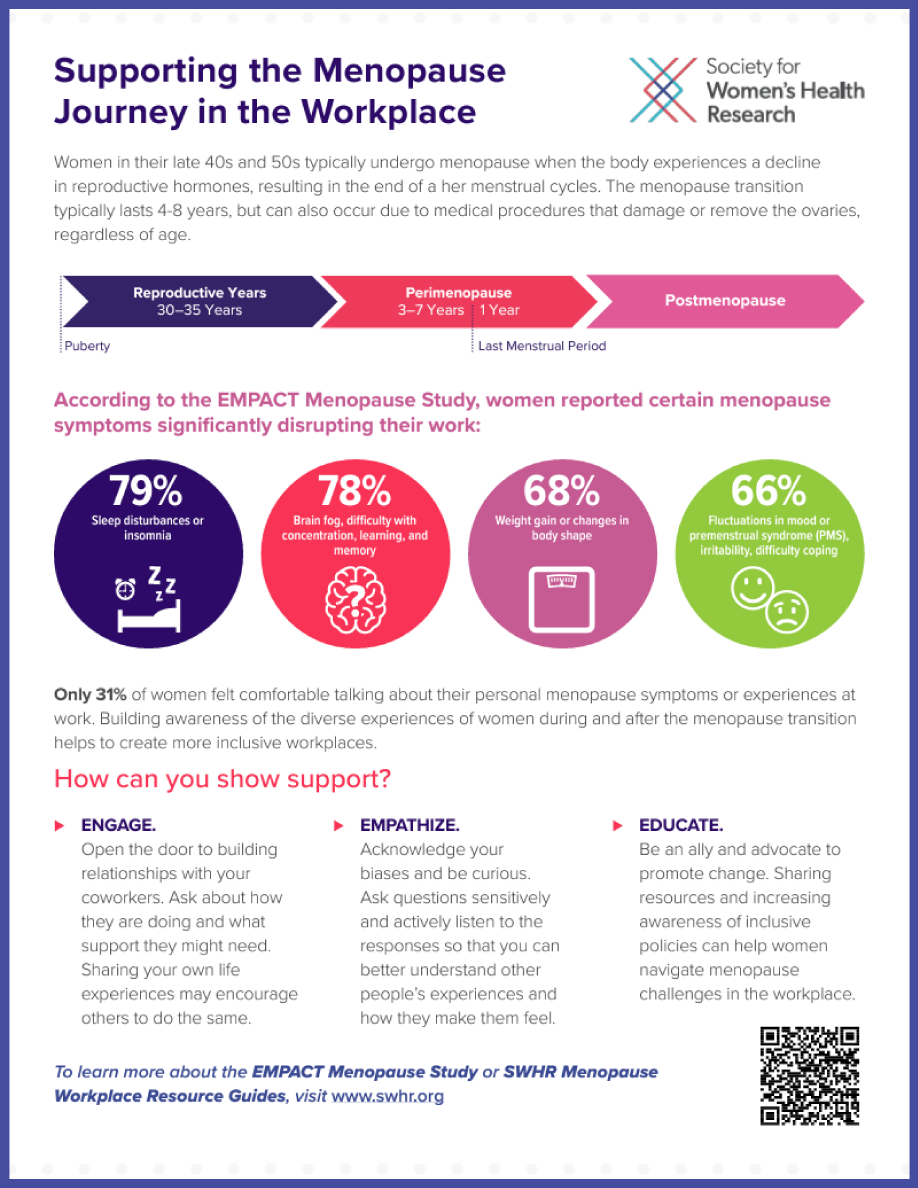
By fostering a culture of open communication, employees may be more inclined to share their concerns or needs related to menopause, allowing HR and managers to provide appropriate support for them and others in similar situations. This poster can be printed and placed in an office breakroom or bathroom to increase awareness about menopause in the workplace and help start a conversation about menopause at work!
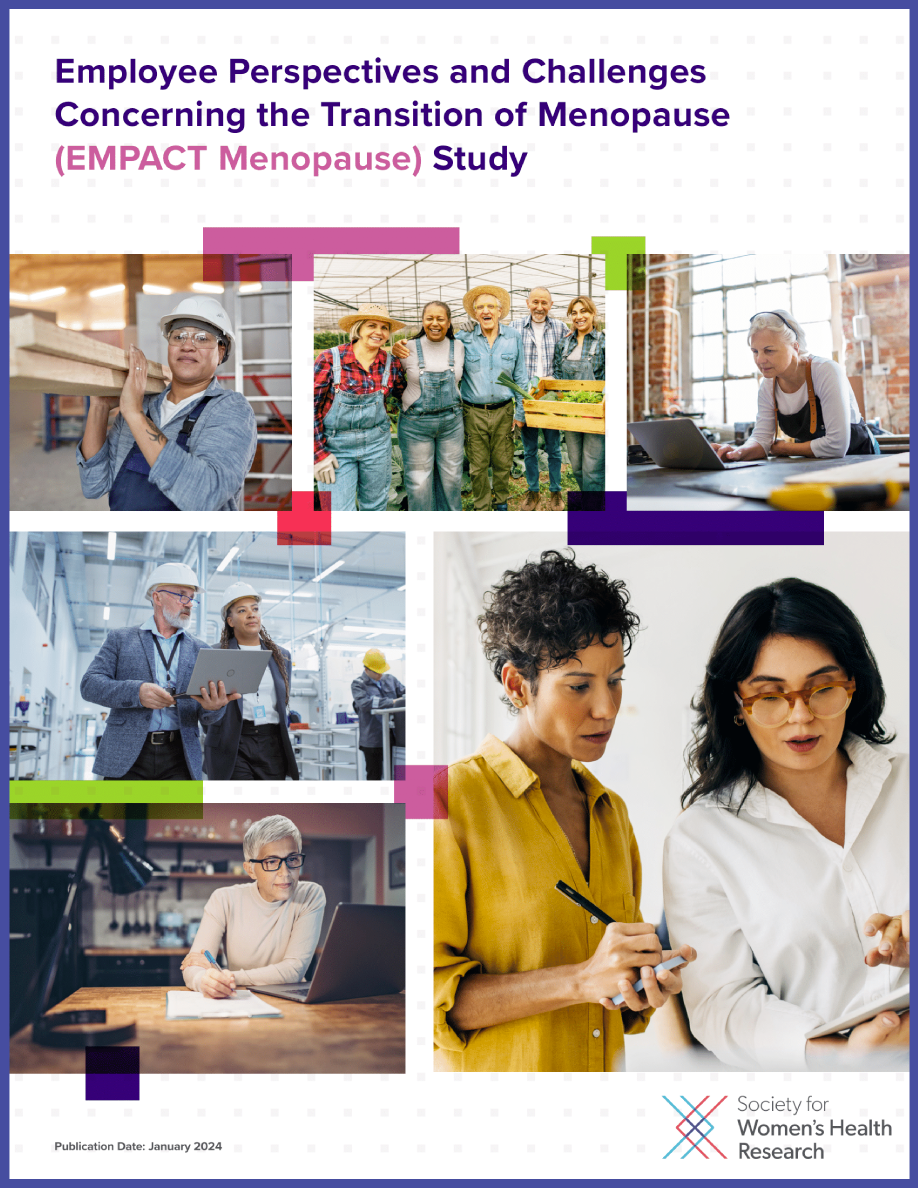
The SWHR Employee Perspectives and Challenges Concerning the Transition of Menopause (EMPACT Menopause) Study aims to better understand the workplace experiences of individuals who have entered or completed the menopause transition, as well as their coworkers and employers.
Four years since its original English publication in 2022, and following its update in 2026, SWHR is excited to make the Menopause Preparedness Toolkit: A Woman's Empowerment Guide available to the public in Spanish.
Cuatro años después de su publicación original en inglés en 2022, y tras su actualización en 2026, SWHR pone el Kit de Preparación para la Menopausia: Una Guía para el Empoderamiento de la Mujer a disposición del público en español.
I continue to read, research, and track my own health data. The clinical system has not always been designed to see me clearly, so I have learned to see myself.
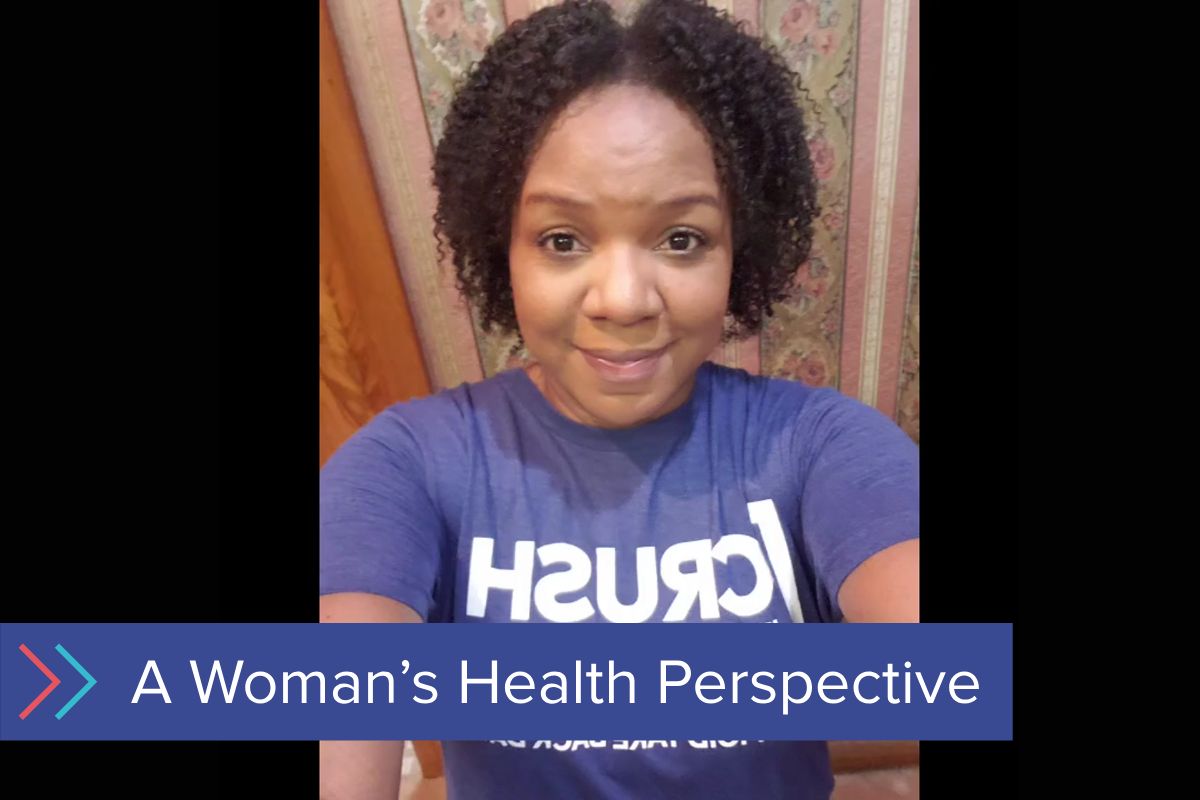
Kathy Calloway shares her menopause experience in a video story.
This document is intended to serve as an educational and informative resource and is not intended or implied to serve as a substitute for medical or professional advice. The Society for Women’s Health Research does not make medical, diagnosis, or treatment recommendations, nor does it endorse or promote specific screening or diagnostic tests. Patients and consumers should confirm information and consult a professional health care provider to determine individual needs. The Society will not be liable for any direct, indirect, or other damages arising therefrom.
This material was created by the Society for Women’s Health Research (SWHR) and is intended to serve as a public educational and informative resource. This material may be cited or shared on external channels, websites, and blogs, with attribution given to SWHR, or printed and displayed in its original formatted version. SWHR encourages the sharing and reposting of its content in order to spread awareness around women’s health issues. For specific questions about sharing SWHR content, please reach out to [email protected].
Support for this educational program has been provided by Astellas Pharma, Bayer, Nutrafol, and Pfizer. SWHR maintains independence and editorial control over program development, content, and work products.