


Dr. Aninye (left) with Claire Gill, founder of the National Menopause Foundation (middle) and SWHR Science Programs Manager Syreen Gloumamine (right) at The Menopause Society meeting.
By Irene O. Aninye, PhD, SWHR Chief Science Officer
A women’s life course is often described in terms of reproductive life stages, starting with puberty pressing the play button – the first official milestone of emerging womanhood. Then fast forward through adolescence and young adulthood until the first pregnancy, at which time childbearing becomes the societal focus and expectation. As the years pass by with occasional commercial breaks, many women unexpectedly begin to experience changes in their mood, menstrual cycle, energy, sleep, body temperature, and even sexual drive. Sometimes these changes are slight, and sometimes they are overwhelming. That’s when the PAUSE button is hit…rather, the menopause button.
Whether entering this life stage through years of the perimenopause transition, or abruptly entering menopause due to medical procedures or interventions, there is no right or wrong way for an individual to progress through menopause – and 100% of women, by a certain age, will experience menopause during their lifetime. Menopause is an unavoidable, natural part of aging. However, there are better ways for society to recognize and support women during this life stage.
The Society for Women’s Health Research (SWHR) has been working to increase awareness of the impacts of menopause on women’s health for many years, and in June 2023, SWHR launched the Employee Perspectives and Challenges Concerning the Transition of Menopause (EMPACT Menopause) Study to address workplace stigma and challenges for midlife and postmenopausal women. The study included a survey that collected insights not only from women experiencing menopause, but also coworkers and employers of these women, spanning over 15 job industries. Menopause affects all individuals in the workplace and has far-reaching societal impacts across – evidenced by the ongoing interest in our EMPACT Menopause data and other related studies in the field.
Demystifying Menopause Health Care
This summer, SWHR collaborated with Medscape to develop an online course for clinicians entitled, “Menopause Mastery: Tailoring Treatment for Every Patient.” CME courses like this aim to help address gaps and provide answers to key questions as health care providers stay up to date on emerging issues in midlife care. It is critical that providers are prepared to present all options to women to address any menopause symptoms and challenges – from medical interventions to lifestyle approaches, and even workplace accommodations.
In September, The Menopause Society held its annual meeting in Chicago, IL. Health care providers and scientists gathered to discuss all things menopause, including cutting edge research that will inform innovative clinical practices. Sessions addressed preventive care for midlife women concerning cardiovascular, bone, and brain health, and one plenary speaker even proposed the management of vasomotor symptoms through virtual reality technology.
Menopause in the workplace was a featured topic that buzzed throughout the conference sessions and at the SWHR booth in the exhibit hall. We had the opportunity to present a poster highlighting data from the EMPACT Menopause Study: menopause symptoms and experiences not only influenced women to consider job changes, but depending on the nature of their job, up to 30% of respondents acted on these considerations. The study shows that menopausal women who reported having a physically demanding job had a higher frequency of making internal changes to their job (i.e., reducing workload or hours, not pursuing leadership, or declining promotion opportunities), whereas those reported having cognitively or emotionally demanding jobs had higher frequencies of exit decisions (i.e., finding a new job, transitioning to self-employment, or retiring altogether).
In the United States, the average age of menopause is 51 – an age at which a majority of women are active in the workforce and attempting to harmonize their work, life, and health. While menopause is an individual experience, it poses a societal grand challenge to ensure that this life stage is prioritized not stigmatized when cultivating inclusive workplace policies and practices.
Recognizing Corporate Responsibility
According to a Bloomberg, $150 billion is lost annually in menopause-related work productivity worldwide. This economic burden could be significantly alleviated by workplaces recognizing the needs of their female employees during midlife and older age, and incorporating a multi-generational approach to workplace culture, leadership training, HR policies, and benefits packages.
At the Public Sector Human Resources Association (PSHRA) annual meeting in Washington, DC, this September, I led a session on “Working Better Together: Insights from the EMPACT Menopause Study.” My co-presenters were two members of the SWHR Menopause Working Group that designed the EMPACT Menopause Study survey – Jennifer Fairweather, DBA, SHRM-SCP, PSHRA-SCP, PHR, Chief HR Officer for Jefferson County, and Sharon Seibel, MD, Associate Editor of HotYearsMag.com. Dr. Sharon Seibel shared her personal menopause experience, noting that we cannot address the stigma and bias about menopause if we are too scared to talk about. She had the entire room stand to their feet as she orchestrated a rousing shout of the word “MENOPAUSE!” You could feel the shift in the energy, as just saying the word liberated attendees to further engage in the discussion. These HR professionals – all seeking ways to improve engagement around menopause and midlife women in the workplace – were charged by Dr. Fairweather to help leaders at their respective organizations to understand the impact of doing nothing. She then offered practical suggestions to cultivate menopause-friendly and inclusive practices, such as partnering with health plan vendors to ensure that benefits packages are robust and meet the diverse needs of current and projected employee pools or facilitating workplace affinity groups, often referred to as employee resource groups (ERGs).
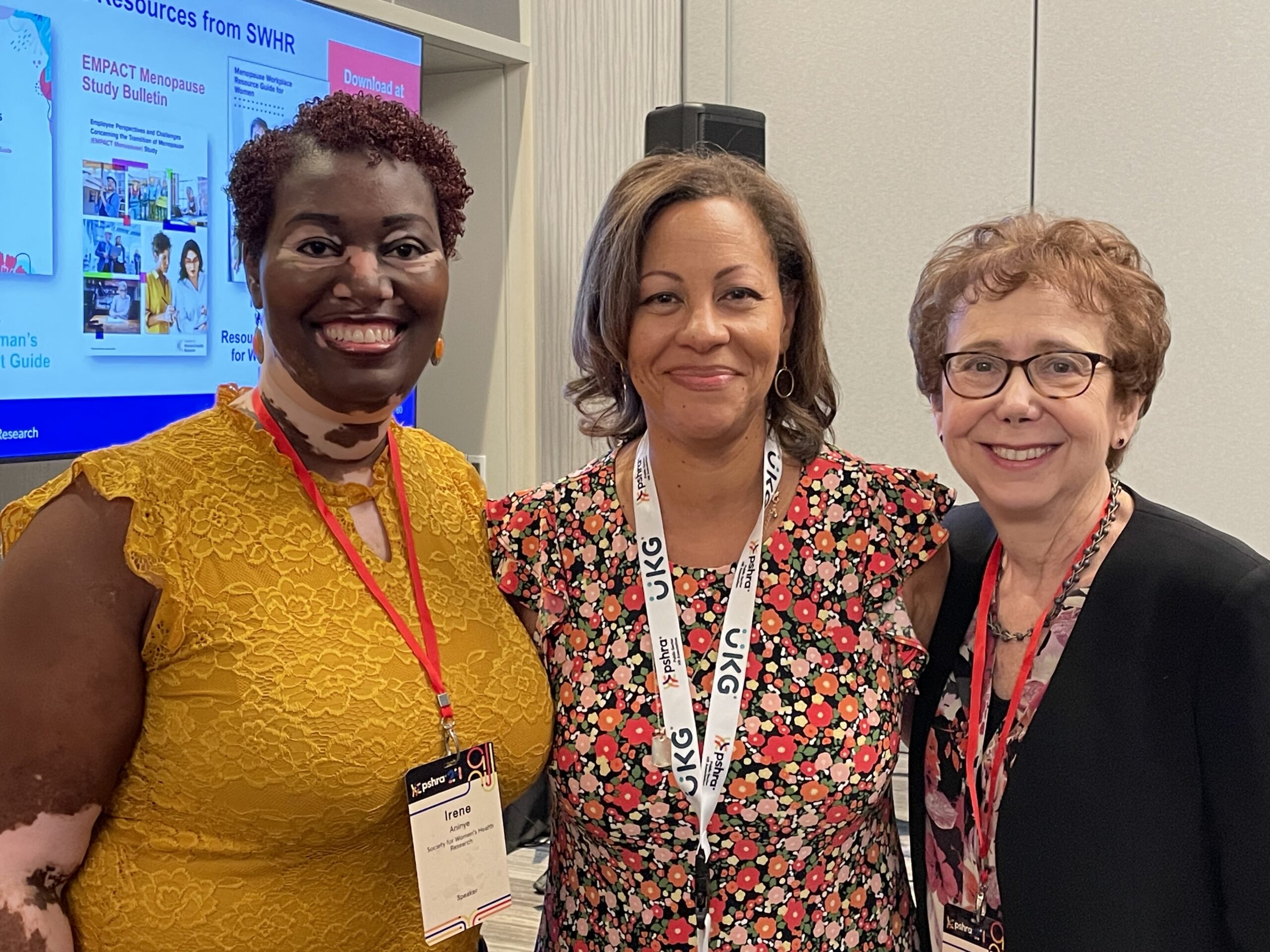
Dr. Aninye, Dr. Fairweather (middle) and Dr. Sharon Seibel (right) at the Public Sector Human Resources Association (PSHRA) annual meeting in September.
In October, one such ERG at AARP hosted a program to celebrate Menopause Awareness Month and invited SWHR to educate their employees and leadership about menopause challenges in the workplace and provide insight as to how they can assist employees, as well as improve external recommendations for their audiences. I was pleased to learn that Mache Seibel, MD, NCMP, another member from our working group, was also invited to speak during the event. He literally wrote a book on menopause in the workplace, co-authored with his wife Sharon. Together, we delved into the role of estrogen in the female body, explaining how this key hormone affects the symptoms and changes women experience during menopause, highlighting its impact on brain health. Dr. Mache Seibel also clarified the controversy and stigma surrounding hormone therapy, and I shared SWHR’s pair of Menopause Workplace Resource Guides – one for women and the other for managers – with the group. This AARP event was one of several internal workplace wellness meetings we had the pleasure of presenting at this fall.
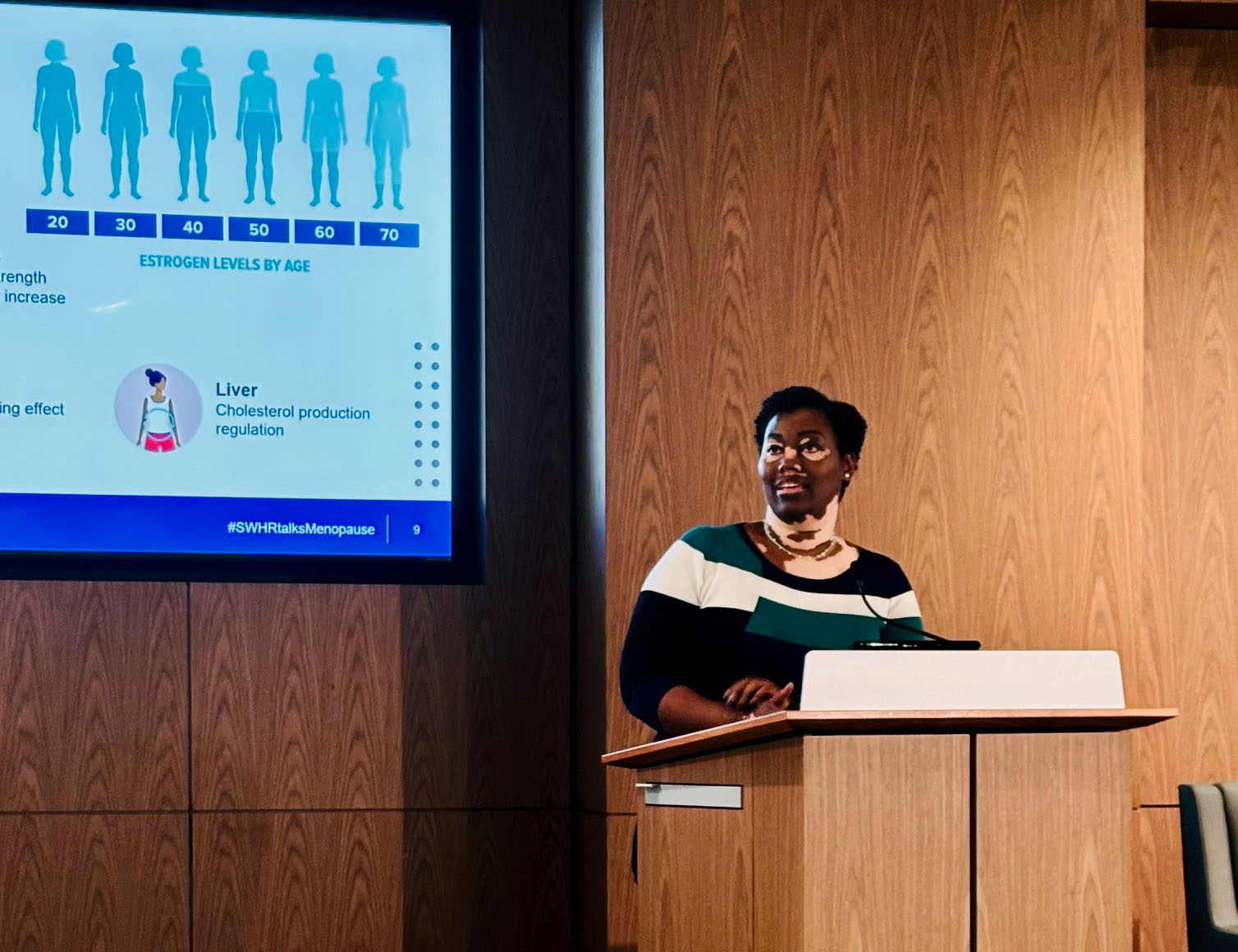
Dr. Aninye speaking at an AARP employee resource group (ERG) meeting to celebrate Menopause Awareness Month.
A New Community of Support
When we think about community, we often picture our neighborhoods or our family and friends. Considering that the average working individual spends the majority of their waking hours at work, there is always an opportunity to create more supportive, healthier, and safer workplaces.
Support at work looks like having policies in place or health benefit options that can allow an individual to address their menopause challenges, knowing company infrastructure acknowledges their value as an employee. Support looks like having an affinity group that allows menopausal women to share their experiences with coworkers about all kinds of women’s health topics. Support also looks like coworkers being more sensitive to avoid using “senior moment” or “private summer” jokes, preserving the dignity of menopausal coworkers that might need a more flexible work schedule, frequent breaks, temperature adjustments, or other accommodations to manage their health as they age. In this grand challenge to destigmatize menopause and aging for women, everyone has a part to play – often many parts – from friends in the neighborhood to family members at home and even colleagues at work.
Women should also feel empowered and encouraged to speak up for themselves, make their needs known, and support their well-being at work. This being said, women must also be gracious with themselves as they pursue wellness throughout their menopause journey. Even if an individual seeks medical and lifestyle solutions to ease their menopause symptoms, this does not absolve employers from providing workplace support as well. Women deserve the same level of support for their health at work as they find at home. Dr. Mache Seibel said it well: “Take care of the sum of you, not just some of you.”