

Guest blog by Susan Van Meter, President of the American Clinical Laboratory Association
Every day, across the country, clinical laboratory tests provide critical insights to women about their health care status and guide critical health decisions they make with their clinicians. Think about routine bloodwork that can help detect common health conditions like heart disease, thyroid disorders, and diabetes or genetic testing that can guide targeted therapies for breast, ovarian, and other cancers. Oftentimes for women, these diagnostics are the first step toward answers and action.
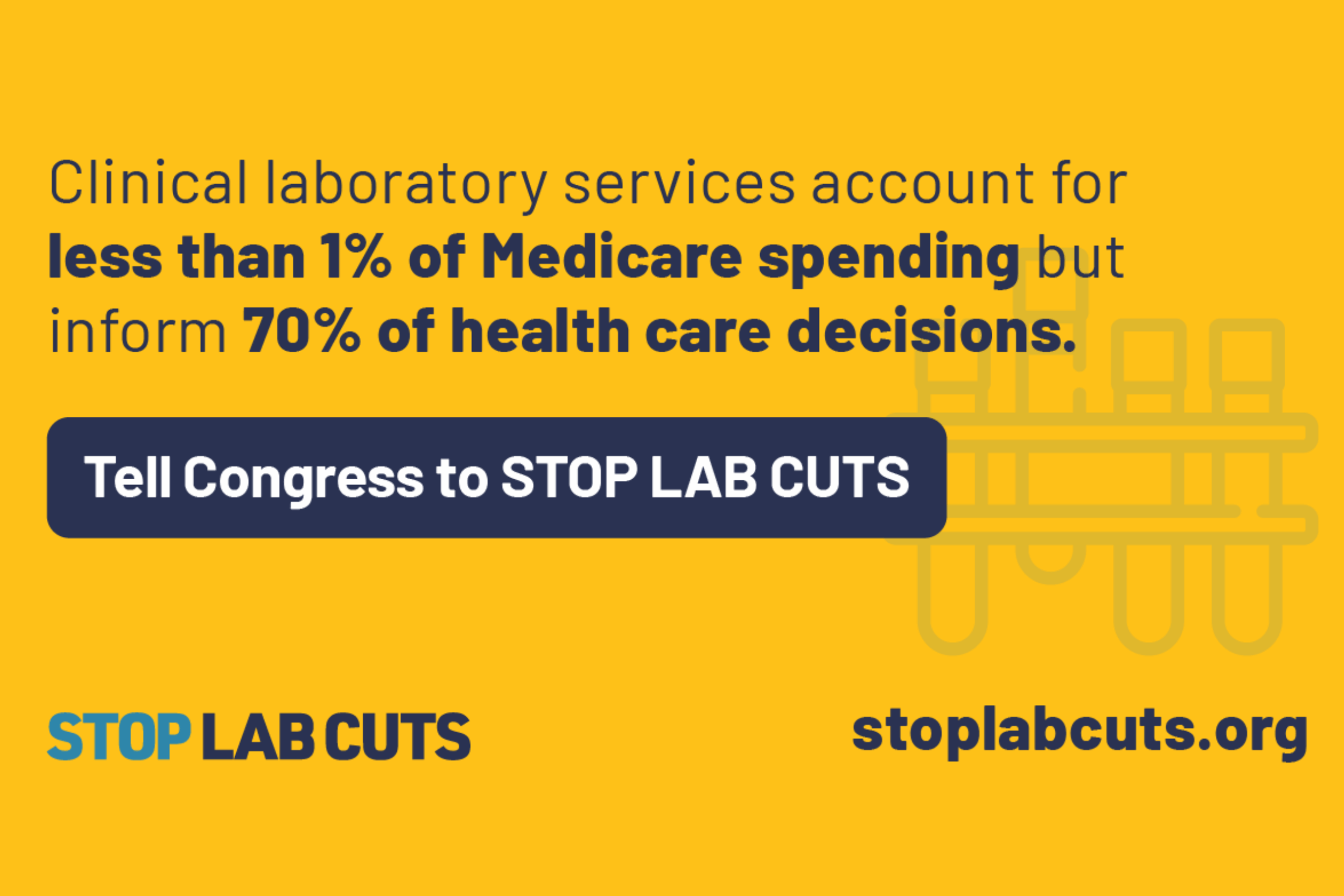
But the system that is the backbone of this care is at risk. In 2014, Congress passed a law that requires Medicare payments for laboratory tests to be based on the rates that private insurers pay. While the intent was to collect data from all labs across the country to form a complete picture of what private insurers pay for testing, Medicare rates ended up being based on data from less than one percent of laboratories, leading to artificially low payment rates. In fact, Medicare has reduced payments for nearly 75% of laboratory tests since 2018.
Unless Congress acts this year, payment for approximately 800 tests, including routine bloodwork and tests used to manage heart disease and diabetes, guide reproductive health care, and inform breast cancer care will be subject to further reductions starting January 1, 2026. These reductions can have ripple effects, like reduced patient access to critical testing and a slowdown in the development of innovative diagnostics that save lives. Thankfully, those who care about women’s health can take action to make sure that all women can get the laboratory tests they need.
The Impact on Women’s Health
- Breast and ovarian cancer tests, including BRCA tests used to determine inherited risk for developing breast cancer, are among the hundreds of laboratory tests whose reimbursement is scheduled to be cut by 15% at the start of the new year, threatening access to life-saving information about a patient’s cancer risk.
- Common tests for heart disease, the leading cause of death for women in the United States, would see as much as a 15% payment cut. In 2023, over 58 million tests were ordered to diagnose and monitor heart disease across the Medicare program alone.
- Key thyroid tests, such as thyroid stimulating hormone (TSH) and thyroxine (T4), can indicate the presence of thyroid disease, which, if undiagnosed, raises the risk for osteoporosis, cardiovascular disease, and infertility. Payment cuts of up to 15% could delay identification of and care for thyroid disease.
- HbA1c testing for diabetes will see reimbursement cut by 12%, impacting the 18.3 million women living with diabetes in the United States.
Repeated Medicare payment cuts have predictable consequences: disrupted care, reduced investment in the innovation needed to fight current and future health threats, and delayed diagnoses. Fixing the broken Medicare payment system will help protect the health of women nationwide.
The Solution
Leaders from both sides of the aisle in both the U.S. House and Senate have come together with a common-sense policy proposal that would create a more accurate Medicare payment system for laboratory services and deliver the long-term stability needed to protect patient access and sustain innovation.
The Reforming and Enhancing Sustainable Updates to Laboratory Testing Services (RESULTS) Act (H.R. 5269/S. 2761) would:
- Protect patient access to innovative clinical laboratory services
- Dramatically improve the Centers for Medicare and Medicaid Services’ (CMS) access to comprehensive commercial market data that is representative of all segments of the laboratory industry to determine Medicare payment rates
- Reduce administrative burden for both clinical laboratories and the Medicare program
- Prevent destabilizing cuts by mitigating payment reductions
- Provide stability so labs can continue developing cutting-edge tests for serious and emerging health threats
What You Can Do
If you care about women’s access to laboratory testing, tell Congress to pass the RESULTS Act, this year.
The Stop Lab Cuts campaign, led by the American Clinical Laboratory Association (ACLA), is mobilizing patients, providers, and advocates to demand action from Congress. By visiting StopLabCuts.org, you can send a message directly to your representatives, urging them to pass the RESULTS Act and preserve access to timely, accurate, and lifesaving diagnostics.
Protecting women’s health requires access to the tests that provide important and actionable insights to improve care and save the lives of our mothers, sisters, and daughters. Absent action by Congress, reimbursement cuts will go into effect that could jeopardize early detection, prevention, and treatment for millions of women nationwide.
By supporting the RESULTS Act, we can ensure that each woman has the tools she needs to take charge of her health and future.