

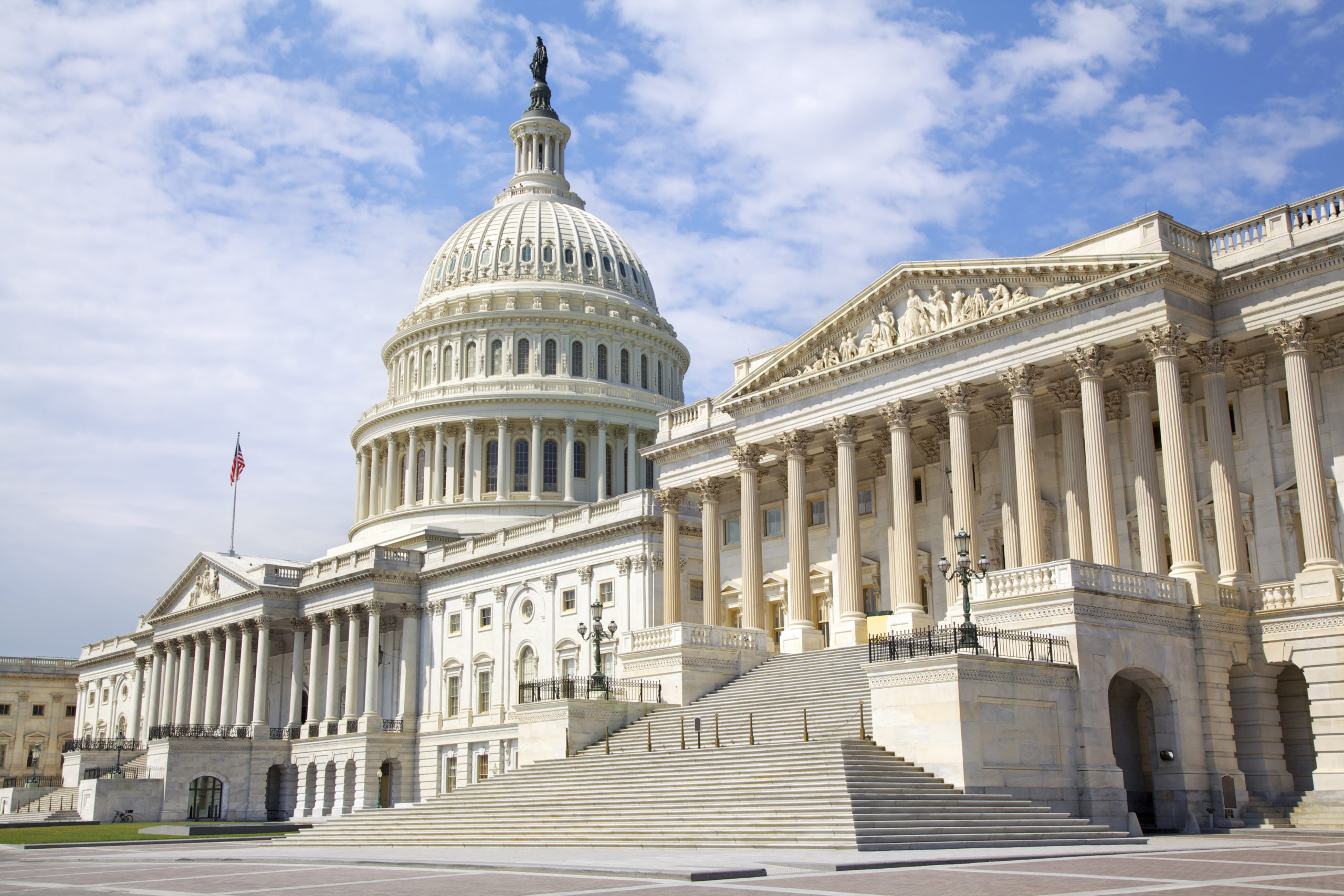
Late last night, on November 12, the U.S. House of Representatives voted largely along party lines to pass a short-term funding measure, officially ending the longest government shutdown in U.S. history. The measure, known as a continuing resolution (CR), will fund the government through January 30, 2026, and is paired with three full-year fiscal year (FY) 2026 appropriations bills: Agriculture, Rural Development, Food and Drug Administration, and Related Agencies; Military Construction, Veterans Affairs, and Related Agencies; and Legislative Branch. This leaves nine appropriations bills – including those funding most agencies under the U.S. Department of Health and Human Services (HHS) – still awaiting final agreement before the January 30 deadline.
The end of the shutdown brings relief for federal programs and the federal workforce at large, including the women’s health research community. However, the repeated use of short-term funding measures raises reasons for concern, and the Society for Women’s Health Research (SWHR) urges Congress to work swiftly in a bipartisan manner to finalize FY 2026 funding bills that prioritize women’s health research.
Implications of Shutdowns and Continuing Resolutions
During the shutdown, medical research was paused across federal agencies, interrupting research studies and jeopardizing scientific progress – particularly in women’s health research. Many of these studies are longitudinal and data-intensive, requiring uninterrupted support to maintain research integrity and continuity. When research activities, coupled with staffing disruptions, occur during government shutdowns, it risks compromising long-term datasets and undermining years of progress in women’s health research.
Although the reopening of the government is a welcome development and a necessary step for advancing FY 2026 negotiations, reliance on short-term CRs is not a sustainable funding approach. CRs perpetuate uncertainty for research institutions, delay critical grant cycles, and impede long-term strategic planning across federal agencies and their grantees. The collective impact of these delays risks yet again slowing scientific progress and threatens the nation’s ability to addressing pressing public health issues – including those affecting women.
What’s Next for Women’s Health and FY 2026 Appropriations
In the coming weeks, Congress will turn its attention to negotiating the remaining nine spending bills, including Labor, Health and Human Services, Education, and Related Agencies (Labor-HHS), which funds federal health agencies like the National Institutes of Health (NIH).
Recently, SWHR sent a letter to lead appropriators urging them to finalize FY26 spending legislation and to prioritize women’s health research during funding negotiations. The Friends of the Office of Research on Women’s Health (ORWH) – a coalition of women’s health research stakeholders that advocate for funding for the NIH’s ORWH, for which SWHR serves as the administrative home – sent a similar letter to appropriators, specifically urging them to adopt the Senate-approved funding levels for both the NIH ($48.7 billion) and the ORWH ($106.5 million) in final budget negotiations, emphasizing these investments as essential for advancing scientific understanding and improving health outcomes for women nationwide.
SWHR will continue to closely monitor the appropriations process and share updates as they develop. We strongly urge Congress to work in a bipartisan manner to ensure robust, sustained funding for women’s health research across federal agencies.
SWHR also encourages stakeholders and advocates to reach out to their members of Congress to emphasize the importance of sustained, full-year funding for women’s health research and the federal agencies that support it. Your voice is valuable in helping direct lawmakers where to prioritize their efforts and federal funding. Not sure where to start? Check out SWHR’s advocacy toolkit, “From Awareness to Action: A Guide to Women’s Health Advocacy,” for information on how to best engage your elected officials via email, phone calls, and office visits.
For questions, please email SWHR’s Policy Team at policy@swhr.org.