Policy Engagement
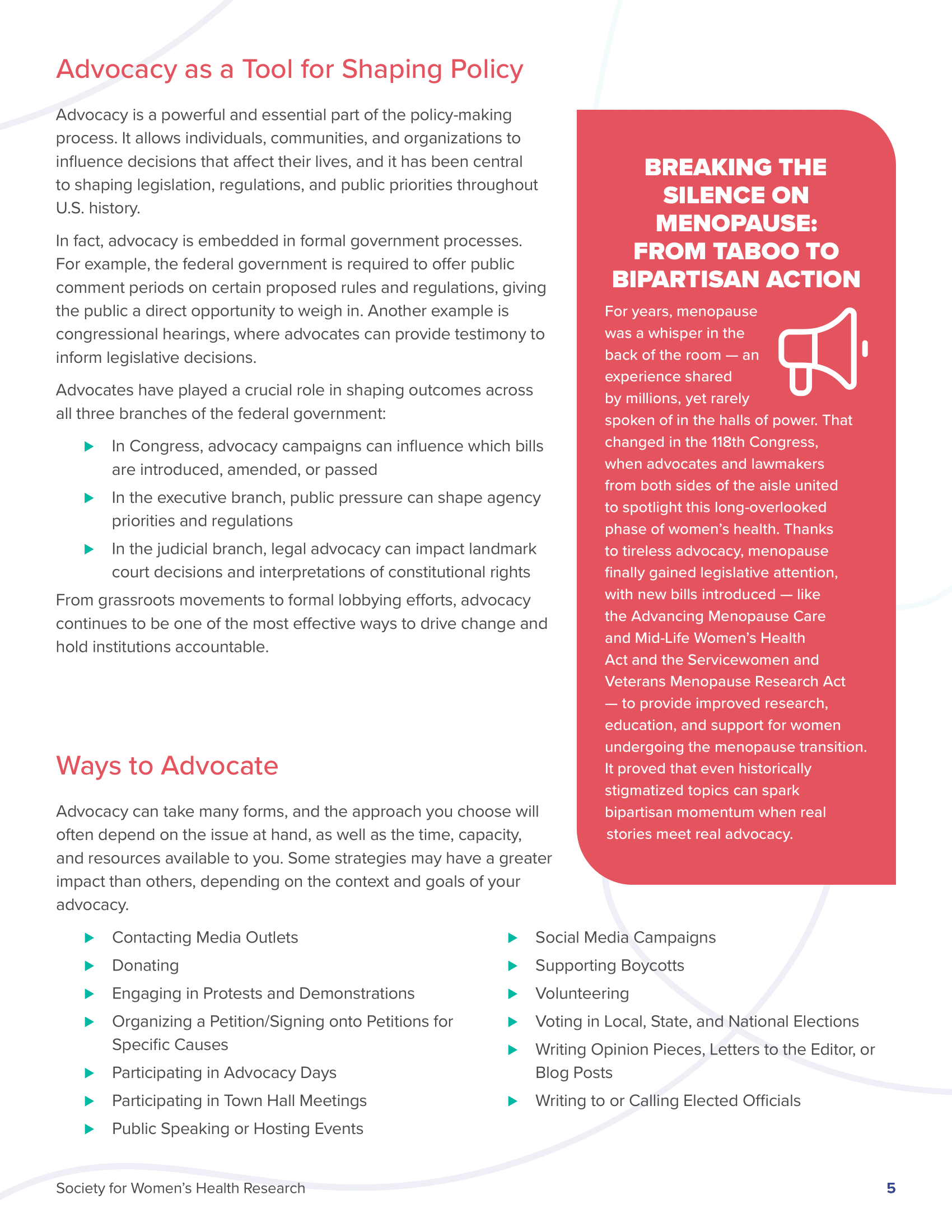
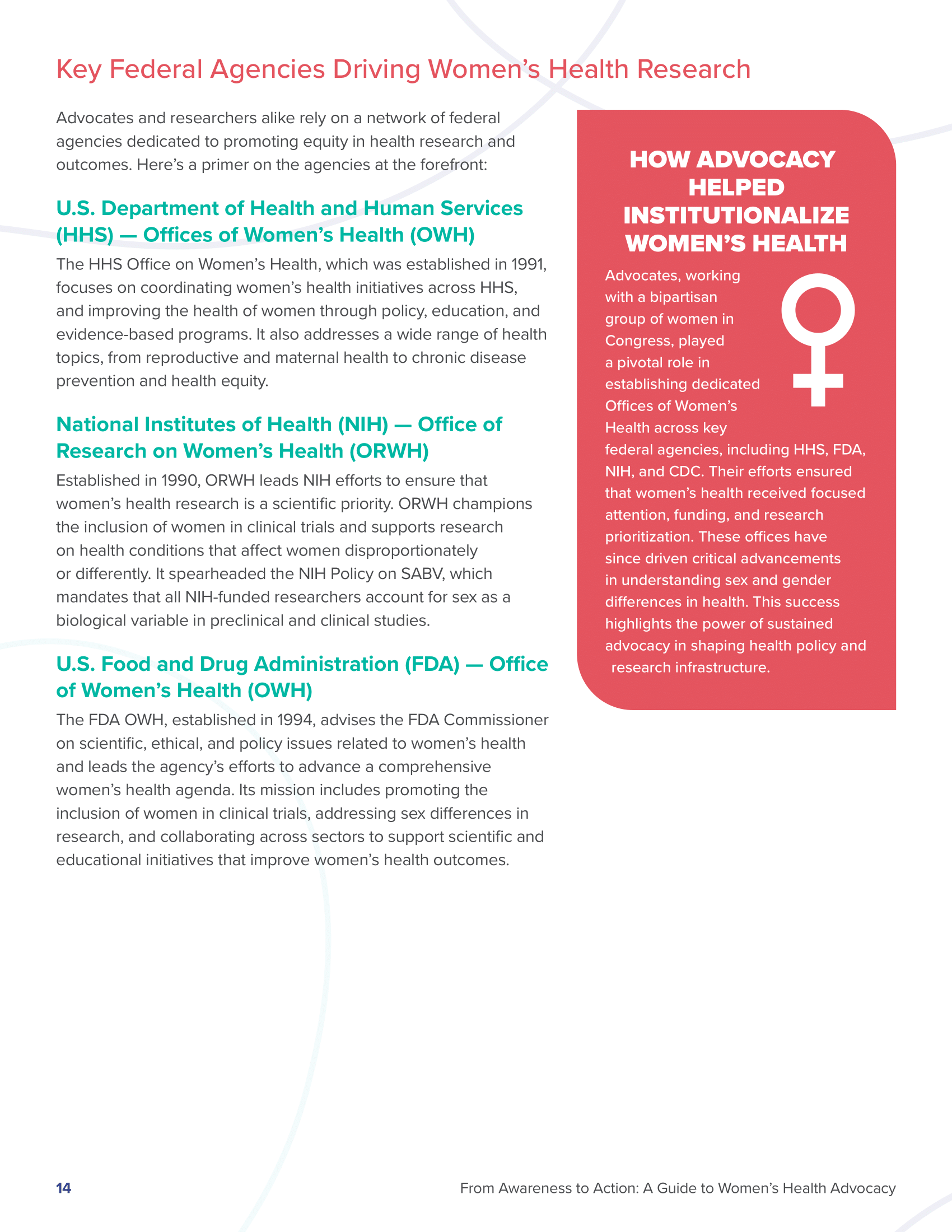
Advocacy is one of the most powerful tools we have to shape a more just and equitable world. When it comes to women’s health, advocacy has been critical in areas like improving the inclusion of women in clinical trial research and expanding access to health care. Without advocacy, many of the rights and services we rely on today would not exist.
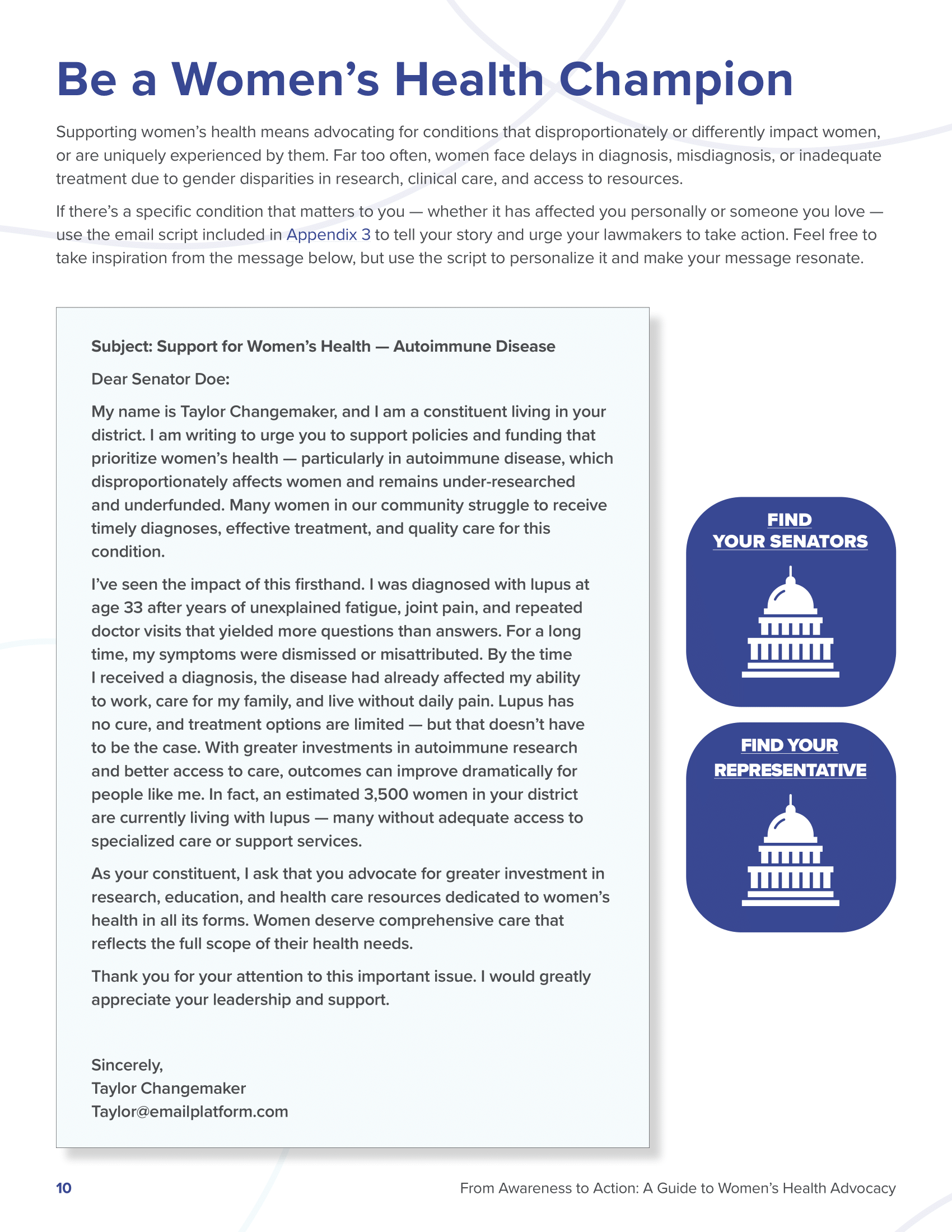
This new SWHR guide, From Awareness to Action: A Guide to Women’s Health Advocacy, is designed to empower advocates — whether you’re just getting started or already deeply engaged — with the tools, strategies, and information needed to effectively champion women’s health.
While the primary focus is on advocacy at the federal level, much of the guidance included here is equally relevant and applicable to efforts at the local and state level. No matter where or how you’re advocating, you’ll find valuable insights and actionable advice to support your work.
For more information, check out the Resources section.
SWHR presented a session titled “Advancing Sex Differences Science in a Changing Advocacy Environment,” at the OSSD Annual Meeting in Kona, Hawaii.
SWHR remains committed to advocating for women living with rare diseases and ensuring they can live healthy lives.
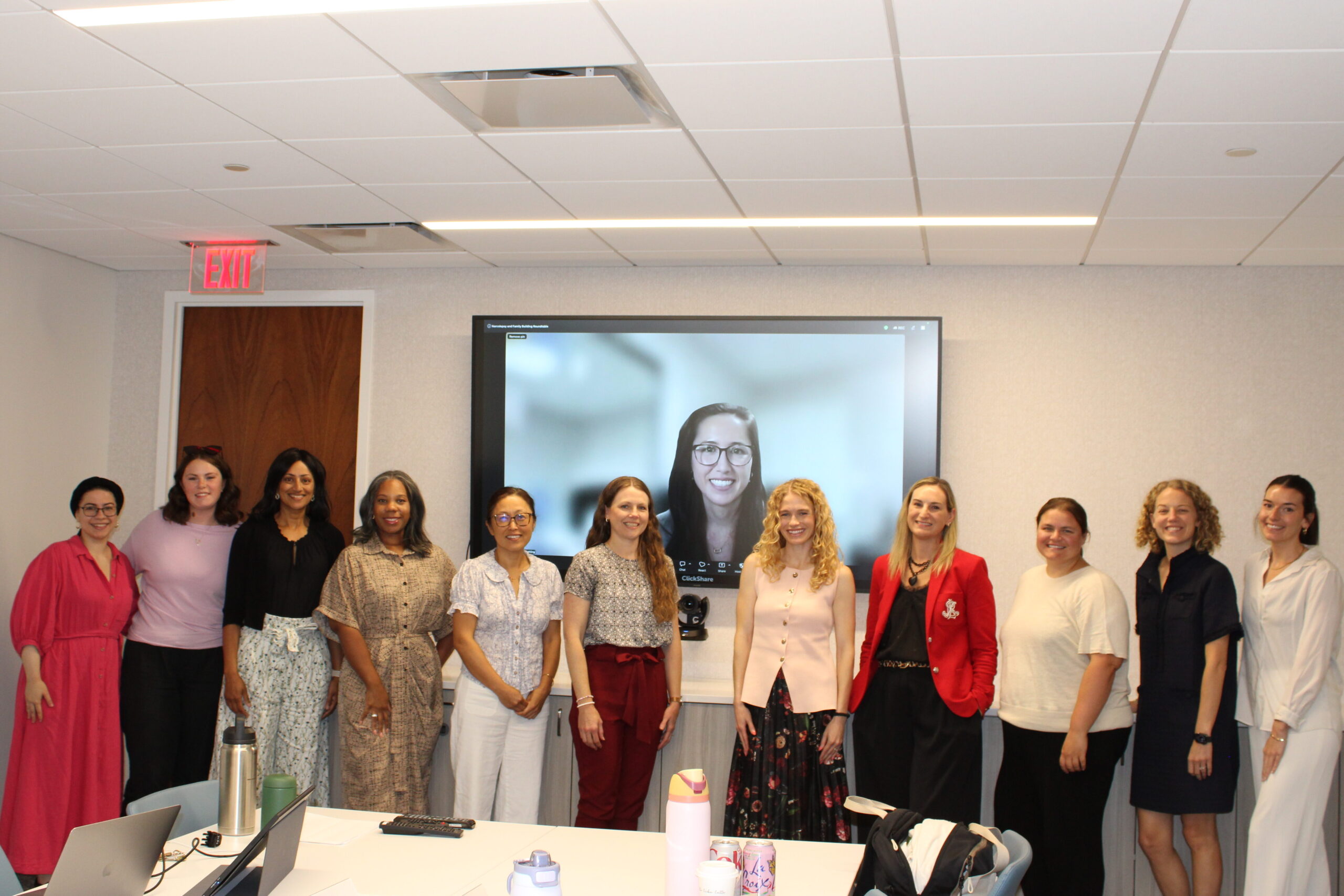
The Menopause at Work study pairs a large-scale, multi-stakeholder survey with a series of in-person regional roundtables, each built to reach beyond the voices already discussing menopause and into the rooms where workplace decisions are actually made.
SWHR hopes to see this conference—and the national focus on women’s health—continue in the years to come and remains committed to working with HHS to move the needle forward in women’s health and ensure that conversations are anchored in science and grounded by evidence.
This document is intended to serve as an educational and informative resource and is not intended or implied to serve as a substitute for medical or professional advice. The Society for Women’s Health Research does not make medical, diagnosis, or treatment recommendations, nor does it endorse or promote specific screening or diagnostic tests. Patients and consumers should confirm information and consult a professional health care provider to determine individual needs. The Society will not be liable for any direct, indirect, or other damages arising therefrom.
This material was created by the Society for Women’s Health Research (SWHR) and is intended to serve as a public educational and informative resource. This material may be cited or shared on external channels, websites, and blogs, with attribution given to SWHR, or printed and displayed in its original formatted version. SWHR encourages the sharing and reposting of its content in order to spread awareness around women’s health issues. For specific questions about sharing SWHR content, please reach out to [email protected].