

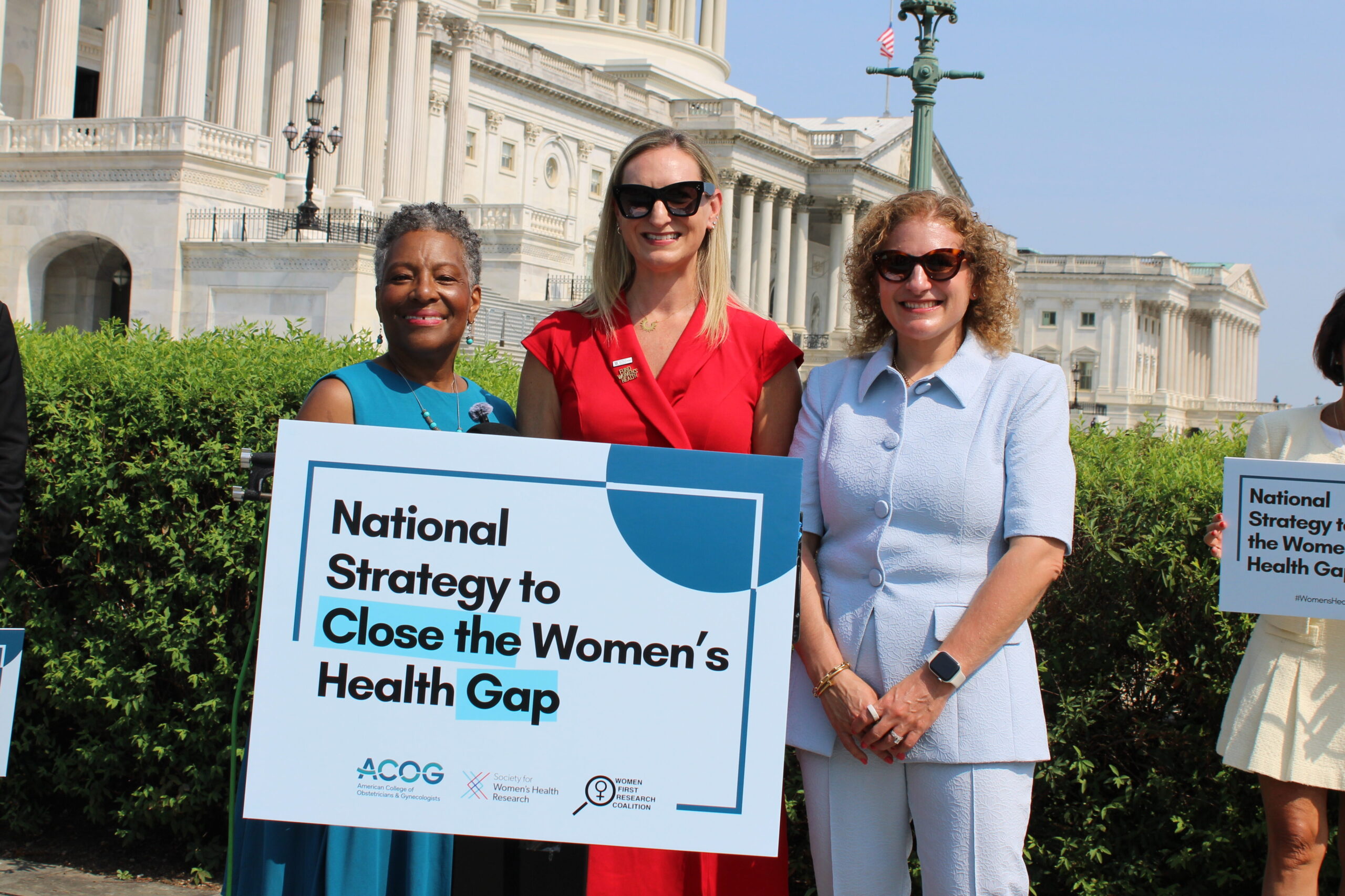
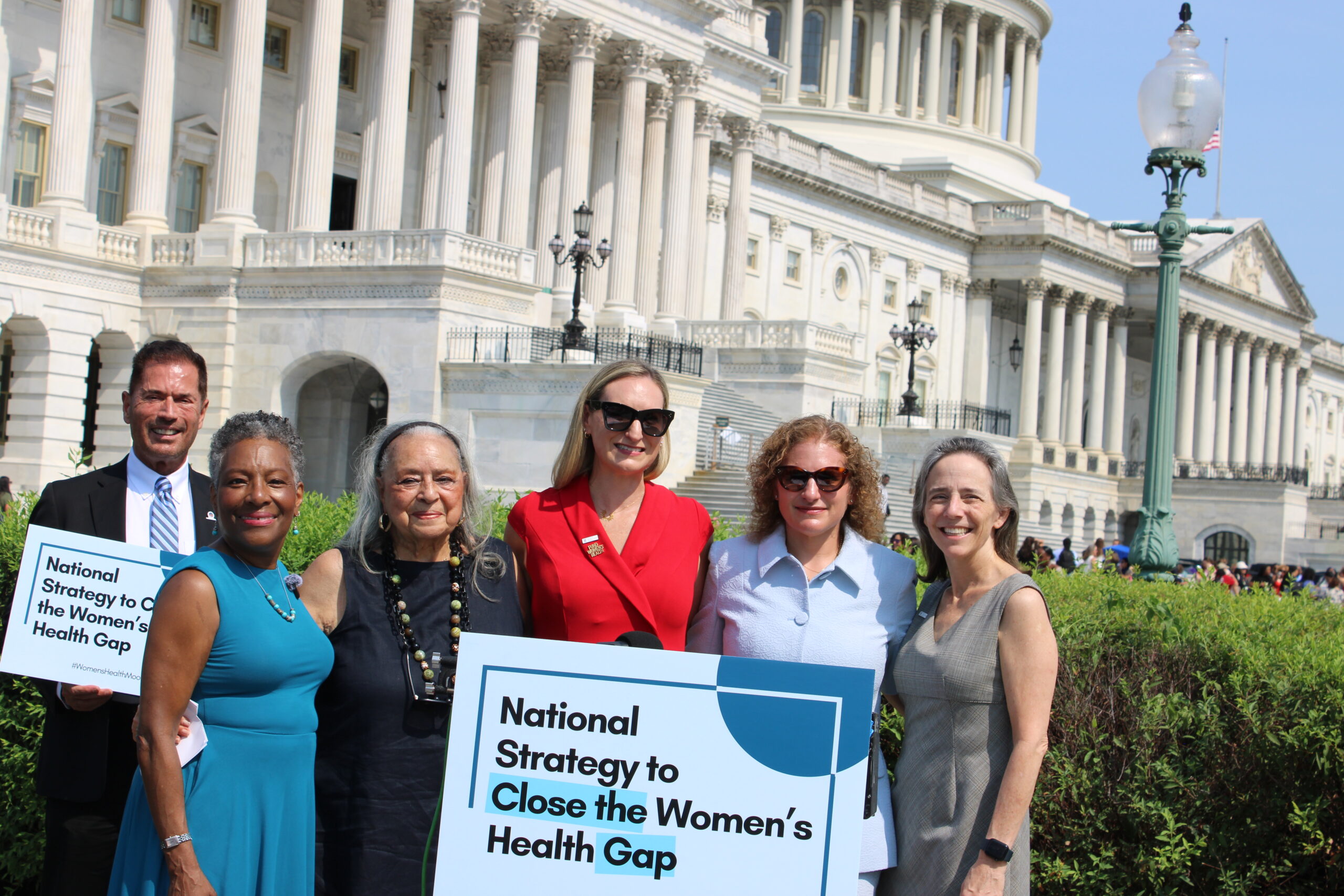
Pictured: Sandra Brooks, MD, MBA, FACOG, CEO of ACOG; Kathryn Schubert, MPP, CAE, President and CEO of SWHR; Erika Miller, JD, Women First Research Coalition
By Isabel Lopez, Public Affairs Intern
Women’s health research continues to lag behind, and women continue to face significant gaps in care, and health outcomes — but these gaps are not inevitable.
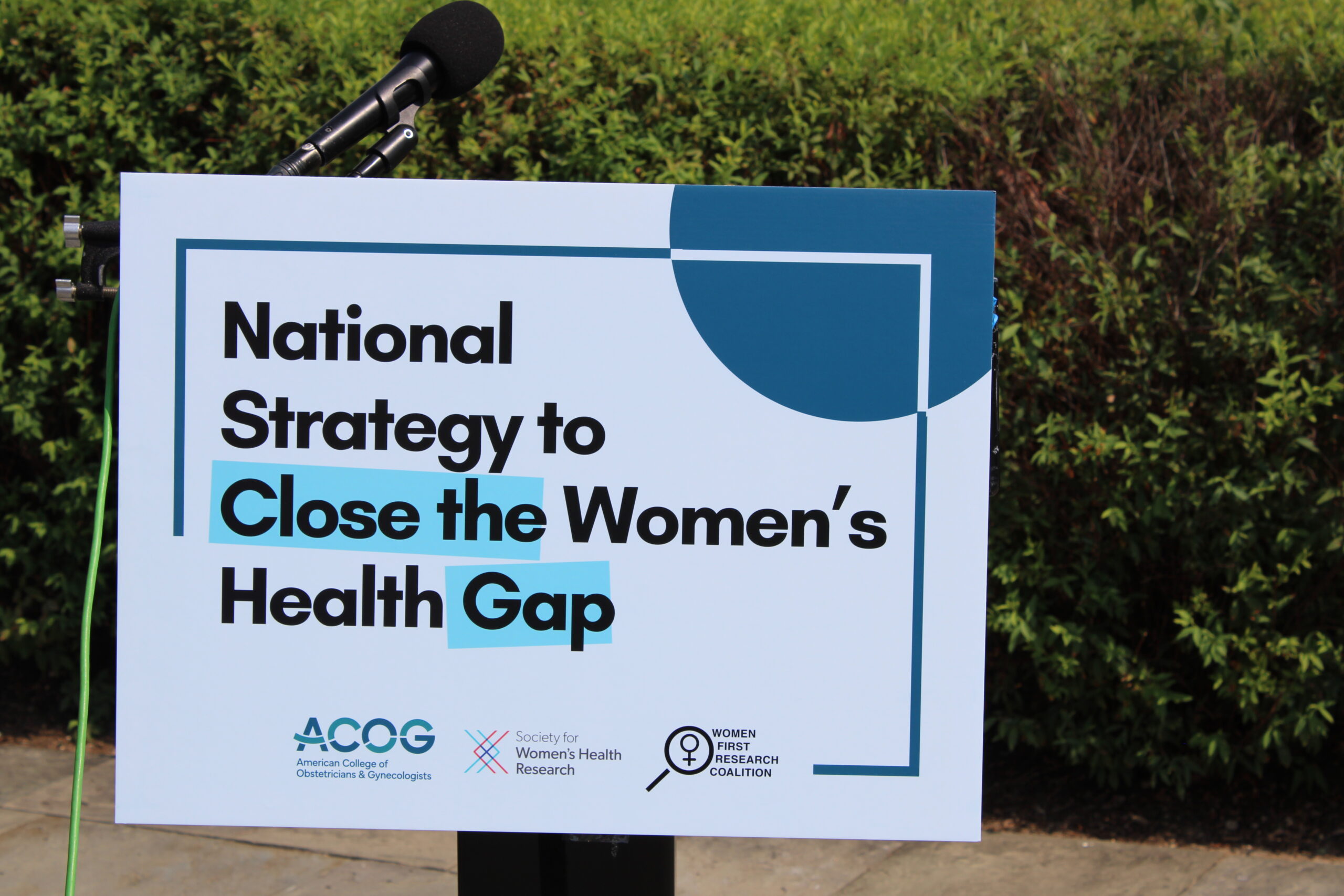
On July 15, the Society for Women’s Health Research (SWHR), the American College of Obstetricians & Gynecologists (ACOG), and the Women First Research Coalition (WFRC) launched a National Strategy to Close the Women’s Health Gap, a roadmap calling for coordinated federal investment of $20 billion over the next 10 years to accelerate women’s health research, improve clinical care, and strengthen the nation’s health.
To officially launch the strategy, SWHR, ACOG, and WFRC hosted a press conference on Capitol Hill on July 15. Opening the event, SWHR President and CEO Kathryn Schubert, MPP, CAE, described the vision behind the strategy as simple but transformative: “The vision is to investigate women and sex differences.” She and several others speakers described this moment as “the women’s health moonshot.” Schubert noted, “The women’s health gap is not inevitable; it is a result of choices, and Congress can choose to make different choices.”
Sandra Brooks, MD, MBA, FACOG, CEO of ACOG, shared her first-hand experience of caring for women and the difficulty she faced when the evidence-base was lacking for patients. “Nothing is more frustrating than sitting with a patient who is suffering, knowing we do not have more information and better answers,” she said. Investing in women’s health, she added, means helping “women live healthier, fuller lives… [because] when women are healthy, families are stronger, communities are stronger, and the economy grows.”
Erika Miller, JD of the Women First Research Coalition reminded attendees that the strategy’s launch is just the beginning of this work. “Today’s launch is not a culmination of research but the beginning of the next chapter,” she said. While the strategy proposes a $20 billion investment over 10 years, given the $116.5 billion budgetof the Health and Human Services in Fiscal Year 2026, Miller emphasized this “is a modest investment in doing what is right.”
The press conference also welcomed leaders from across government and medicine to share a common message: investing in women’s health benefits everyone.
Congresswoman Rosa DeLauro, Ranking Member of the House Appropriations Committee and the Subcommittee on Labor, Health and Human Services Educations, and Related Agencies, spoke about her decades of women’s health advocacy in Congress, underscoring the importance of sustained federal investment and individual advocacy working together: “There needs to be the continued public awareness and education, [so that women] can stand up and fight to make sure that our health is safeguarded in Congress.”
Vivian Pinn, MD inaugural director of the National Institutes of Health (NIH) Office of Research on Women’s Health, also reflected on the progress women’s health has made in recent decades, while recognizing the work left to be done. “I remember when we had to explain what women’s health was to so many people,” she said. Today, we know what women’s health is, she noted, but the gaps remain; she challenged attendees to continue building momentum so that future generations “will be talking about what happened in 2026 to close the women’s health gap.”
Finally, SWHR Board Member and maternal fetal medicine specialist Cathy Spong, MD, FACOG underscored how investments like the National Strategy will address the need for better evidence in women’s health. “Too many conditions that affect women remain incompletely understood, and too many clinical decisions are still made without the evidence that women deserve. For me, this comes down to one simple principle: better evidence leads to better care,” she said.
The National Strategy outlines a comprehensive approach to closing the women’s health gap by increasing federal investment in research across conditions that affect women, strengthening the biomedical workforce, improving regulatory coordination and modernization , , and increasing public education and awareness across women’s health topics.
The National Strategy has been endorsed by over 30 national patient advocacy, medical professional society, and nonprofit advocacy organizations spanning areas like Alzheimer’s disease, autoimmune, fibroids, maternal health, and rare disease. Find a full list of endorsing partners here.
Closing the women’s health gap will require sustained commitment, collaboration, and investment, but as the press conference speakers, many endorsing partners, and the National Strategy itself make clear, it is both achievable and essential.
Learn more about the National Strategy and read the full document at swhr.org/nationalstrategy.
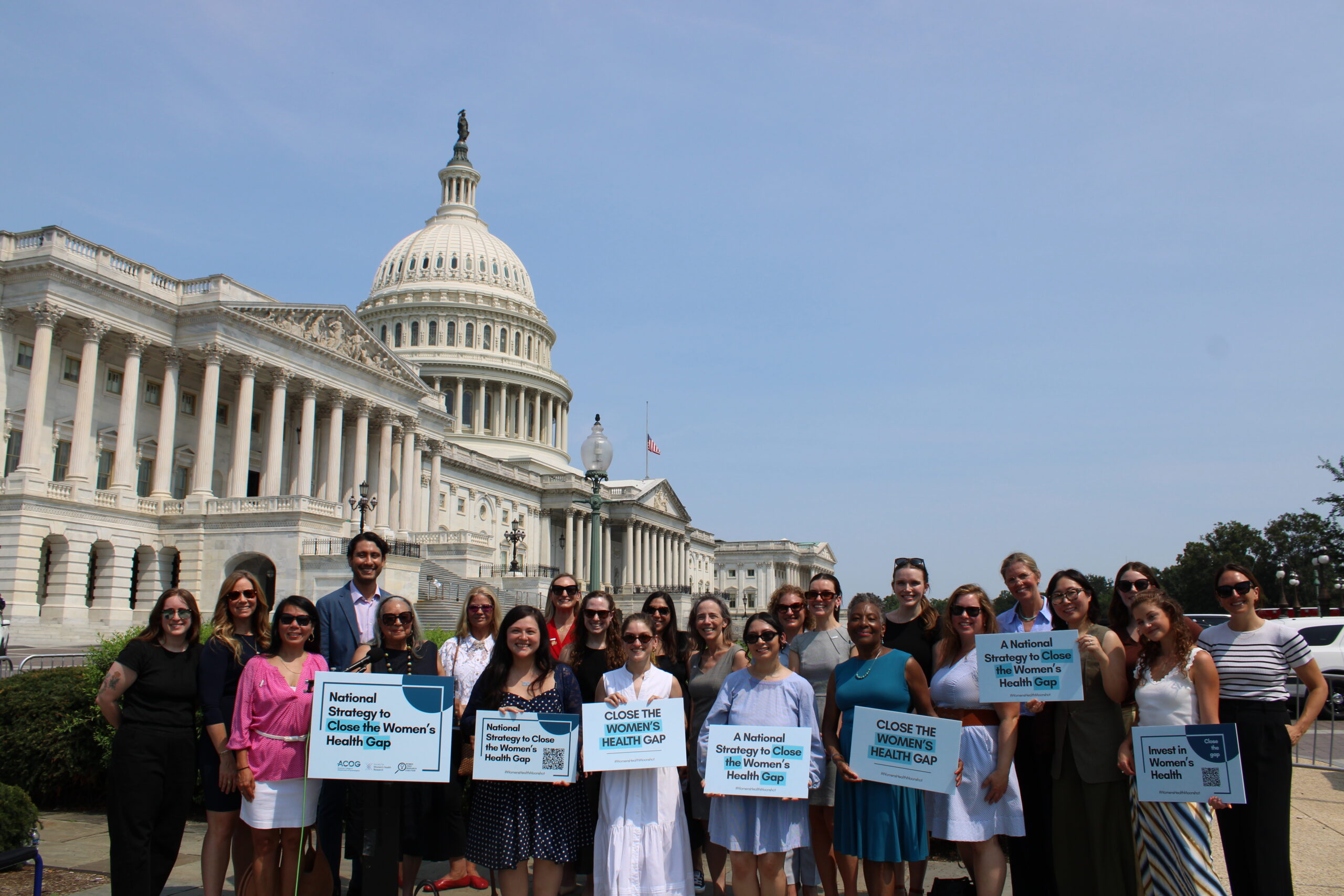
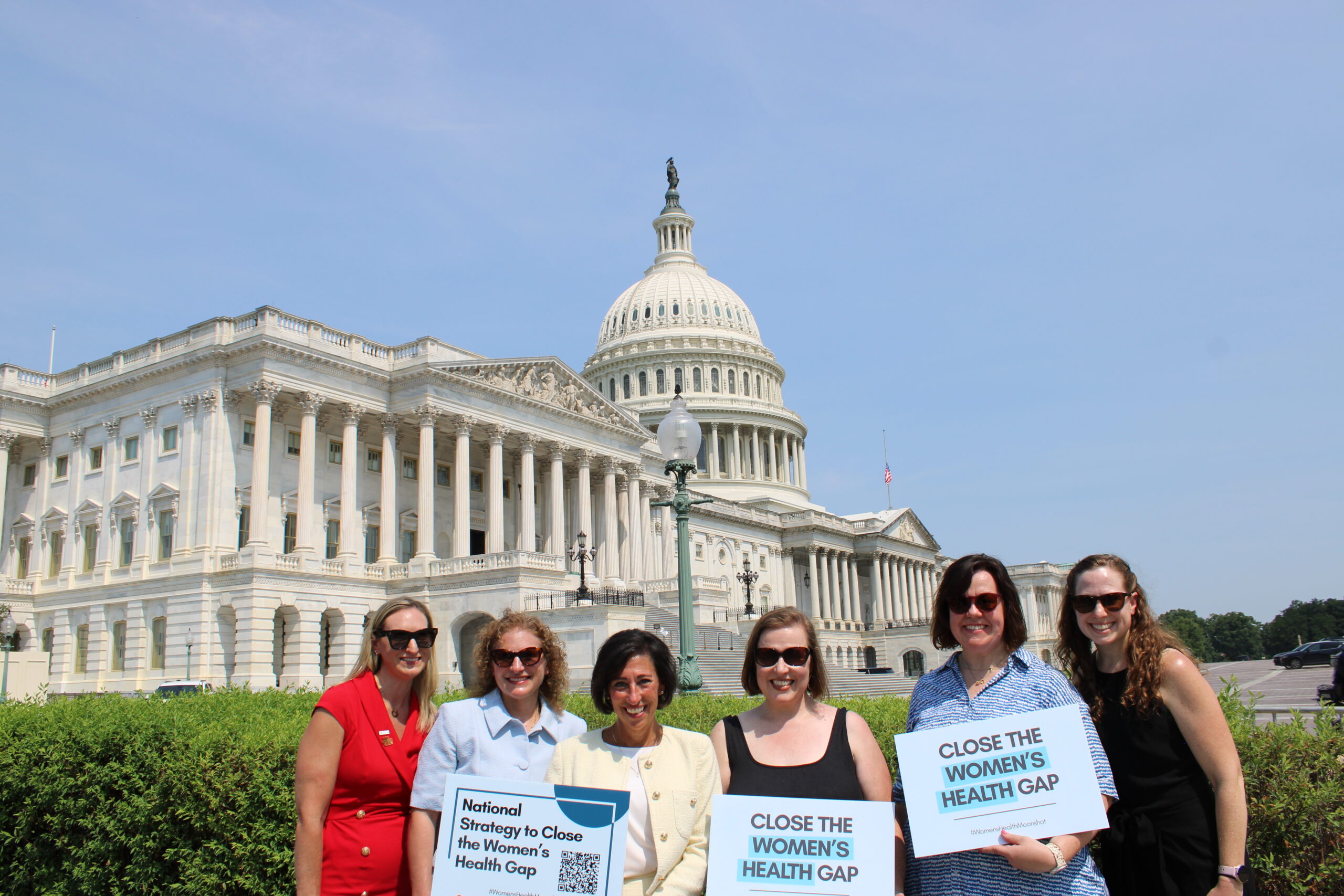
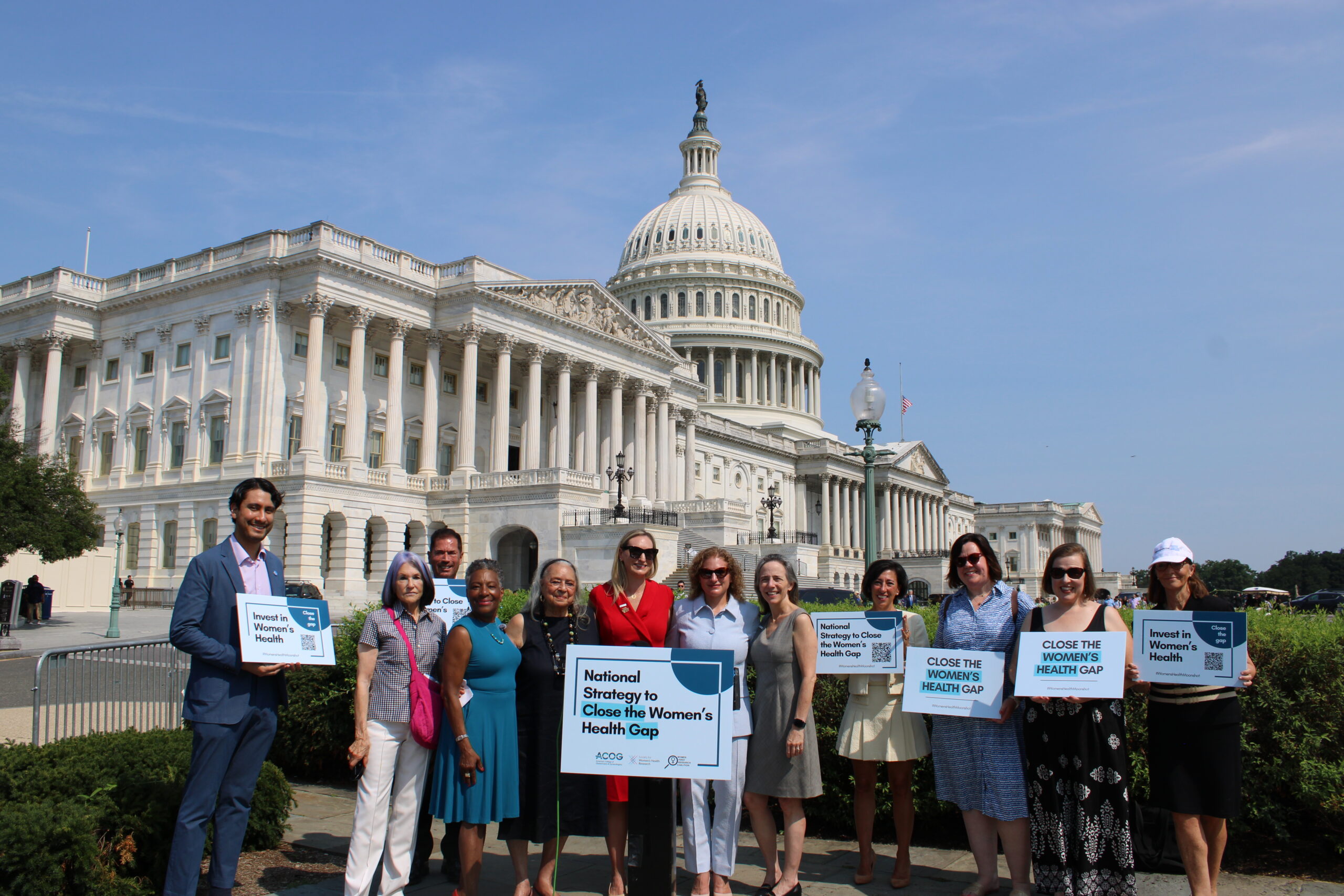
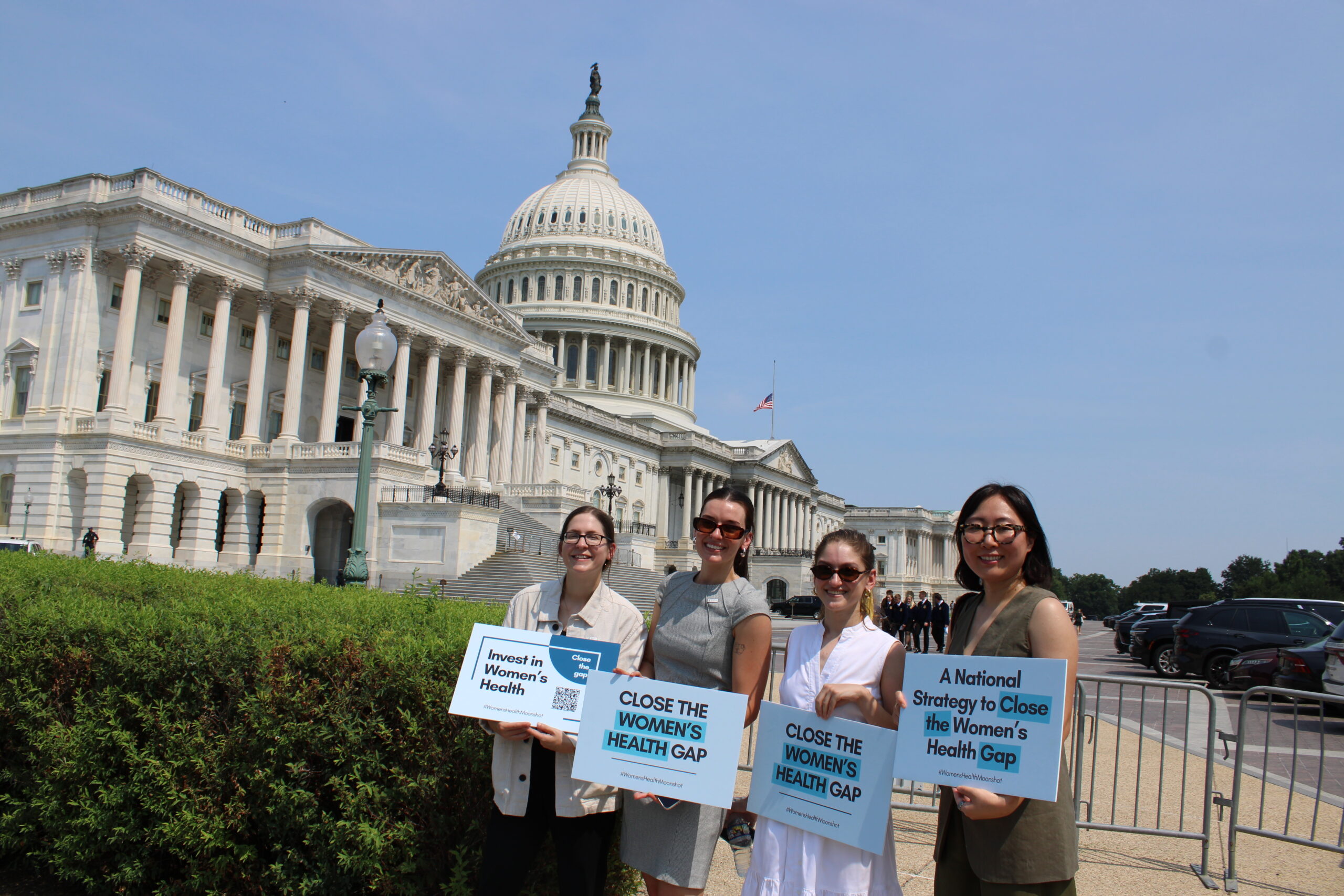
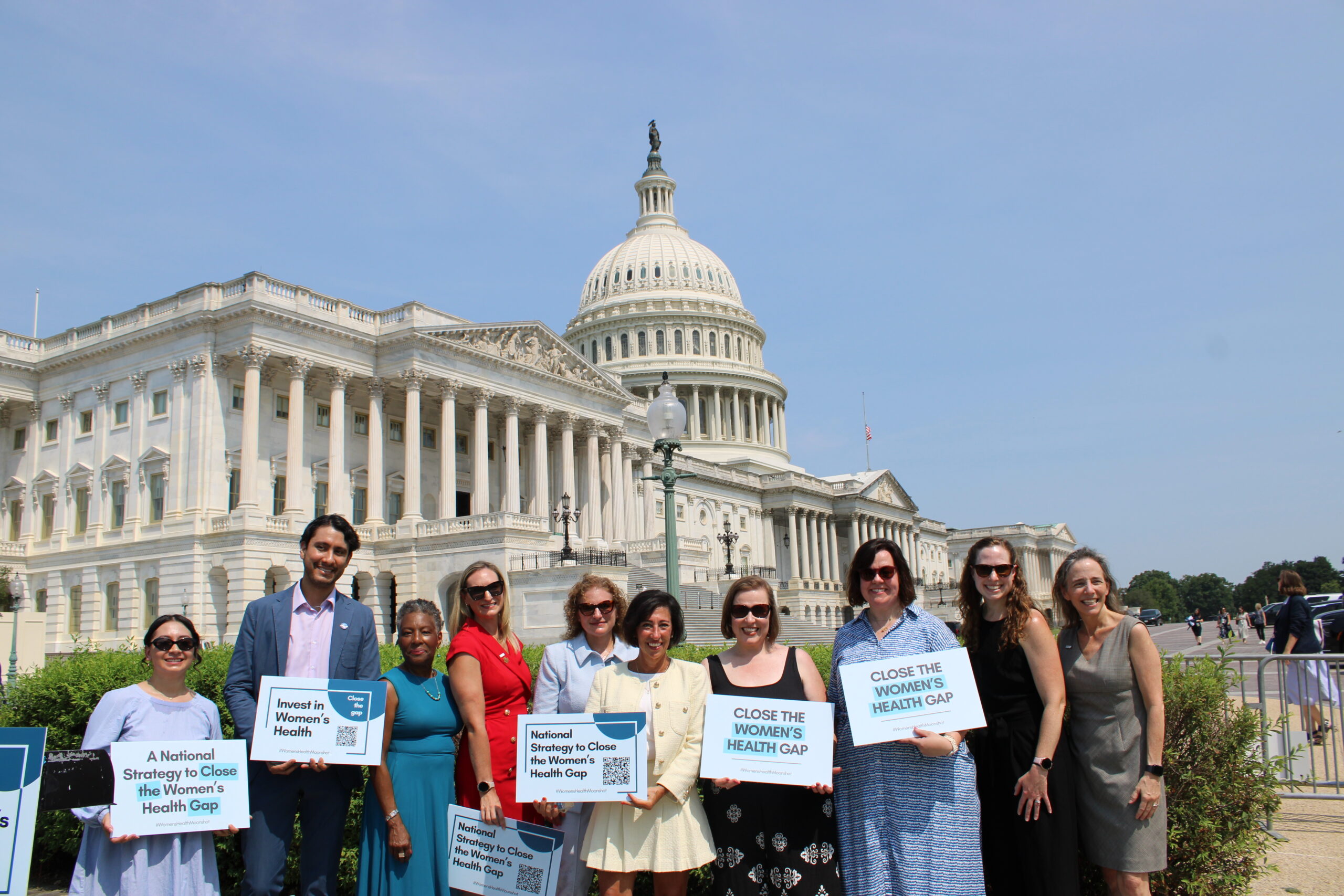
Check out photos from the press conference
-
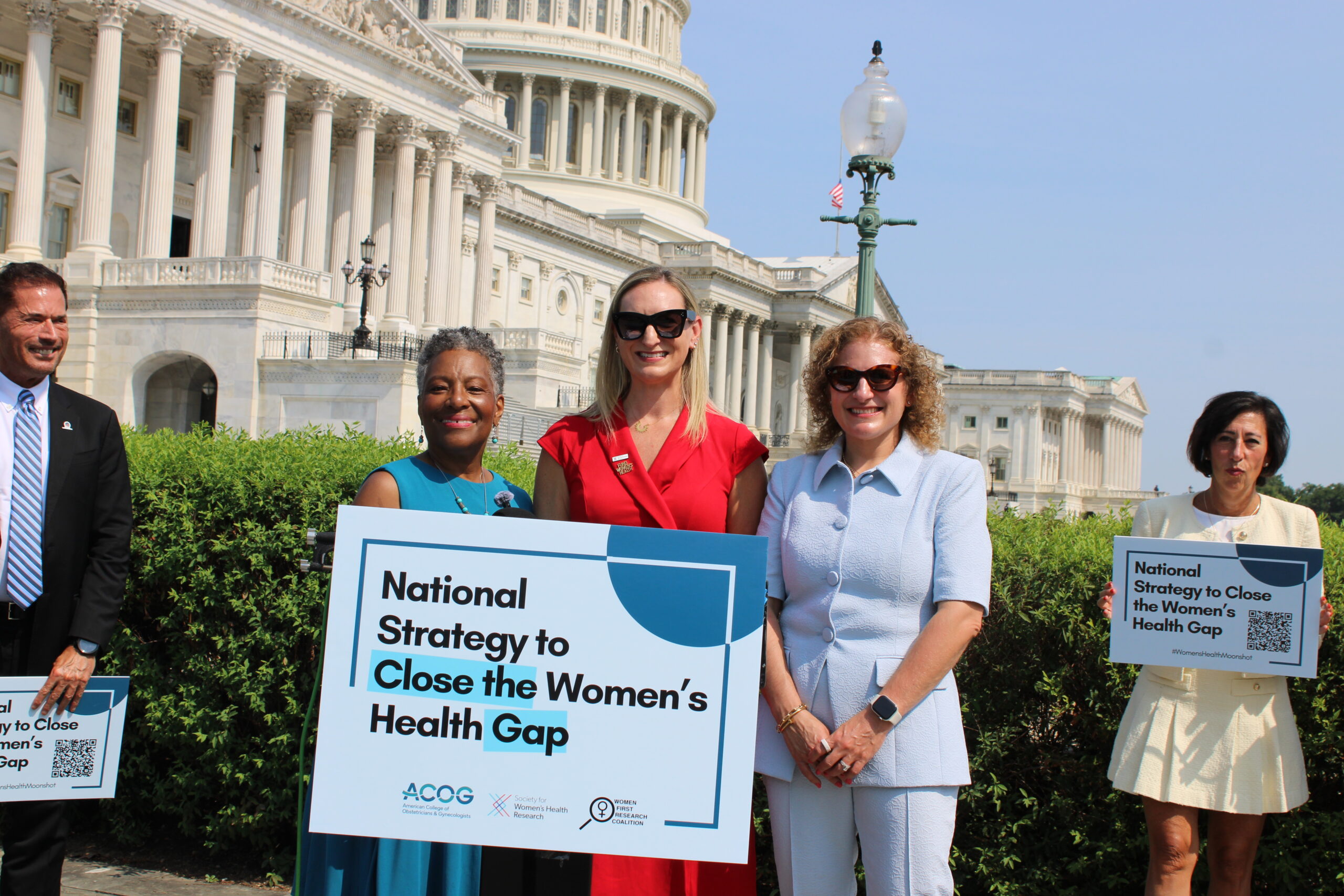
- Hosts ACOG, SWHR, and WFRC
-
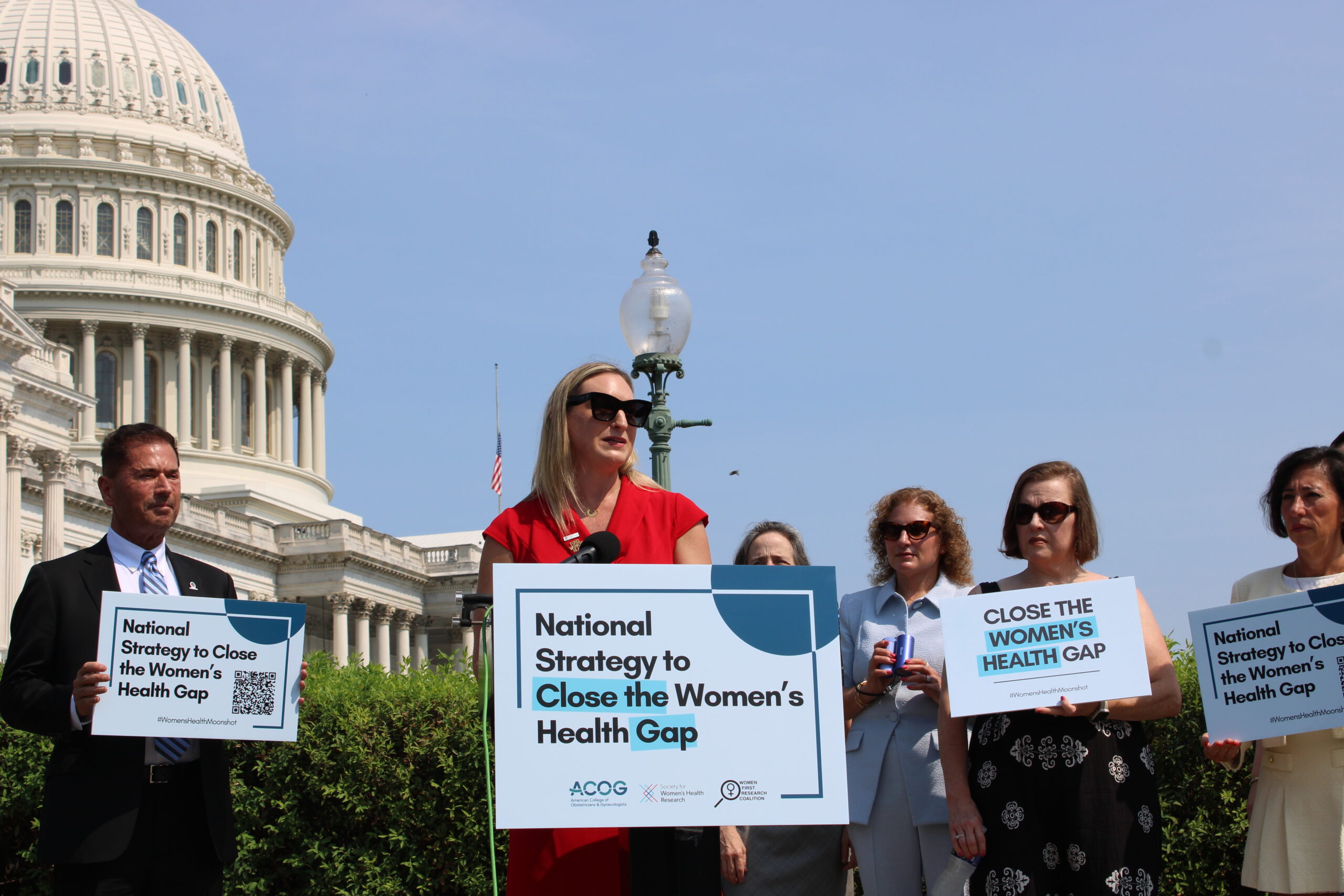
- Kathryn Schubert speaking
-
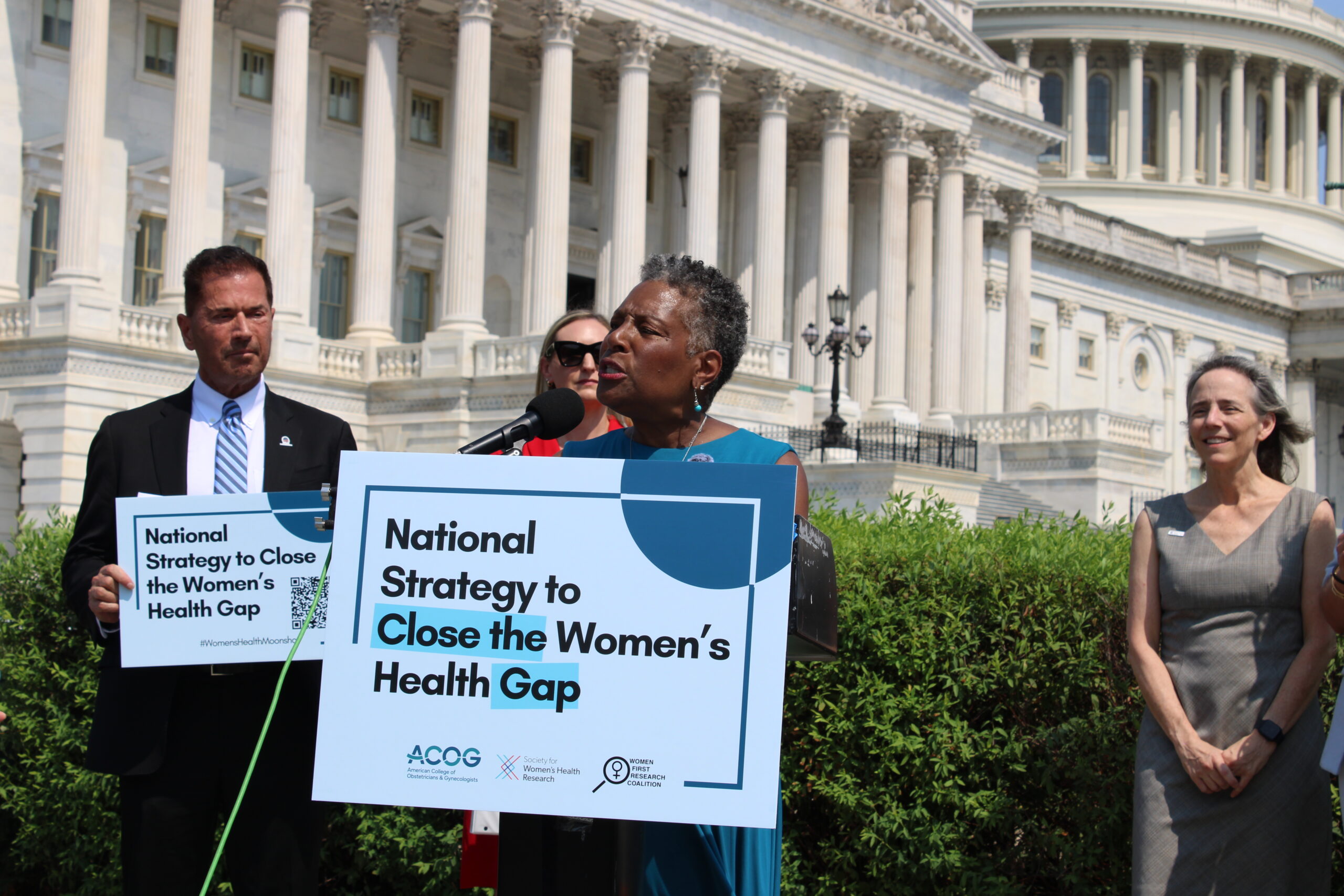
- Sandra Brooks speaking
-
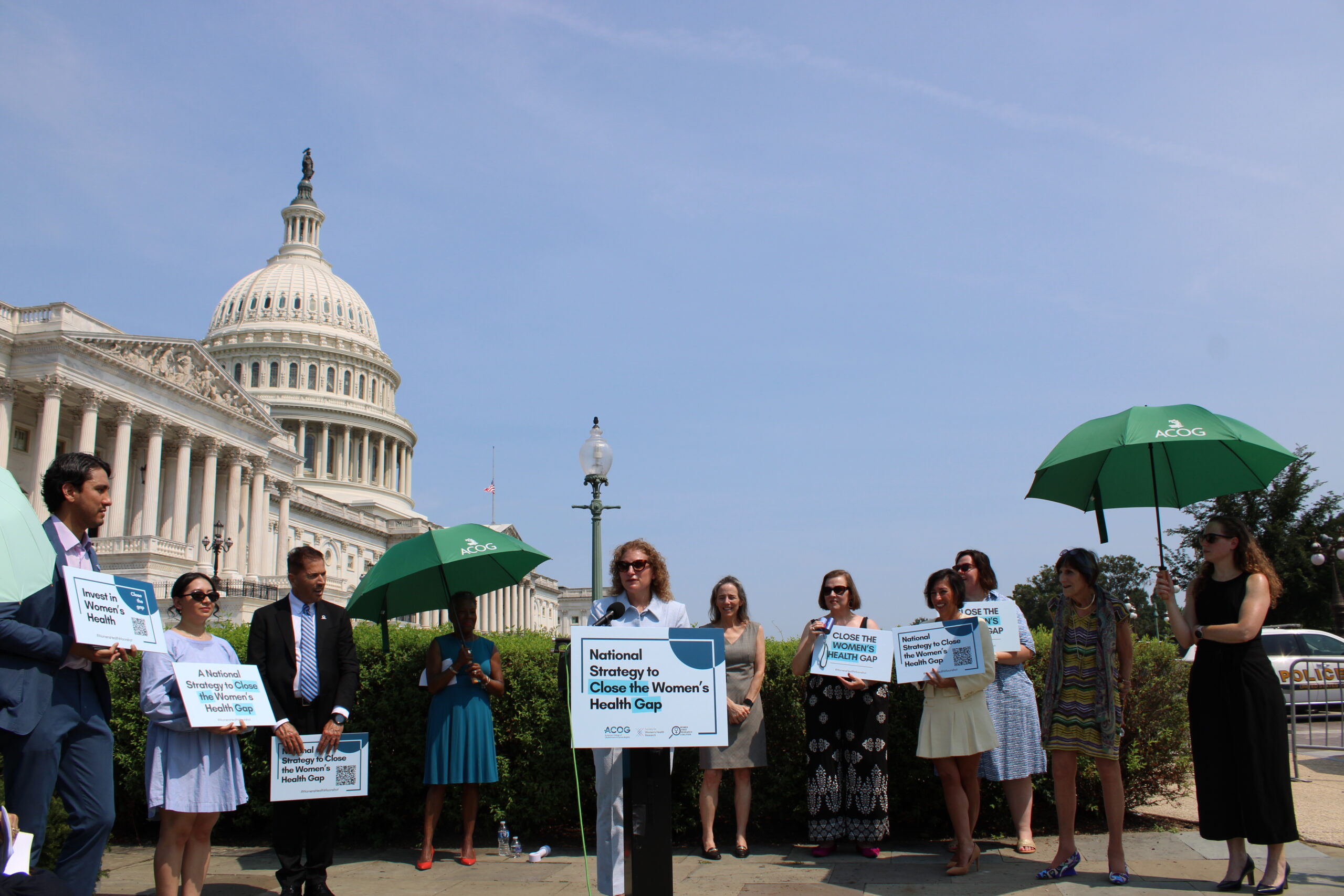
- Erika Miller speaking
-
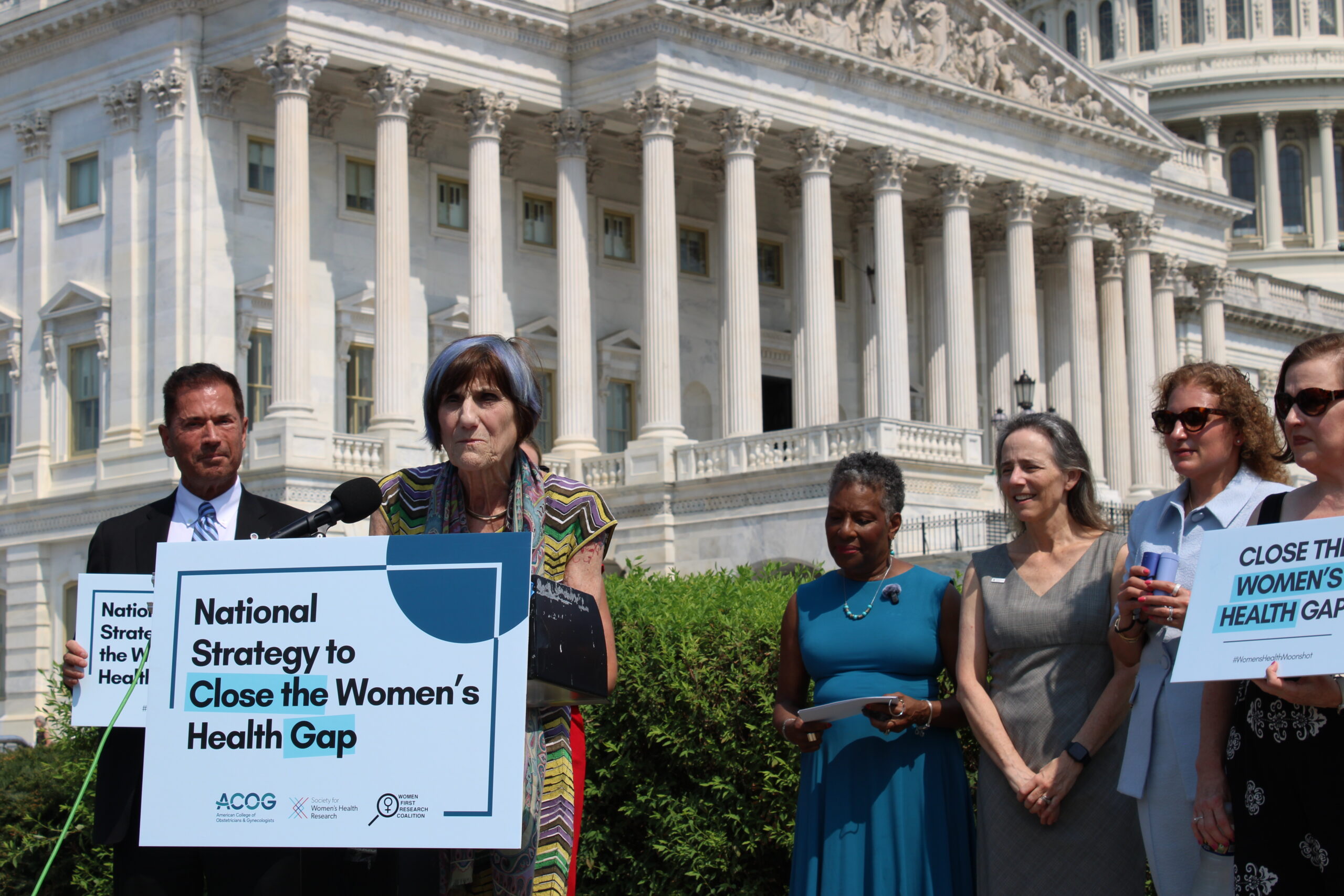
- Congresswoman Rosa DeLauro speaking
-
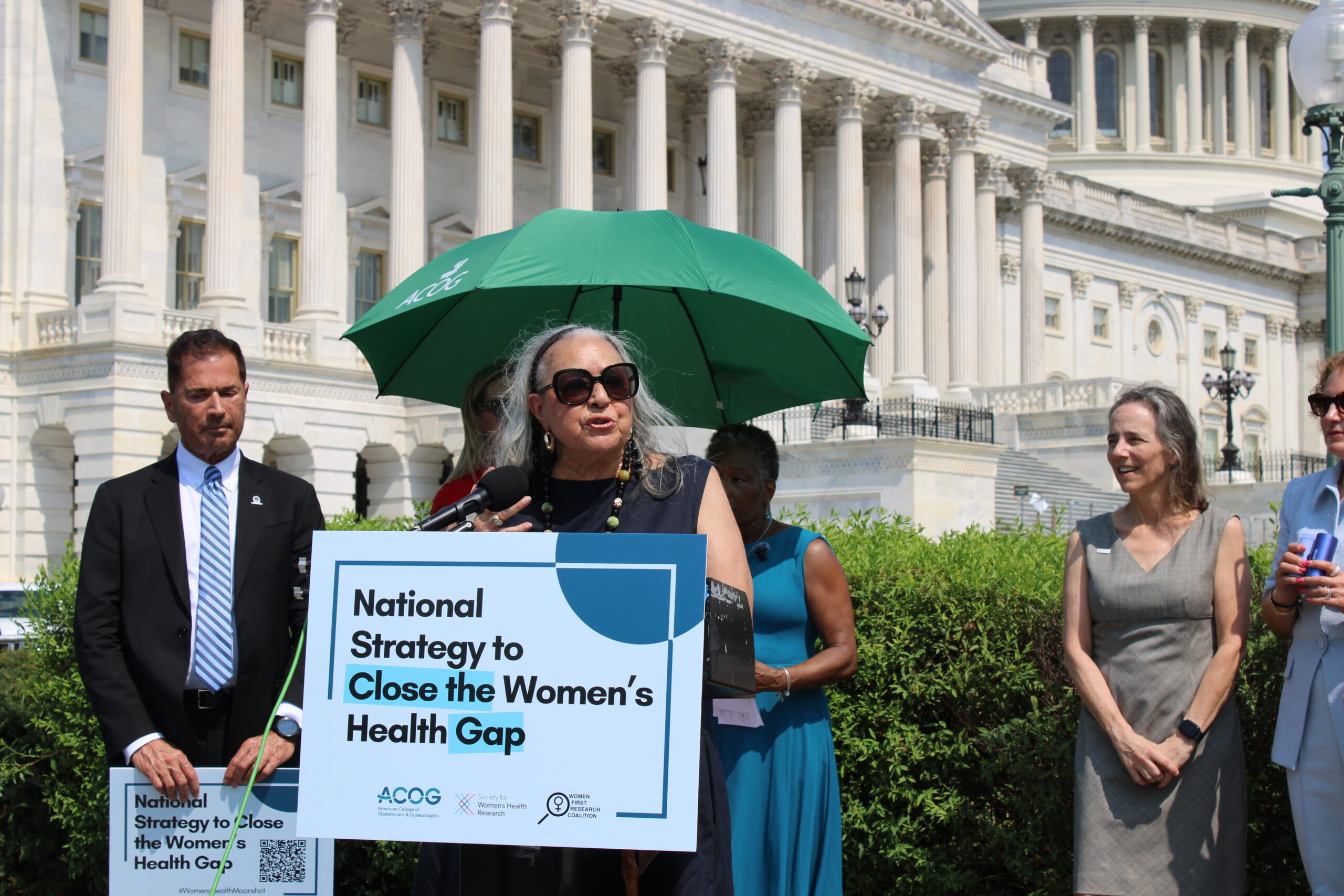
- Vivian Pinn speaking
-
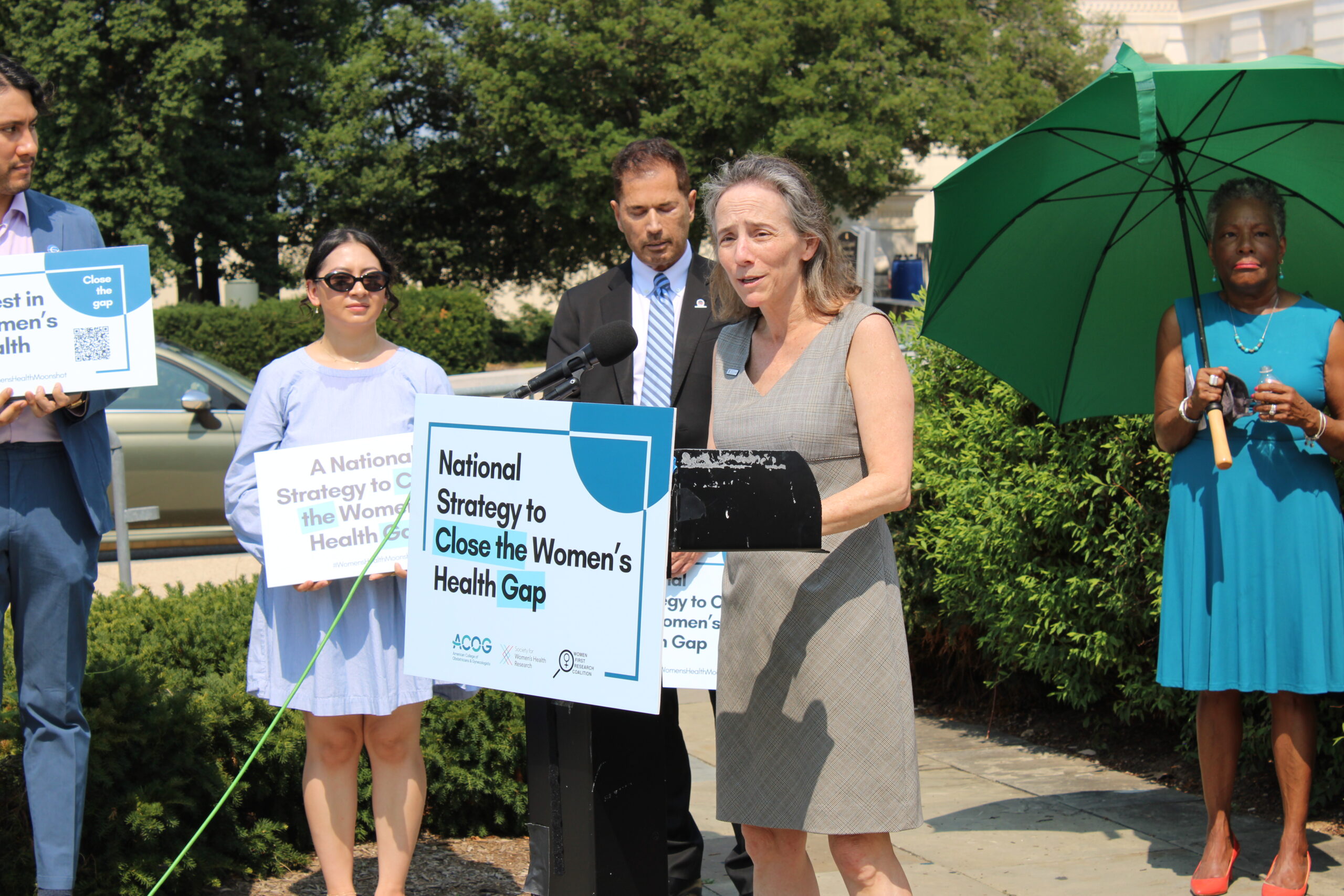
- Cathy Spong speaking
All photo credits to the Society for Women’s Health Research.