


Rare Disease

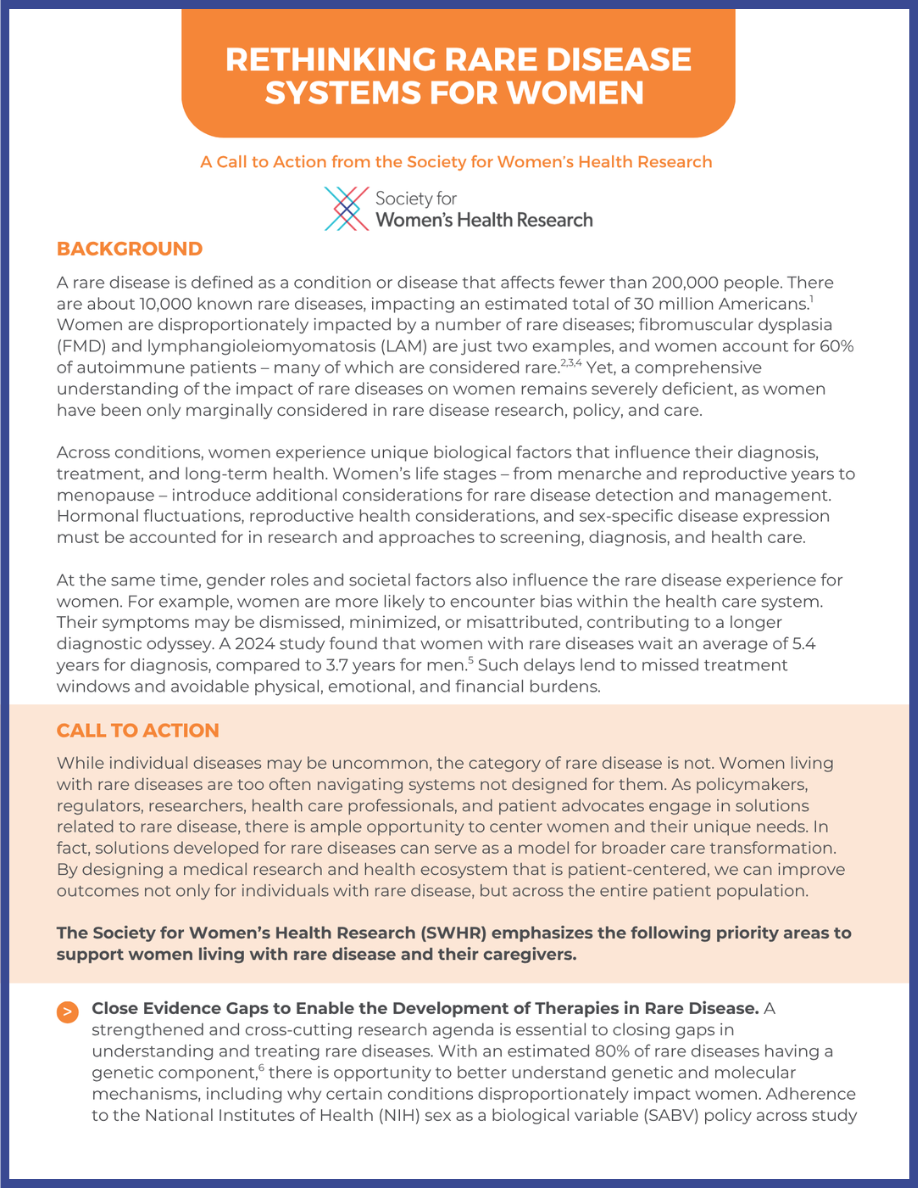
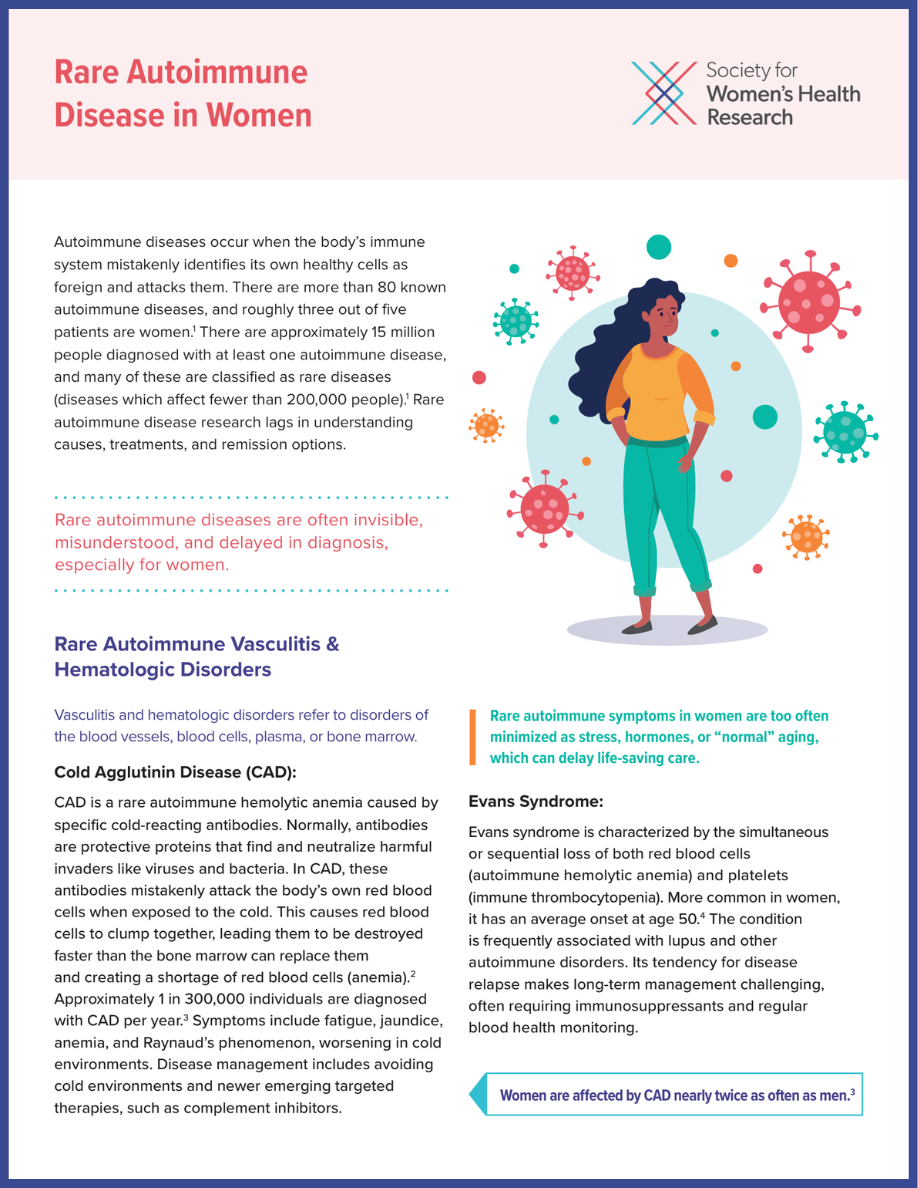
A rare disease is defined as affecting fewer than 200,000 people. Despite their small prevalence, compared to other diseases, their impact on patients, communities, and the health care system is large. There are more than 10,000 known rare diseases impacting more than 30 million Americans, according to the U.S. Food and Drug Administration.

Rare diseases are often discussed in a silo, but rarely is a patient managing just a single disease. Rare disease patients frequently have multiple diseases and conditions that can complicate care, obscure symptoms, limit treatment options, and impact research participation. Rare disease care can involve several different providers and caregivers, in addition to the patient themselves.

Living well with a rare disease is possible, but the health care system must remain flexible and innovative to address the treatment, management, and research needs of rare disease patients.

The Rare Disease program is part of the SWHR Rare Disease Network.

Program Goals

  • Improve understanding of how women as rare disease patients are impacted.
  • Identify opportunities to better support patients navigating rare disease, their families, and their caregivers.
  • Examine how federal policy and regulatory decisions influence innovation, research, and patient access to rare disease care.
  • Explore strategies to improve access to earlier diagnosis, emerging therapies, and high-quality clinical care for people living with rare diseases.

Facts about Rare Diseases

95%

 of rare diseases do not have an FDA-approved treatment1

30 million

Americans are living with at least one rare disease2

80%

of rare diseases are caused by genetics or specific genetic subtypes3