
Guest blog by Sara Hirsh Bordo
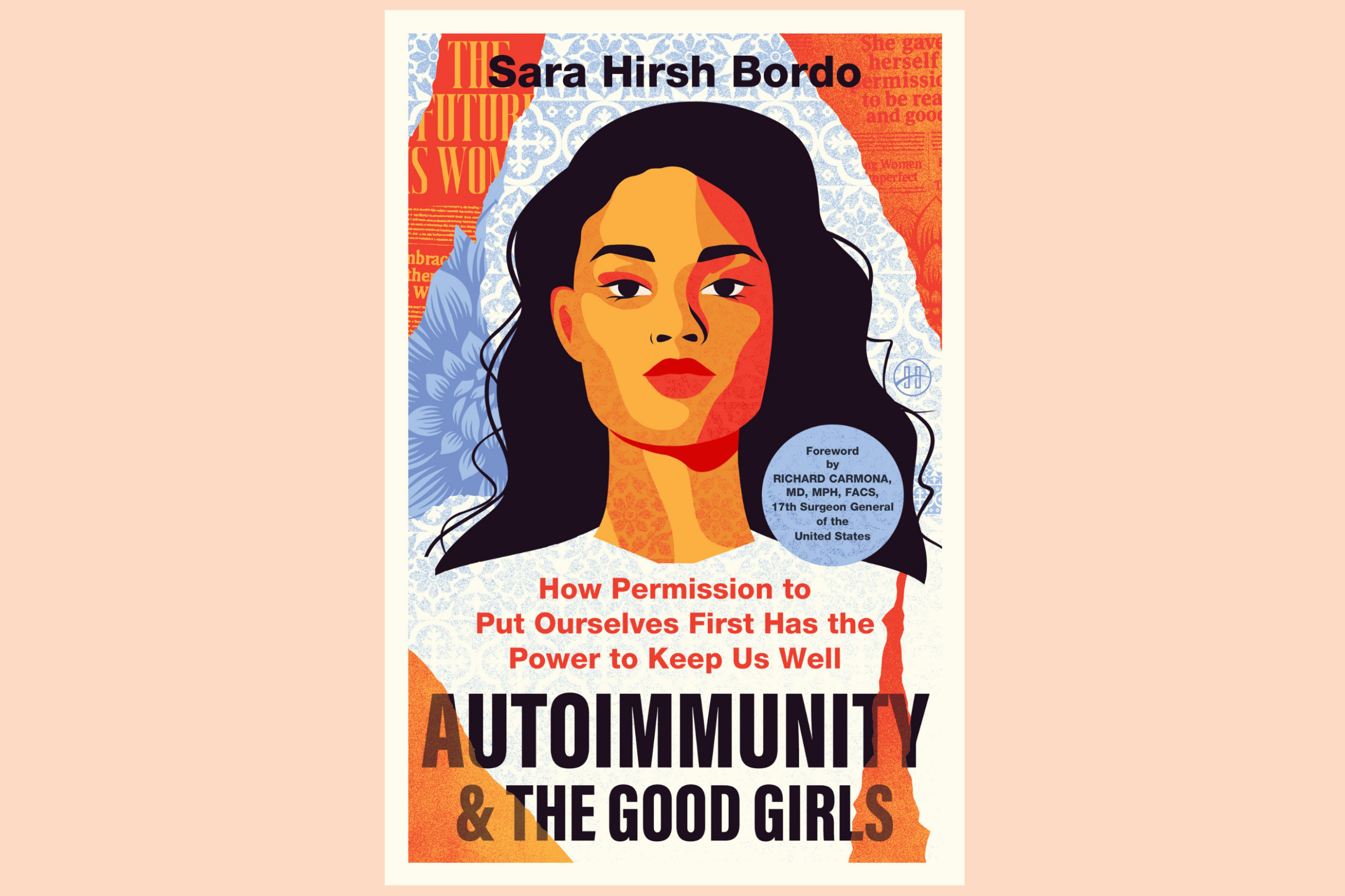
SWHR is the nonprofit partner of the book Autoimmunity and the Good Girls, by Sara Hirsh Bordo, award-winning documentarian and founder of the production company Women Rising®. An estimated 80% of autoimmune disease patients are women, and Hirsh Bordo is one of them. In this book, she makes it her mission to call attention to what she calls a “climate crisis of women’s health” and dive into the intersection of autoimmunity and female empowerment through memoir, expert interviews, and women’s personal stories. SWHR spoke with Hirsh Bordo about what led her to write this book and what she hopes others will take away from it. This interview has been edited for length and clarity. The book and audiobook are available everywhere for pre-order now and will be released June 2. Learn more about the book and the companion podcast at autoimmunityandthegoodgirls.com.
What inspired you to start the Autoimmunity and the Good Girls project?
I began asking questions of other women diagnosed with autoimmune conditions over 10 years ago. I kept finding that those of us who were being diagnosed were predominantly either the eldest or the only daughter in our families. I always had an instinct that I would activate my curiosity on this topic in a broader way. And that curiosity got me well.
Just before 2020, I conducted a 300-woman survey amongst my Women Rising® community with autoimmune conditions. When the results came back, I knew I wanted to go bigger. I reached out to PROOF Insights to find out what it would take to conduct a proper quantitative and qualitative study at scale. In my case, 1,000 American women. The team understood my intention was to help other women, to ignite change, and to hopefully create a new consideration for why so many women were getting so sick. Two weeks after the PROOF Insights Autoimmunity and the Good Girls survey was in the water, the results rolled in. The team shared with me the thousands of short answer questions (all posed as optional); it was the highest number they had received in any research project in company history. I choose to believe that it was because it was written by and for a fellow woman living with autoimmune conditions.
Having knowledge is one thing; being able to put it into action is another. My book, Autoimmunity and the Good Girls, is my multi-year research journey towards my healing and remission through awareness of identity and immunity, and a road map for so many other women who find themselves sick from over- compromising themselves for others.
How has your own personal experience inspired this work?
I am an eldest daughter, and I have lived with multiple autoimmune and chronic conditions. Within 18 months of my 42nd birthday, I was diagnosed with melanoma, multiple breast and ovarian tumors, active Epstein-Barr, heavy metal poisoning, and mold poisoning, in addition to experiencing debilitating flare-ups of the autoimmune disease Hashimoto’s thyroiditis, which I was diagnosed with at age 30. I had shingles at the age of eight and chronic strep throat for 20 years, also beginning at eight. I had my first breast tumor removed at the age of 22, and my second at the age of 23. I was no stranger to the health care system.
Now that you’ve written the book, what is your hope for the Autoimmunity and the Good Girls project moving forward?
In storytelling structure, we often see the “hero’s journey” as one of vast travels and dangerous external conquests. That is not the “heroine’s journey.” Ours as women is one of stillness, depth, and transformation from the inside out. I want to reinforce encouragement more than ever that:
- Your power matters
- Your readiness to be the individual you came here to be matters
- Your ability to recognize what you need matters
- Your courage to speak what you want matters
- Your dreams for your wellness matter
- Your journey to reach them matters
- It also matters to the girls behind you and around you who are waiting for you to figure it out so you can teach it to them.
What is one thing you would go back and tell your younger self?
If I could go back to Little Sara, I would go back to the Sara at three and a half years old, when my twin brothers were born. I would sit with her and try to explain to her that what made her lovable and worthy of love and attention does not need to be replaced by how good she will be at being of help. I would give her language to use to say, “I need a hug” and “I am feeling lonely can someone please sit with me today.”
How do you hope other women engage with this book and its themes?
I wrote a kind of affirmation that I read before I sat down to write each day. Rather than paraphrase, I’ll just share some of it here:
- May my book gently awake women to the sovereign responsibility of being in a female body.
- May it catalyze a consciousness for healing and transformation.
- May it help women feel heard, seen, validated.
- May it cradle them like a chosen mother, may it soothe them like a chosen sister, and may it champion them with the power of a goddess.
- May it catalyze self-prioritization, one clumsy step at a time.
- May it give permission to every cell of their receptivity to receive, to be open, and to release the fear that “the strong have no needs.”
- May they feel with ever letter, my love and my life. My heart and my hope.
What is one piece of advice you have for other women looking to take charge of their health?
The book supports the thesis with every page that a self in compromise creates immunity in compromise. We cannot allow ourselves to continue being more afraid of disappointing others than doing what is needed for our own care. Changing my relationship to this construct changed everything for me. We are worthy of having wants and needs. We are worthy of bringing them out into the world through our voices, and we deserve to have them addressed and fulfilled. Most of us were never told or taught this, but we can re-parent ourselves one step at a time. I am living in a healed and harmonic body now, with every diagnosis disappeared or in remission, and I am living proof that it can be done.
I want to invite women to:
- Believe that it is never too late to prioritize yourself.
- Acknowledge their bodies are their partners and not their enemy.
- Befriend their inner girl whose turn it never was, until now, to take her turn, and to mother her in the way you know you need now.
- Get comfortable speaking new phrases, such as “No, thank you, that’s not what I need right now,” “Can I please ask for your help with something?” or “I’m hurting. And here is what would be really comforting.”