

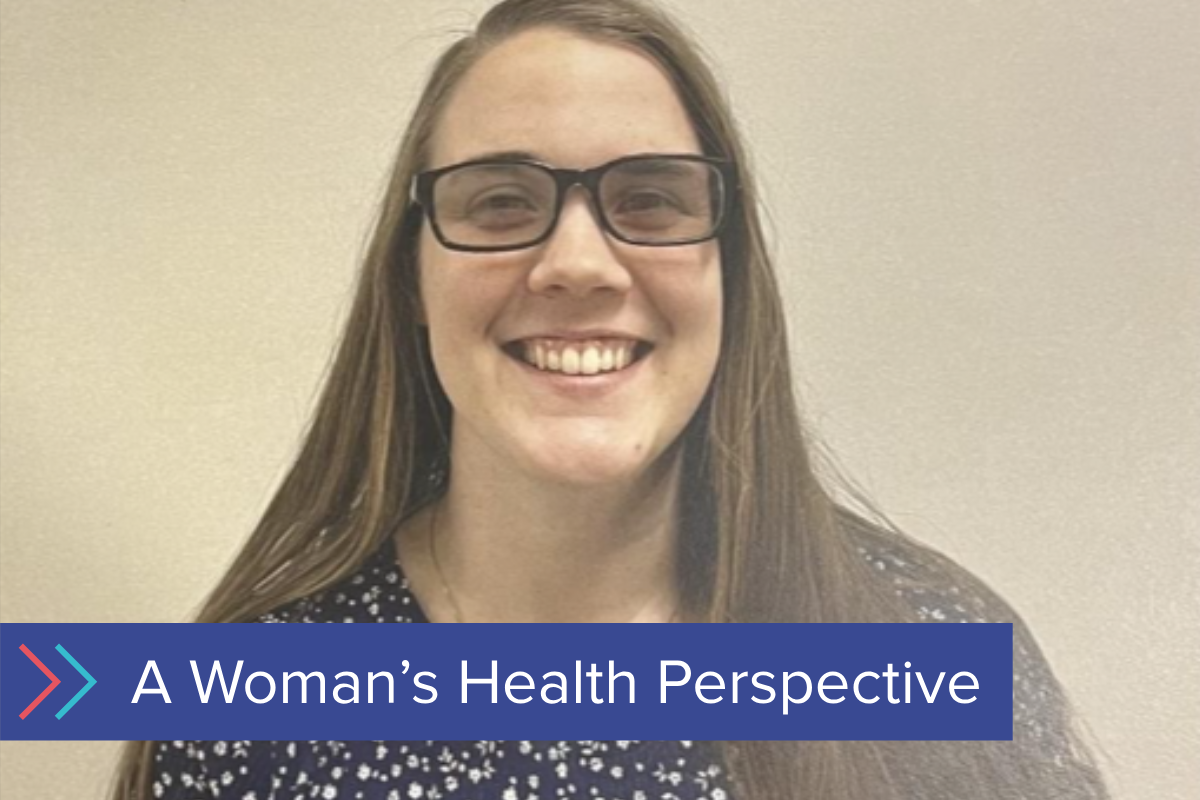
This is a firsthand account submitted through SWHR’s Share Your Story portal, as part of SWHR’s Women’s Health Perspective series.
For years, I thought being exhausted and being in pain were simply things I had to push through.
In high school and college, I was constantly exhausted—not just “I stayed up too late” tired, but the kind that made ordinary days difficult. I watched my peers take heavier course loads, volunteer, join organizations, work multiple jobs, while I struggled to keep up. My grades were mostly good, but I never felt I matched what they were able to take on. I thought I was failing. I thought I was lazy and unmotivated. After significant trauma around the beginning of college, I also attributed my exhaustion to constantly being anxious, nervous, and on edge. I didn’t realize my body might be telling me something was wrong.
Pain was much the same. I had painful periods and pelvic pain, but I minimized it—even to doctors. I told myself I was being dramatic, that other women had painful periods too, and that I just needed to be stronger. Eventually, my pain became constant. Severe pelvic and back pain, nausea, fatigue, and shortness of breath became part of my everyday life. Even with medication, I was struggling. Because I was young and otherwise healthy, I didn’t understand why I was struggling so much.
Laundry, dishes, cooking, and cleaning became things I dreaded because I knew I would be in pain and exhausted afterward. After a colonoscopy triggered a severe flare, I reached a point where, in the month before surgery, I was working from my bed and could manage at most 10 hours a week. Some days, getting to the bathroom felt impossible. I used a cane and shower chair just to function. I carried a heating pad everywhere—even in summer—and tried five different birth control pills, hoping something would help.
My experience with the health care system in the Las Vegas area was frustrating and discouraging. A gynecologist dismissed my pain and recommended pelvic floor physical therapy, telling me my symptoms did not sound like endometriosis because I had not “clamped down” during my pelvic exam.
Later, I was told an ultrasound showing a normal-thickness endometrial lining ruled out endometriosis. Shortly afterward, I was labeled with premenstrual dysphoric disorder (PMDD), despite already taking a selective serotonin reuptake inhibitors (SSRI) for anxiety for years. But PMDD did not explain my constant pain, severe back pain, nausea, fatigue, or shortness of breath. When my provider wanted to stop investigating, I kept pushing for answers.
Eventually, I found a gynecologic surgeon who listened to my entire story and understood that endometriosis is far more than painful periods. My symptoms did not have to fit a stereotype to be real. After years of uncertainty, I finally had an answer: stage 2 endometriosis.
During surgery, my surgeon found and excised endometriosis and adhesions. A diagnosis did not erase years of pain or make recovery easy, but knowing my experience was real was profoundly healing. I was not weak. I had not failed to “push through.” My body had been telling me something, and finally, someone listened.
I am still healing, but I am beginning to imagine a life that is not organized around pain. I am slowly returning to what I love and learning to trust my body again.
If I could tell another woman anything, it would be this: you do not have to push through everything. Pain is not a measure of strength, and exhaustion is not a character flaw. You are allowed to rest, and you are allowed to let the people who love you help when you are hurting or exhausted.
Most importantly, trust yourself. If something does not feel right, keep asking questions. When you have lived with pain for years, it can be difficult to recognize how abnormal your “normal” has become. You deserve a health care provider who listens and takes you seriously.
For a long time, I thought strength meant enduring everything silently. Now I understand that sometimes strength looks like saying, “This isn’t normal for me. I need help.” Sometimes, healing begins the moment you finally believe yourself.