

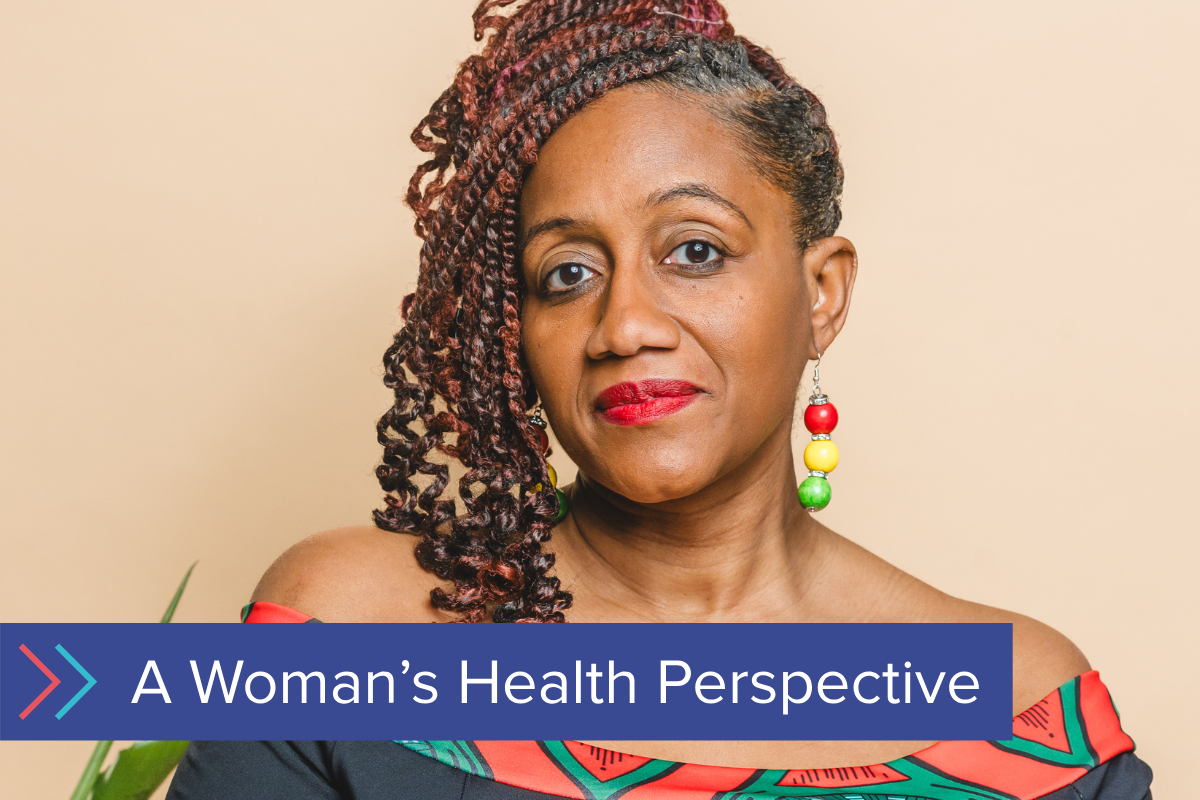
This is a firsthand account submitted through SWHR’s Share Your Story portal, as part of SWHR’s Women’s Health Perspective series.
My endometriosis story is raw, heartbreaking, and inspirational. It began at the age of 11 when I got my period. I had my first gynecological exam and was on birth control before I turned 16. After giving birth to my daughter at 24, I was met with more pain, and the cramps became unbearable. I often found myself fainting, nauseous, and rushing to the emergency room (ER). My mother, who, like me, also suffers from endometriosis, shared her wisdom about self-advocacy. Together, we insisted on a diagnosis, and after enduring the invasive procedure of a laparoscopy, I learned in 2005 that I had endometriosis.
At that time, no doctors had told me that endometriosis could spread. Instead, they offered more birth control and said I may have trouble getting pregnant again. Whenever I followed up with my ongoing pain complaints, the response was always to suggest a hysterectomy. I continued to deal with indescribable pain and other symptoms. For me, this looked like intense pain, mostly in my stomach, nausea, and fainting spells. To distract myself, I leaned into community activism, becoming a well-known activist in the space. I continued to advocate for myself with my doctors; however, this typically resulted in me being ignored, gaslit, and overlooked. One doctor told me, “I know you; I see you on TV. You’re strong; you can handle this,” or, “You know, Black women can take pain.” Not to mention, they were saying it was all in my head.
During this time, I met and married my husband. We faced the challenge of trying to conceive with endometriosis. My pain persisted, and I found myself repeatedly in the emergency room, where I was diagnosed with diverticulitis (inflammation in the colon), leading to antibiotics that did little to address my pain. In 2021, I felt a sudden, intense pain on my right side that caused me to pass out. I went to the ER and got no answers, only strong pain meds. This went on for months, and I was taking 5 to 10 Tylenol daily. Growing frustrated, I started to do my research, cut back on work, and set boundaries with people. After another gynecologist misdiagnosed my situation as a sexually transmitted disease, I demanded to see an endometriosis specialist. He diagnosed me with stage 4 endometriosis, which had already spread to my rectum and pelvis. As a Black woman, I felt all the things. Specifically, that racial medical gaslighting stole my ability to have children with my husband and now my uterus. I made the difficult decision to have a hysterectomy. While I understood this wouldn’t be a cure, my quality of life was low. The doctors said this was one of the worst cases of endometriosis they’d encountered. During the seven-hour surgery, an abscess exploded in my stomach and my bladder was nicked. I woke up with a catheter. Afterwards, the pain improved but came back.
This led to more tests and outpatient procedures that revealed a slow-moving colon due to the endometriosis and a small patch of endometriosis on my right pelvic area. As reminders of my struggle surfaced, I grappled with the reality that I still had remnants of the disease in my body. Not to mention the invasive procedures that at times left me feeling medically violated.
However, this time I began to advocate for myself differently. I practiced radical self-care and began to practice African spirituality. I use holistic methods such as meditation, cannabidiol (CBD), breath and body work, and sound healing to manage my symptoms, and moreover, viewing food as medicine. In addition, I’m currently working with a doctor who supports me in using natural methods alongside some forms of Western medicine to help manage my pain.
Now, my pain is more manageable, and my recent dietary changes have been beneficial. I recognize that these methods may not work for everyone. I encourage others to advocate for themselves and explore options that fit their individual needs. Black women especially need to prioritize their health and well-being. I can firmly say that if I hadn’t advocated for myself throughout this journey, I would not be here today.
Versions of this story have previously appeared in the book HEALING IN THE FIGHT: A Black Woman’s Journey With Endometriosis and Radical Self-Care.