

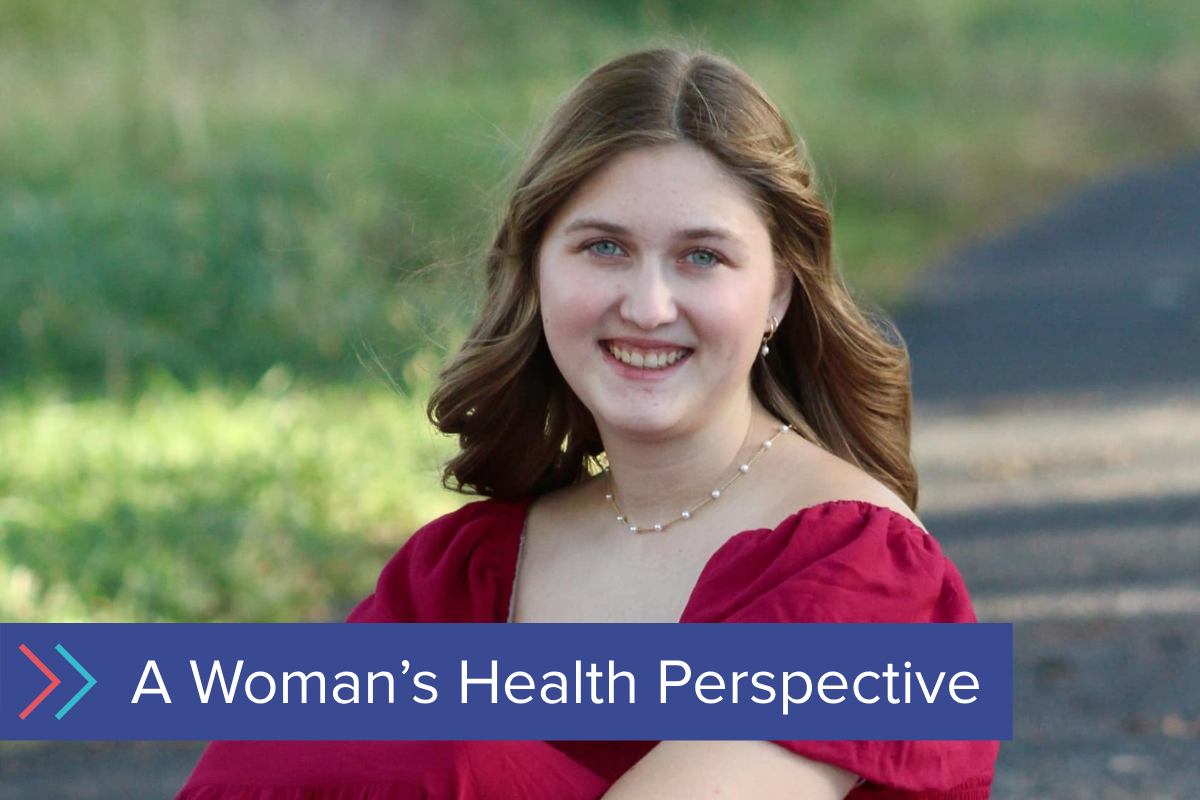
This is a firsthand account submitted through SWHR’s Share Your Story portal, as part of SWHR’s Women’s Health Perspective series.
I write this because I want to not only be heard but also truly listened to. We live in a world surrounded by noise—the honking of cars, conversations, the hum of nature, and the constant beeping of devices. These sounds are heard daily, but I ask that you focus on the stories that truly need to be heard.
For far too long, women have been ignored in the health care system. I’m 18, and yet, I’ve had many experiences that reveal just how often women’s pain is dismissed. Diagnosed with three autoimmune diseases before age 17, I have endured both gratitude for the doctors who helped me and frustration from those who didn’t listen. With overlapping symptoms—like stomach aches and headaches—doctors often overlook these distinctions, treating everything the same.
One instance stands out when I went to the emergency room (ER) in excruciating pain. Despite my condition and a recommendation from my gastroenterologist (GI) to go to the ER, I was sent home with fluids and no real help. The doctor didn’t know much about my disease and assumed it wasn’t urgent. They didn’t listen to my situation, didn’t consider the complexities, and sent me home in pain. If they had listened, they would’ve known that I had been in contact with my GI, who had advised going to the ER, and that my local GI had left without informing me. If they had listened, they would’ve understood the depth of my pain. Unfortunately, this happens often to women, whose pain isn’t taken seriously. Perhaps it’s because we hide it well or because we are women, but it shouldn’t matter. We shouldn’t have to bear the weight of our suffering silently or apologize for it.
That experience stayed with me, leading me to avoid seeking help for my pain during flare-ups. It wasn’t because I didn’t need it, but because I had been made to feel that asking for help was pointless. It wasn’t until I came to college and found doctors who listened and validated my pain that I felt heard. For the first time, I felt that the system might be changing. But then, a recent incident made me question that progress.
I was at a routine blood draw when I passed out. When I came to, I learned my blood sugar had dropped to 69. As a type 1 diabetic, I explained that 69 isn’t dangerously low for me, yet the physician assistant questioned me as if he didn’t believe me. After receiving sugar, I felt a little better. I was then asked when I had last eaten, and when I answered, they thought I was lying due to a clock error in the room. I’m not saying they were wrong to ask these questions—they were just doing their job. What hurt was that despite explaining myself clearly, I wasn’t believed. The chart stated I passed out from low blood sugar, a conclusion I knew wasn’t accurate. This is another issue that many women face in health care. We can explain our symptoms, but assumptions are still made. Despite our lived experiences, we are often treated as if we don’t know our own bodies. Our pain isn’t taken seriously because it doesn’t fit a textbook description.
This is my story. Half my life has been spent navigating a health care system where my pain is often dismissed. The one constant is that I am not always heard. It’s time for that to change, not just for me, but for others who go through the same. We need to be seen as experts of our own bodies, not as medical puzzles. Today, you listened to me. I hope that one day, the world will listen too.