

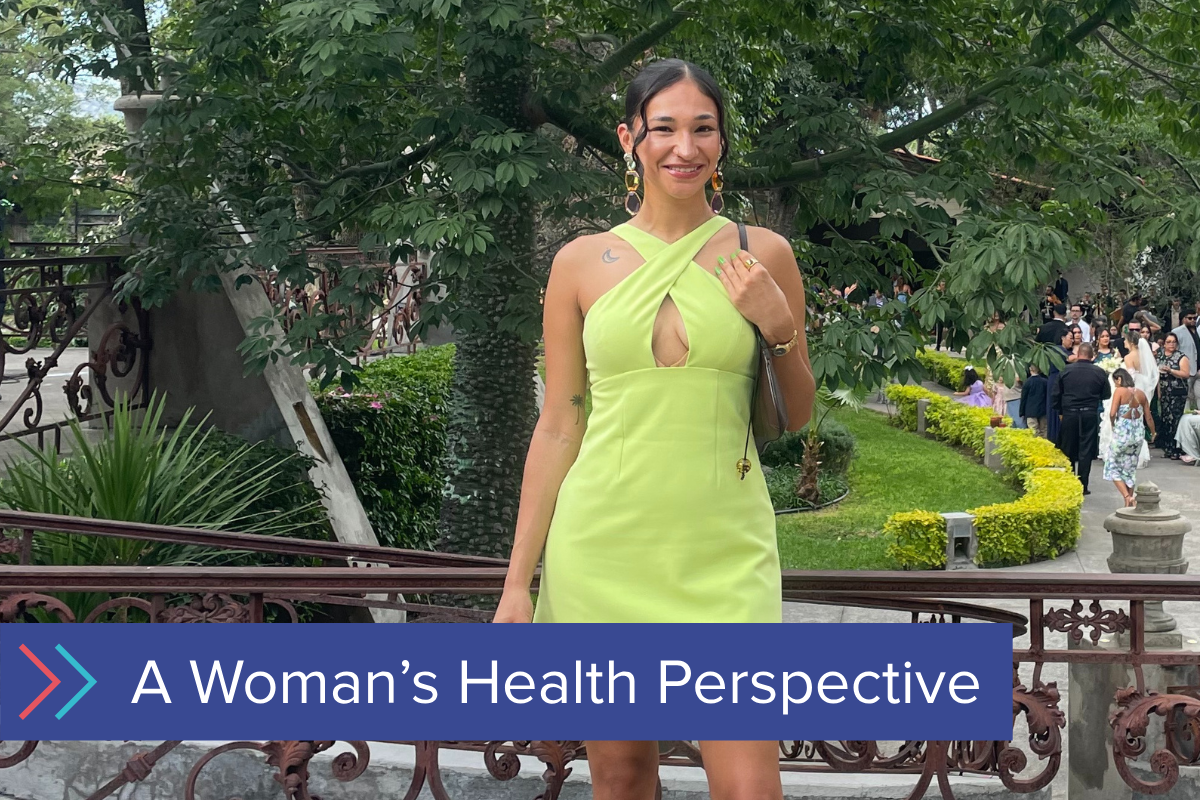
This is a firsthand account submitted through SWHR’s Share Your Story portal, as part of SWHR’s Women’s Health Perspective series.
I was 22 when I had my first miscarriage. It was heartbreaking. The doctors said fibroids may have been the cause. A dilation and curettage (D&C) was performed to clear my uterus, an intrauterine device (IUD) was inserted, and I was sent on my way—no real follow-up, no further discussion. Just grief.
Fibroids are non-cancerous growths that develop in and around the uterus. They’re incredibly common yet often minimized. Up to 80% of women will develop fibroids by the age of 50. For many of us, they come with a wide range of symptoms—back pain, constipation, abdominal pressure, frequent urination, painful cramps, and fertility complications.
By the time I was 28, my symptoms had become impossible to ignore. I had constant bloating, intense pressure on my bladder, and bleeding between periods. I assumed my IUD had expired and that it was time for a new one, so I booked an appointment with the first available OB-GYN. The doctor assured me that everything was normal and that I had nothing to worry about. I didn’t question him.
But the discomfort persisted. Over the next year, I found myself trapped in a frustrating cycle of appointments. Despite my symptoms, no one seemed particularly concerned that I had six fibroids and that my uterus had doubled in size. One doctor made me cry, “Does this look like the operating room to you?” She was upset that I had been referred to her for a procedure that she was not equipped to perform. I came seeking relief, but I left feeling humiliated and helpless.
That’s when I knew I had to be my own advocate.
A simple Google search led me to a provider who specialized in fibroids. During my very first visit, he scheduled surgery to remove them. Finally, I had a plan. Finally, someone was listening. I felt peace.
At 29, I underwent my first robotic-assisted laparoscopic myomectomy. It was the height of the pandemic, so no loved ones were allowed in the hospital. I was alone, facing my first major procedure without support—but I knew relief was on the other side. The surgery lasted six hours—much longer than expected. My fibroids were described as two grapefruits and four apples. No wonder I had been in so much discomfort. They had even shifted some of my organs.
Living with fibroids had become my normal. I didn’t fully realize how much pain and pressure I had grown used to. Once I started healing, I had this moment where I just broke down in tears—not from pain, but from the overwhelming relief. My body had been speaking to me for years, but I hadn’t known how to listen.
It breaks my heart that my story isn’t unique. So many women suffer in silence, taught to dismiss or downplay their pain. We’re conditioned to believe that heavy bleeding, debilitating cramps, and constant fatigue are just part of being a woman. But these narratives are outdated—and dangerous. When we normalize these experiences, we make room for medical gaslighting, delayed diagnoses, and the deep invalidation of women’s pain. The burden falls on us to advocate for ourselves, even when we’re already worn down from the fight.
Unfortunately, my journey didn’t end there.
Five years later, now 34, I’ve just undergone my second laparoscopic myomectomy. This time I was in a new state, better equipped to advocate for myself, and more confident navigating the system. I had eight fibroids—my largest measuring 10 centimeters.
After surgery, the pathology report revealed something unexpected. My fibroids carried a rare mutation in the FH gene, which led to a diagnosis of Hereditary Leiomyomatosis and Renal Cell Cancer Syndrome (HLRCC).
HLRCC is a rare, hereditary condition. Only about 500 families worldwide have been diagnosed—but it’s likely underdiagnosed. For women, it means fibroids can appear early and grow aggressively. It also comes with the risk of benign skin tumors and, more seriously, a significantly higher chance of developing an aggressive form of kidney cancer. Even small kidney masses can metastasize, which makes early detection and regular screening absolutely critical.
This diagnosis didn’t just affect me—it impacted my family. They now have to undergo genetic testing. If others carry the mutation, they too will need proactive care and close monitoring. What scares me the most is how easy it would’ve been to miss all of this. Had I not kept advocating, pushing, and researching, who knows how long it would’ve taken to get here?
Since the diagnosis, I’ve immersed myself in every piece of literature I can find on HLRCC. I’ve joined studies, shared my story, and provided resources to my own providers. It hasn’t been easy. But in many ways, my experience with fibroids prepared me for this new chapter. It taught me how to speak up, ask questions, and push for answers. It made me an advocate—not only for myself and other women navigating this system but now for my family too, as we take steps to understand and manage this diagnosis together.
This cause is personal to me. I won’t stop until we’re heard. If we want to change the way women experience health care, we have to keep sharing. We have to keep educating. We have to keep fighting.