

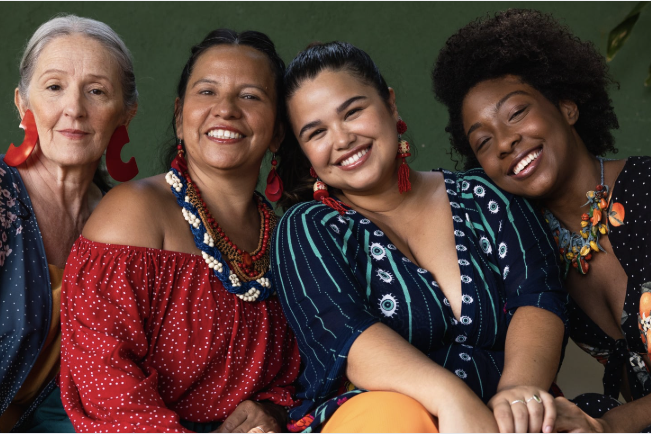
Guest blog by Rosa C. Krewson, Ph.D., Policy Director, and Chloe Urias, MPH, Health Policy Fellow, Organization for Latino Health Advocacy (OLHA)
There are over 33 million Latinas in the United States, contributing $1.3 trillion to U.S. GDP, with a total Latino purchasing power that exceeds $4 trillion. Latinas are one of the fastest-growing demographic groups in the country, but simultaneously one of the most systematically underserved groups by the health care system. These are not coincidental failures, but rather predictable outcomes of decades of underinvestment in research, clinical infrastructure, and public policy. The Organization for Latino Health Advocacy (OLHA) has released a Latina health policy brief for the 119th Congress, naming what is at stake and charting a path toward bipartisan solutions.
The Disease Burden on Latinas in the United States
Since 2000, the percentage of Latinas earning bachelor’s degrees has more than doubled — from 11% to 23%, making their graduation rates higher than those of Hispanic men. Yet the UCLA Latino Policy and Politics Institute found that even Latinas with a bachelor’s degree still earned less than white men with the same credentials. This wage gap compounds into more than $1 million in lost earnings over a lifetime, making Latinas the lowest-paid major demographic group in the U.S. workforce. Additionally, the disease burden they carry is a contributing factor impeding their ability to close this gap.
The health disparities are staggering in both their breadth and their compounding effects. The leading cause of death among Latinas is heart disease. They also have a 40% higher cervical cancer incidence than non-Hispanic white women and carry a diabetes prevalence of 11.7%, with compounding risks of kidney failure and diabetic glaucoma. Roughly half of Latinas are living with obesity, driving cascading chronic conditions that limit physical capacity and workforce participation. Latinas also face a 1.5× higher risk of Alzheimer’s disease than non-Hispanic white women — a disease for which women already shoulder 60% of the caregiving responsibilities nationally, routinely requiring them to leave the workforce or reduce hours to absorb unpaid care responsibilities. Autoimmune diseases, like lupus, disproportionately affect Latinas – conditions that are painful, chronically under-treated, and disruptive to employment long before a diagnosis is even reached. Even as women age into the workforce, menopause symptoms across the female population alone cost the U.S. economy an estimated $26.6 billion annually in lost productivity.
What makes this crisis particularly acute is the near-total absence of a financial cushion at every level. Latino workers are among those least likely to have access to paid leave — meaning a Latina managing a serious diagnosis frequently faces an impossible choice between her health and her paycheck. Compounding this, Latinas have among the highest uninsured rates of any demographic group in the country, and even those with coverage regularly encounter underinsurance gaps that put preventive screenings, specialist care, and essential medications out of reach. Geographic inequities amplify these disparities, particularly in non-expansion Medicaid states. Latinas in these states are more likely to be uninsured and to delay preventive care due to cost. Chronic illness in a woman who has no paid leave, no adequate insurance, and a wage that already reflects structural exclusion is not simply a health problem — it is a compounding economic trap from which recovery is practically impossible. The wage gap and the disease burden are not parallel crises; they are interlocking ones.
The Research Gap That Drives Disparity
The evidence gaps that drive Latina health disparities extend well beyond the laboratory. National Institutes of Health’s (NIH) Sex as a Biological Variable (SABV) policy, implemented in 2016, was designed to build upon efforts to correct the longstanding exclusion of female subjects from federally funded research by setting an expectation that sex variables be accounted for in research design and analyses. Nearly a decade later, the SABV policy remains “encouraged” rather than enforced — contributing to clinical guidelines built on populations that systematically exclude the patients most at risk. Trial protocols rarely require language access provisions, effectively barring millions of Spanish-dominant women from research that shapes their care.
Yet underrepresentation in clinical trials is only the beginning of the problem. Women of color, including Latinas, face a compounding barrier within the clinical encounter itself: they are frequently not believed. Research published in the Proceedings of the National Academy of Sciences documents that providers systematically underestimate the pain of patients of color, attributing lower pain scores and prescribing less aggressive treatment regardless of objective clinical evidence. When language barriers, a shortage of Spanish-speaking providers, and cultural dynamics that discourage assertiveness in medical settings are layered on top of this, the effect is amplified — producing diagnostic delays, undertreated conditions, and an accumulating disease burden that earlier intervention could have addressed. Conditions like endometriosis, lupus, and PCOS (now known as polyendocrine metabolic ovarian syndrome, PMOS)— already under-researched — are also among those most likely to be dismissed in the clinical encounter, forcing Latinas to spend years advocating for diagnoses that are eventually confirmed.
This credibility deficit carries acute policy consequences. For example, under H.R. 1’s proposed Medicaid work requirements, low-income enrollees are required to document employment or qualify for medical exemptions to retain coverage. For low-income Latinas managing serious chronic conditions, exemptions require that providers recognize, formally diagnose, and advocate for the severity of their illness. In a health care system that already discounts their reported symptoms, many Latinas may fail to obtain the documentation needed because their conditions may never be taken seriously enough to be properly recorded.
A Bipartisan Policy Agenda for the 119th Congress
OLHA’s Latina health policy brief for the 119th Congress advances a set of evidence-based, bipartisan solutions grounded in one foundational premise: Latina health disparities are the product of policy choices, and policies can be changed. The policy brief calls for policy change in the following areas:
Federally Funded Research
- Move NIH’s Sex as a Biological Variable (SABV) policy from “encouraged” to enforced compliance, with inclusion of pregnant and lactating women in trial protocols where appropriate
- Mandate language access and cultural competency requirements in all federally funded clinical trials
- Protect funding for the NIH, Centers for Disease Control and Prevention (CDC), Food and Drug Administration (FDA), and Health and Human Services (HHS) Offices of Women’s Health
Access, Coverage & Care Delivery
- Protect the ACA marketplace enhanced premium tax credits and close the Medicaid expansion gap in all remaining states
- Require 12-month postpartum Medicaid coverage in all 50 states, eliminating the postpartum coverage cliff when maternal mortality risk is highest
- Codify the ACA contraceptive coverage rule — all 18 FDA-approved methods covered without cost-sharing
- Fund sustainable promotoras – community health worker models to deliver culturally congruent preventive care, cancer screening, and early diagnosis in underserved communities
Maternal & Reproductive Health
- Integrate behavioral health screening and treatment into prenatal, postpartum, and pediatric care
- Mandate menopause and menstrual disorder training across Graduate Medical Education
- Increase NIH funding for PCOS, endometriosis, uterine fibroids, and menopause research
Safety & Workplace Protections
- Reauthorize and expand Intimate Partner Violence (IPV) screening reimbursement across Medicaid and Medicare
- Expand bilingual survivor services through HHS
- Establish federal menopause and caregiver workplace accommodations, including paid leave
- Expand the Caregiver Tax Credit and enforce equal pay protections
Health Equity is Not Limited to Latinas
The urgency of this agenda is compounded by current challenges in Congress and across the federal government. Programmatic changes and funding challenges with respect to Medicaid, NIH, and HHS at large risk impacting populations already carrying the heaviest disease burdens.
Latina health equity is not a niche issue but a test of whether our health system serves everyone’s needs. OLHA is actively building a coalition of researchers, clinicians, policymakers, and advocates committed to ensuring the 119th Congress marks a turning point for Latina health – and for all health. We invite readers to explore the policy brief, follow OLHA’s advocacy at latinohealthadvocacy.org, and join the work of making visible the health needs of more than 33 million women who have been treated as invisible patients for far too long.
About the Author: Dr. Rosa C. Krewson is the Policy Director and Chloe Urias, MPH, is the inaugural Health Policy Fellow at the Organization for Latino Health Advocacy (OLHA), a nonpartisan 501(c)(3) nonprofit dedicated to advancing health equity for Latino and all underserved communities across the United States. Access the Latina Health Policy Brief and follow OLHA’s congressional advocacy at latinohealthadvocacy.org.