

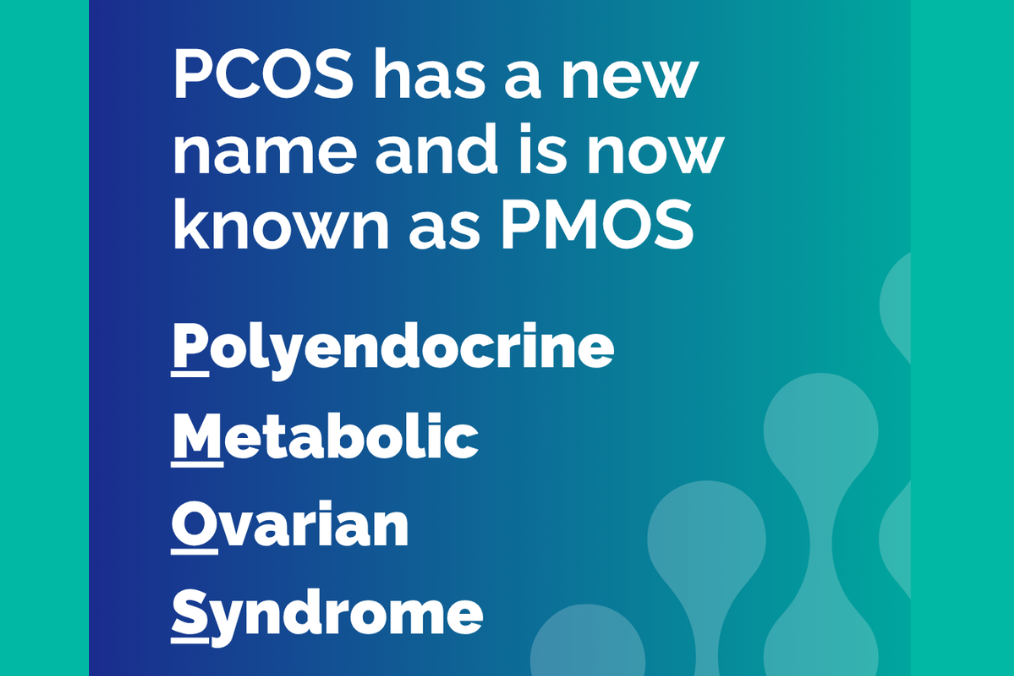
For decades, the name polycystic ovary syndrome (PCOS) told only part of the story for 170 million women. Now, after 14 years of global collaboration and the largest patient engagement ever undertaken for a medical name change, that story is being rewritten. A public article in May 2026 via The Lancet announced that the condition will now be known as Polyendocrine Metabolic Ovarian Syndrome (PMOS).
For the millions of women affected worldwide, this is more than a rebrand. It is a meaningful step toward better diagnosis and care, and long-overdue recognition of all that this condition encompasses.
Why Change the Name?
The language we use, especially in health care, matters. Disease names and descriptions can impact what providers look for, how patients understand their symptoms, and the policies that are passed.
PCOS was always considered a misnomer among health care professionals and patients, because “cysts” are not actually at the core of the condition. Although the word “cysts” is in the name, the small-fluid areas sometimes seen in PCOS (now PMOS) patients are not the same as typical ovarian cysts. In PCOS/PMOS patients, “cysts” was actually referring to small, underdeveloped follicles, which are not the same as ovarian cysts. Further, these follicles are not required for a diagnosis and can appear in people without PMOS. The former name also anchored the condition to the ovaries, but this condition is best medically characterized by a hormonal imbalance that disrupts ovulation.
In reality, PMOS is a complex, long-term endocrine, metabolic, reproductive, and dermatological disorder. Hormonal fluctuations affect weight, skin, mental health, and the reproductive system, among other areas, resulting in symptoms that impact the entire body including infertility, irregular or missed periods, excess facial and body hair (hirsutism), and severe acne. These impacts were completely invisible in the name PCOS. According to the global team that led the renaming effort, the old name contributed directly to missed diagnoses and inadequate treatment across the world.
Endocrine Society member Helena Teede, Director of Monash University’s Monash Centre for Health Research & Implementation and an endocrinologist at Monash Health, said of the announcement, in an Endocrine Society press release, “this change was driven with and for those affected by the condition and we are proud to have arrived at a new name that finally accurately reflects the complexity of the condition. Make no mistake, this is a landmark moment that will lead to desperately needed worldwide advancements in clinical practice and research.”
How Does This Name Change Impact Care?
This new name promises to have real, positive effects for how women are diagnosed and treated.
Anuja Dokras, MD, MHCI, PhD, Executive Director of the International Androgen Excess and Polycystic Ovary Syndrome (AE-PCOS) Society, SWHR PCOS Working Group member, and a senior co-author on The Lancet article, is direct in her hope for the future. She told SWHR: “The name change from PCOS to PMOS will likely allow for early diagnosis and better coordinated care between different care providers. If it increases research funding, the downstream effects on treatment and care could also be significant as we currently have several unanswered questions.”
Renaming the condition matters enormously. By leading with the words polyendocrine and metabolic, PMOS signals that this condition requires multi-system attention, not just gynecological care. Framing it as such could also prompt better cross-specialty coordination and push the condition up the research priority list.
What Happens Next?
There is a three-year transition period during which both PCOS and PMOS will coexist, supported by a major international education and awareness campaign in multiple languages. The new name will be fully embedded in the 2028 International PMOS Guideline update. In addition, SWHR will use both PCOS and PMOS during this period.
SWHR continues to engage with partners in this space and look for ways to support this exciting transition moment. The Society remains committed to supporting the diagnosis, care, and well-being of individuals living with PMOS and offers free resources on this topic on our website.
Additional resources for patients and health professionals are available from partners at bit.ly/3V85nPJ. The free, evidence-based Ask PCOS App, used in 195 countries, is also transitioning to Ask PMOS at askpmos.org.
Moving forward, we know that the condition itself and its immense impact on millions of lives has not changed. But what has changed is our ability to describe this condition accurately and inclusively – and it doing