

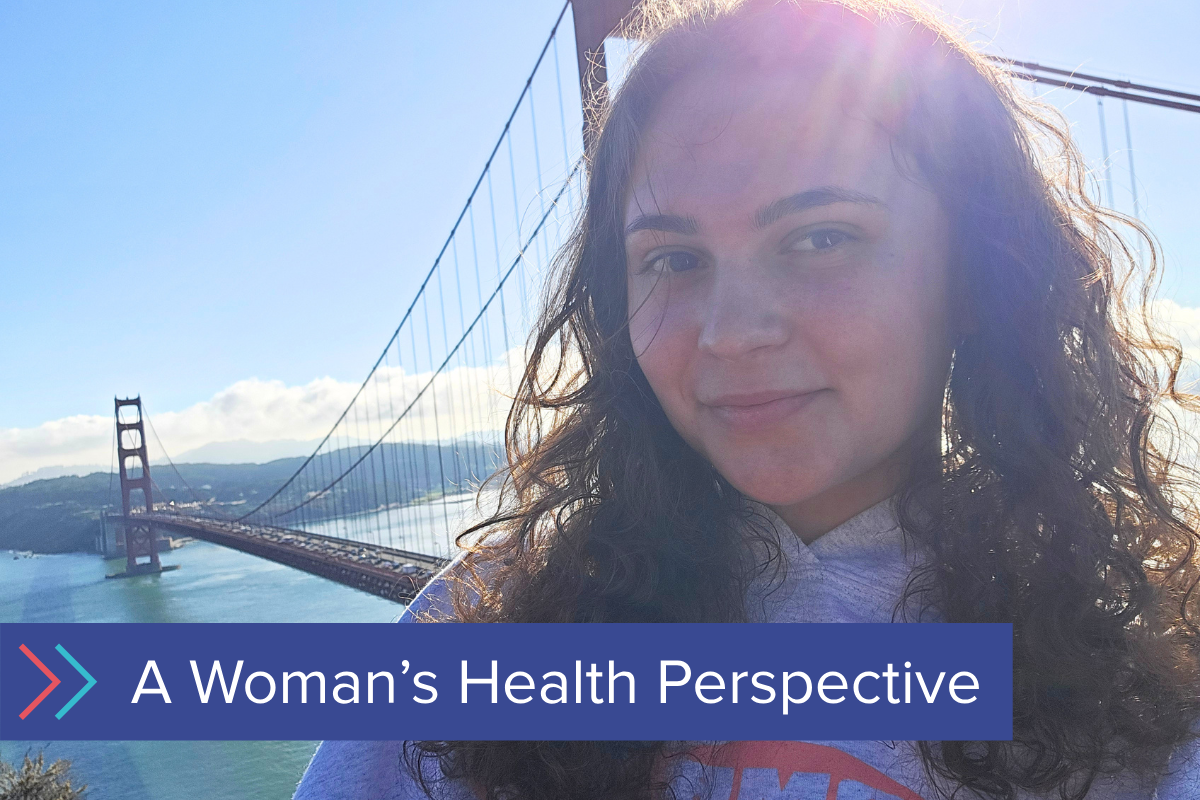
This is a firsthand account submitted through SWHR’s Share Your Story portal, as part of SWHR’s Women’s Health Perspective series.
I was nine years old when I started my menstrual cycle. By 11, I began experiencing rapid mood swings, intense anxiety, and extreme discomfort around my cycle. I assumed these were normal parts of puberty, so I didn’t talk about them.
By 13, my mental health had significantly worsened. My anxiety became debilitating, with multiple panic attacks a day, and my depression took over my life. The best words I can use to describe that time are ‘overwhelmed, scared, and confused.’ I began experiencing thoughts of self-harm, withdrew from social activities, quit the sports I loved, and eventually switched to online school.
When I finally opened up to my family, we sought medical help. I was told my symptoms were normal for my age and was sent home with minimal guidance. A month later, I reached a breaking point and went to the emergency room, where I was admitted to an inpatient psychiatric hospital. I was diagnosed with major depressive disorder and panic disorder and prescribed multiple medications, including selective serotonin reuptake inhibitors (SSRIs), sedatives, and antipsychotics. Over the next few years, I saw little to no improvement.
At one point, my providers considered a bipolar diagnosis, although my symptoms did not fully align. It wasn’t until I was 16 that my therapist asked if I had ever heard of premenstrual dysphoric disorder (PMDD). I hadn’t. We began tracking my symptoms, and a clear pattern emerged, they appeared consistently in the two weeks leading up to my menstrual cycle.
I was referred to a psychiatrist who understood PMDD, and my treatment shifted. I was able to discontinue my previous medications and begin birth control. For the first time, I felt stable. I realized I had never truly known what “normal” felt like until then.
Now at 19 years old, I experience little to no symptoms. Looking back, my experience reflects how often conditions like PMDD are misunderstood, overlooked, or misdiagnosed. Years of my life were shaped by a condition that went unrecognized.
Today, as a college student, I advocate for women’s mental health and PMDD awareness on my campus. I have seen how many others share similar experiences of dismissal and confusion. My story is not unique, and that is exactly the problem.
Women should not have to struggle to be heard or fight to receive accurate care. Greater awareness, research, and understanding of conditions like PMDD are essential to improving outcomes for those affected.