

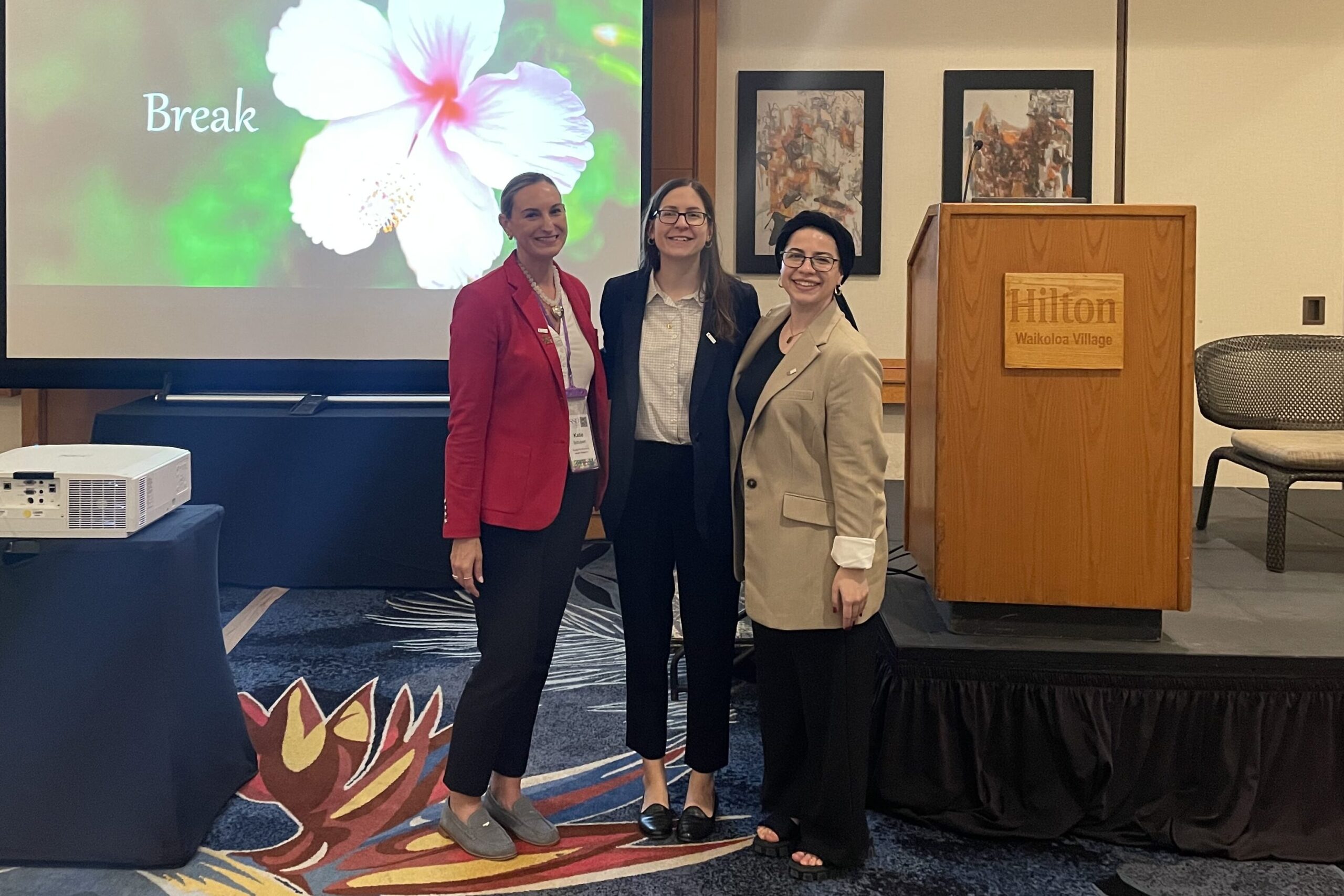
At the 20th Annual Meeting of the Organization for the Study of Sex Differences (OSSD), the Women’s Health Research Cluster hosted a pre-meeting symposium entitled, “Integrated Women’s Health: Brain, Body, and Behavior,” focusing on advancing interdisciplinary sex differences research spanning basic science, translational medicine, clinical research, neuroscience, immunology, cardiovascular health, endocrinology, and women’s health across the lifespan.
The Society for Women’s Health Research (SWHR) presented a session at the symposium titled “Advancing Sex Differences Science in a Changing Advocacy Environment,” serving as a starting point for many advocacy and communication conversations throughout the OSSD Annual Meeting in Kona, Hawaii.
Why This Moment Matters for Sex Differences Advocacy
SWHR President and CEO Kathryn Schubert opened the session, framing the broader scientific and policy landscape of women’s health research. She emphasized that despite decades of progress in sex differences research, sizable gaps remain in funding, implementation, and translation into clinical care. She highlighted ongoing uncertainty around federal research funding while also recognizing increased public and policymaker awareness of women’s health and sex differences research in recent years. Across the scientific community, Schubert said, women’s health is increasingly being recognized as a critical area for innovation and investment, with growing attention to precision medicine, reproductive health, menopause, brain health, cardiometabolic disease, and immunology.
Schubert also discussed implementation of the 2016 NIH Sex as a Biological Variable (SABV) policy, which celebrates its 10-year anniversary this year. The policy helped drive greater inclusion of both sexes in research studies, particularly in human research. However, inclusion alone is not enough. If researchers include women in studies but fail to analyze sex-specific differences, we still miss opportunities to understand differences in disease progression, variability in treatment response, distinct symptom presentation, and medication efficacy and safety.
Science as a Catalyst for Advocacy
Women’s brain health was a major focus of the symposium, specifically the importance of integrating neurologic and mental health into broader women’s health advocacy efforts.
SWHR Programs Manager Syreen Goulmamine highlighted that women account for nearly two-thirds of Americans living with Alzheimer’s disease, women have a 3.25-fold higher risk of suffering from migraine than men, and women have disproportionately higher rates of depression and anxiety disorders. Hormonal transitions, caregiving responsibilities, chronic stress, and structural inequities further shape women’s neurologic and mental health outcomes. Goulmamine emphasized that many neurologic and psychiatric conditions affecting women remain underrecognized, underdiagnosed, or fragmented across health care systems; delayed diagnosis and symptom dismissal are not isolated issues, but consequences of broader gaps in provider education, research translation, and systems-level implementation. Throughout, Goulmamine reinforced that brain health cannot be separated from overall women’s health.
Goulmamine highlighted the disconnect between scientific discovery and real-world implementation, also referred to as the “evidence-to-action gap.” Although sex differences research continues to expand, she noted that clinical guidelines, provider education, and health systems often lag behind emerging evidence. Women patients remain underrepresented in some clinical research areas, and many health systems still fail to operationalize sex-specific evidence into routine care. To address these challenges, Goulmamine recommended:
- Expanding provider education on sex differences research
- Increasing inclusive clinical trial participation
- Integrating brain health into broader women’s health policy efforts
- Improving communication between scientists, policymakers, patients, and communities
- Elevating patient stories and lived experience alongside quantitative data
Communicating Sex Differences Science for Impact
The final session, presented by SWHR Communication Director Monica Lefton, focused on science communication and the growing importance of translating complex research into accessible, audience-centered messaging.
Lefton encouraged researchers to think strategically about specific audience needs when communicating science to policymakers, advocacy organizations, media outlets, and the general public. Rather than relying solely on statistics or technical findings, she emphasized the importance of connecting data to lived experiences and tangible outcomes. Researchers were encouraged to:
- Build relationships with their organizational communications teams
- Share findings proactively with media and reports
- Engage with advocacy organizations
- Maintain scientific accuracy, even while paraphrasing research to improve accessibility
- Connect research findings to real-world implications for patients and communities
A Broader Movement in Women’s Health
SWHR’s symposium underscored a growing reality shift happening in women’s health: the impact of scientific discovery is limited without implementation, advocacy, communication, and sustained investment; scientific expertise alone is no longer enough. Increasingly, researchers are being called upon to serve as educators, advocates, and communicators too. SWHR aims to help support and equip researchers with the resources they need to communicate their research and ultimately advance women’s health. Check out more resources for researchers here:
Science & Research Advocacy Organizations
- American Association for the Advancement of Science (AAAS)
- American Women in Science (AWIS)
- National Academies of Sciences, Engineering, and Medicine
- NIH Office of Research on Women’s Health (ORWH)
- Organization for the Study of Sex Differences (OSSD)
- Patient-Centered Outcomes Research Institute (PCORI)
- Research!America
- Society for Women’s Health Research (SWHR)
Advocacy & Science Communication Resources
- AAAS Center for Public Engagement with Science
- SWHR’s From Awareness to Action: A Guide to Women’s Health Advocacy
- SWHR’s Share Your Story
- SWHR Share Your Research
Funding & Career Development Opportunities