

Guest blog by Cristy Gallagher, Obesity Care Advocacy Network (OCAN)
July 1 is right around the corner, which means it’s almost time for the launch of the new Medicare GLP-1 Bridge program. The Bridge program will expand access to obesity treatment for older Americans on Medicare.
Obesity affects two out of three women in the United States. It also affects women differently than men, with distinct hormonal, reproductive, and psychological burdens. Women face more obesity-related disease risks than men—including hormonal disorders, heart disease, and increased weight stigma. Women also carry a disproportionate share of obesity-related health consequences.
Obesity treatment options for women have historically lagged, but with the new Medicare GLP-1 Bridge program, there’s a real pathway to care opening.
For decades, a statutory ban has prevented older adults from receiving Medicare coverage for obesity treatments, but starting July 1, the Bridge program will serve as the Centers for Medicare & Medicaid Services (CMS) vehicle to provide expanded access to GLP-1 obesity medications. Eligible Medicare beneficiaries will gain access to these medications for a flat $50 per month.
Most Medicare-eligible women don’t know that obesity treatment coverage exists for them. Data from the Obesity Care Advocacy Network’s survey earlier this year revealed that 82% of the Medicare population is unaware that this coverage is coming—even though more than 25% are medically cleared for treatment. That awareness gap is exactly why spreading the word matters.
To qualify for coverage, there are certain requirements a patient must meet, depending on which of the three clinical pathways they align with. The three pathways are:
- Body Mass Index (BMI) ≥ (greater than or equal to) 35 for weight management alone
- BMI ≥ 30 with heart failure with preserved ejection fraction, uncontrolled hypertension, or chronic kidney disease stage 3a+
- BMI ≥ 27 with pre-diabetes, prior heart attack, prior stroke, or symptomatic peripheral artery disease
It’s also important to know that you must be enrolled in a Medicare Part D prescription drug plan or a Medicare Advantage plan with prescription drug coverage to participate in the Bridge program. Individuals who are already receiving Medicare-covered GLP-1 therapy through their Part D program are not eligible for the Bridge program.
Additionally, your provider must attest to the applicable pathway via prior authorization at the time the obesity medication is initiated.
Women face common barriers in health care—like diagnostic gaps, provider bias, and prior authorization hurdles. Therefore, women specifically can benefit from the Bridge program as long as they know how to start the access process.
How to Use the Bridge Program
Women should start by visiting their provider to determine if a GLP-1 medication for obesity treatment is appropriate and safe given your individual medical history and co-existing conditions. Once your doctor has deemed you eligible, they will send the prescription to your pharmacy. Medicare’s central processor will then review the prescription and the prior authorization submitted by your doctor. The central processor will automatically send the approval to your pharmacy.
Once at the pharmacy, you’ll be asked to pay $50 per 30-day supply, and your Part D plan will not be billed. Keep in mind that the $50 co-payment for the Medicare GLP-1 Bridge program does not count towards your Part D deductible or out of pocket cap. Your pharmacist will walk you through how to take the medication, potential side effects, and when to check back in.
Your clinical team will help manage your dose over time, handle the renewal paperwork, and help you navigate any side effects along the way.
The federal government is taking real steps to treat obesity as a chronic disease rather than a lifestyle choice by offering the Bridge program to support mediation access. This shift matters enormously for women, who have too often been dismissed or undertreated in their obesity care.
Coverage for obesity care exists—and it’s navigable. If you think you may qualify and benefit from this kind of care, schedule an appointment with your health care provider and start the conversation today. There’s no better time to act for your health.
OCAN Resources on the Medicare GLP-1 Bridge Program
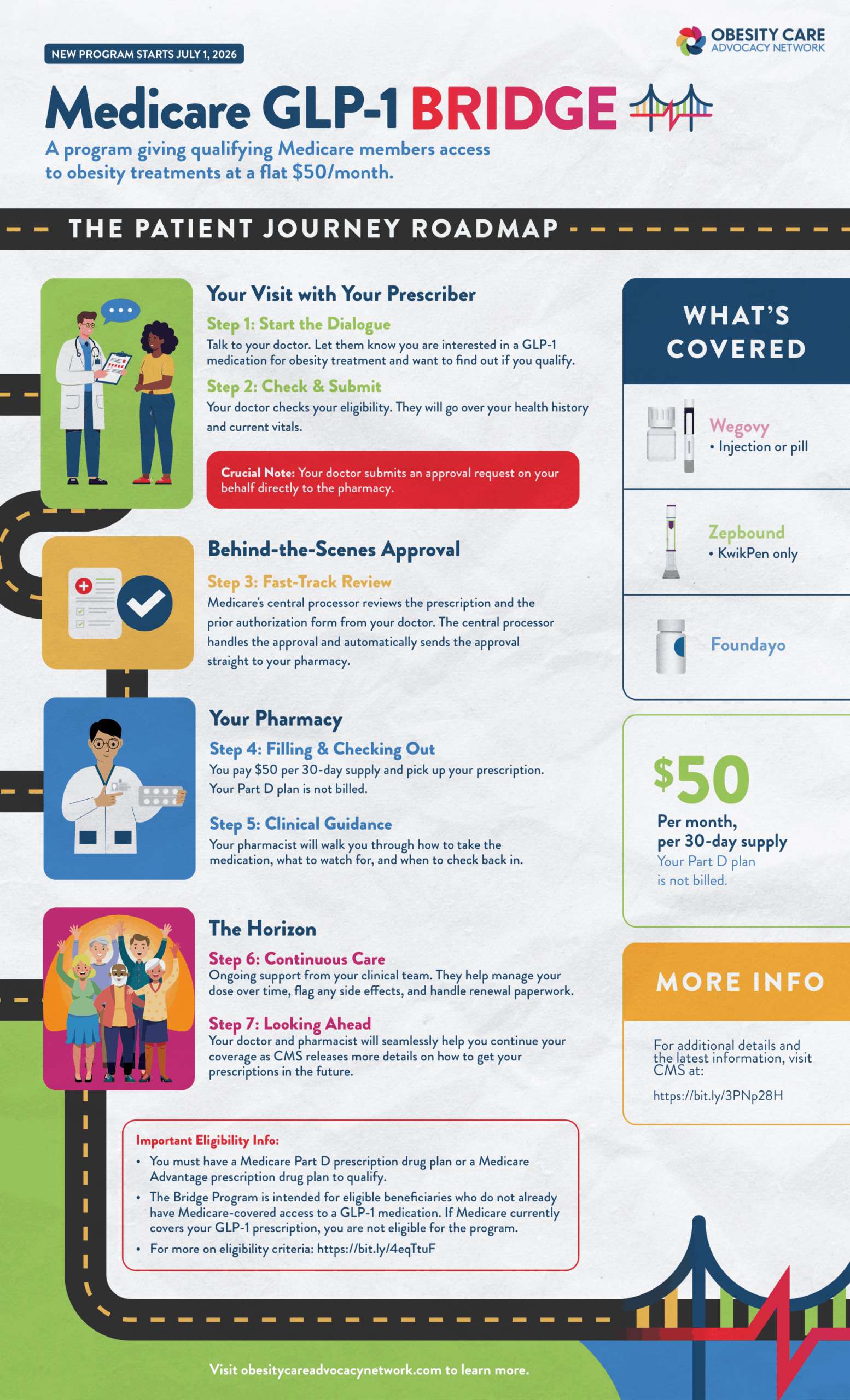
- Patient Roadmap: https://obesitycareadvocacynetwork.com/news/medicare-glp-1-bridge-the-patient-journey-roadmap (above)
- Eligibility Infographic: https://obesitycareadvocacynetwork.com/news/medicare-glp-1-bridge-eligibility-infographic
For more information on the Bridge program, please visit the OCAN website, https://obesitycareadvocacynetwork.com, or contact the Centers for Medicare and Medicaid Services (CMS) at glp1demo@cms.hhs.gov.