


By Isabel Lopez, Public Affairs Intern
Obesity is defined as an excessive or abnormal accumulation of body fat and, more importantly, it is a complex, chronic disease. Obesity is affected by many different factors including a person’s sex, genetics, health conditions, and mental health as well as their environment and financial situation.
It is critical for women living with obesity to understand that each experience is unique, and may even change over her lifespan.
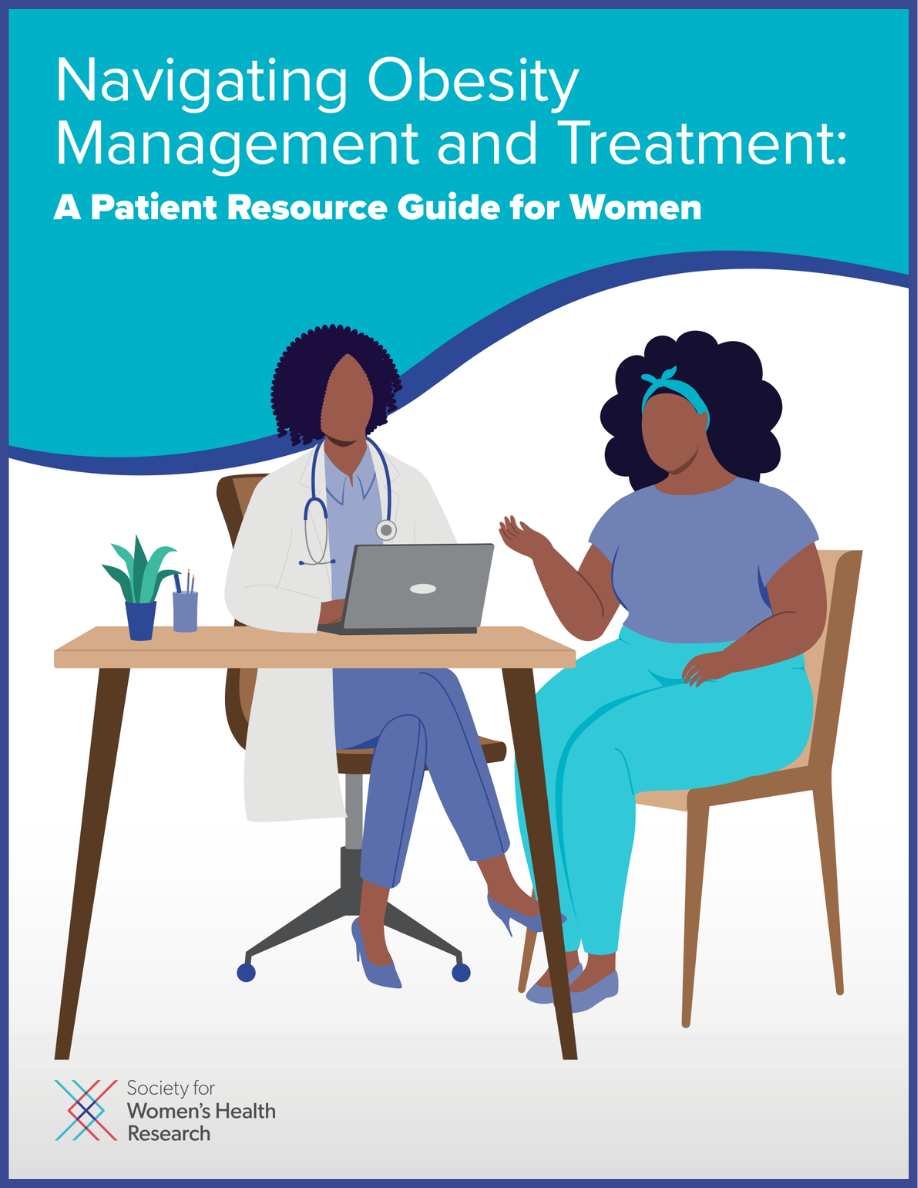 To help women better understand their options for obesity management and treatment, the Society for Women’s Health Research (SWHR) created Navigating Obesity Management and Treatment: A Patient Resource Guide for Women. This resource guide covers how to seek care for obesity, medical support options for obesity, and how patients can apply their insurance coverage for obesity treatments.
Sections of the guide specifically cover:
- Understanding obesity in women
- Identifying risk factors and comorbidities
- Deciding on a care plan
- Understanding the use of obesity medications
- Navigating insurance coverage
The Risk Factor Worksheet at the back of the guide helps patients track their individual obesity risk factors including medications, family history, diagnosed conditions, physical activity, eating habits, and sleep habits.
It is never too late to begin seeking treatment for obesity. Managing obesity is a lifelong process, and while it is a treatable disease, it is also a chronic disease, which means its management requires patients to maintain holistic and personalized strategies.
Obesity remains chronically undertreated and over stigmatized, and the longer the condition is left untreated, the more significant the potential health impacts.
Learn more by exploring the full guide here, and check out additional obesity care resources from SWHR here.
Breaking through weight stigma and bias starts with awareness and encouraging patients to seek care without judgement. SWHR is proud to support women living with obesity at every stage of life.