

By Monica Lefton, Senior Director of Communications
While great strides have been made in women’s health research in recent years, research inclusive of pregnant and lactating populations continues to lag. An estimated 90% of women take at least one prescription drug during their pregnancy, but 70% of medications approved by the Food and Drug Administration (FDA) have no human pregnancy data and 98% of medications have insufficient data to determine risk to infants. Pregnant individuals are often left with little to no evidence to guide their health decisions around prescription medication use, resulting in real-world impacts for patients and families.
Individuals living with narcolepsy may be all too familiar with this reality. Many women living with narcolepsy report concerns about medication safety during pregnancy and lactation as well as dissatisfaction with preconception information and guidance.
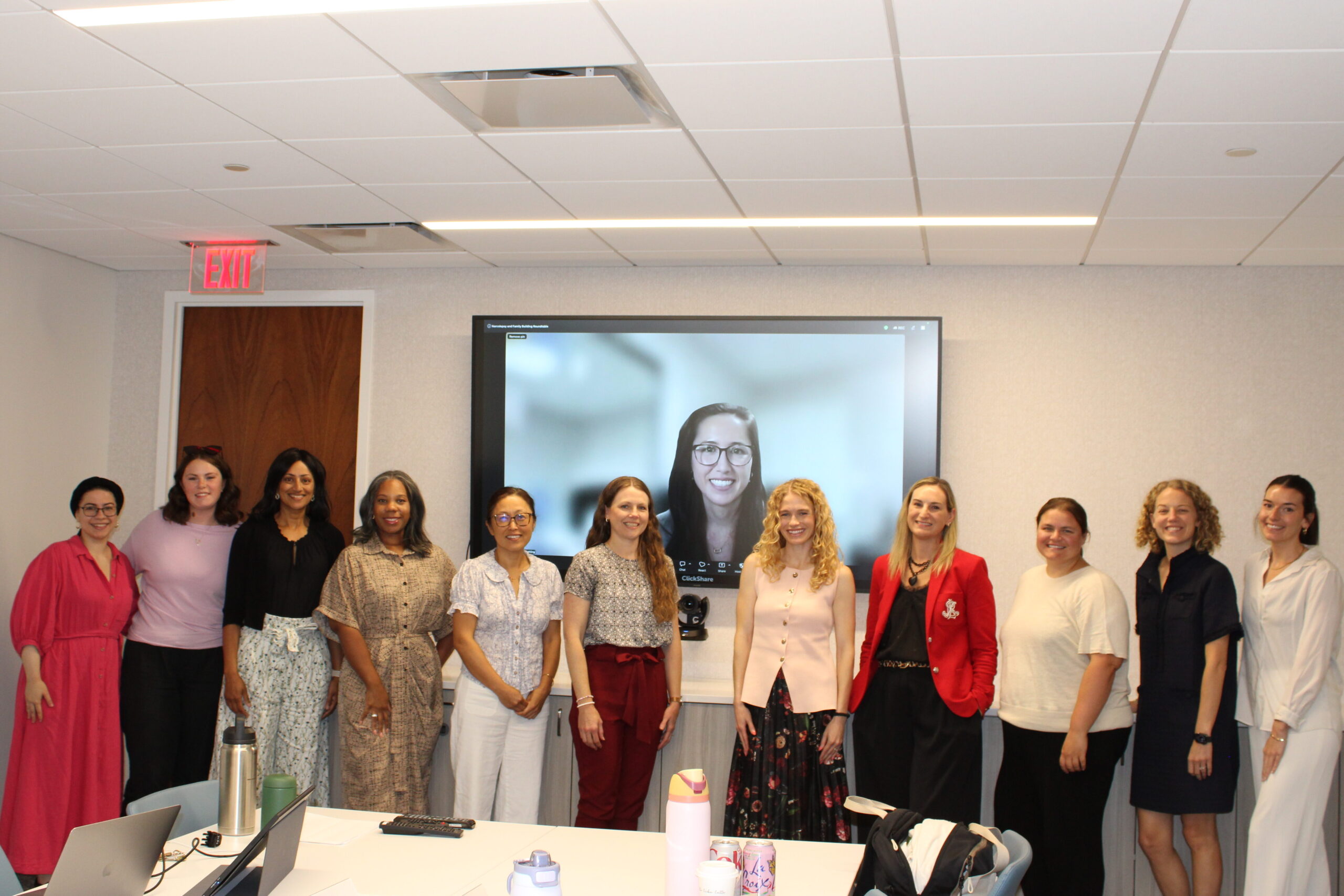
This summer, the Society for Women’s Health Research (SWHR) convened an interdisciplinary Narcolepsy and Family Building Working Group of researchers, health care providers, and patient advocates for a closed convening to discuss family building for women living with narcolepsy with an emphasis on gaps in research, care, and practice.
The Patient Experience
Narcolepsy is a chronic neurological disorder characterized by persistent and excessive daytime sleepiness, an inability to regulate sleep-wake cycles, and, in some cases, cataplexy (sudden changes in muscle tone that can be triggered by strong emotions), sleep paralysis, and hypnogogic and hypnopompic hallucinations. There are two types of narcolepsy – Narcolepsy Type 1 (NT1) is associated with cataplexy and Narcolepsy Type 2 (NT2) does not present with muscle weakness.
There are known sex and gender differences in narcolepsy; most notably, women are more likely to experience a longer pathway to an accurate diagnosis, from two up to 12 years longer than men. There have also been shown to be sex differences in symptoms, including depressive symptoms.
Even with these known trends, research on women with narcolepsy is minimal, particularly related to pregnancy and lactation. In the absence of robust clinical data, patient stories are a powerful tool to better understand the breadth of narcolepsy experiences, especially during pregnancy. SWHR is grateful to those who shared their personal health journeys, expertise, and family caregiving experiences during the roundtable convening. While each patient’s experience is different, common themes emerged around difficulties navigating uncertainty and risk, limited provider support and referral pathways, and access to care.
Emily Clegg Barker, PhD lives with NT1 and was diagnosed at age 20; she has three children, the first of which she had at age 25. When Dr. Barker saw an infertility specialist during pregnancy, she was advised to go off her medication when trying to conceive. “That felt impossible,” she said, so after consulting with her sleep specialist and another sleep expert, she decided to stay on her medication until she had a positive pregnancy test. Dr. Barker did not see her sleep specialist during any of her pregnancies but noted it would have been beneficial to have an ongoing dialogue regarding symptoms and safety. As a peer support leader, she encourages others to keep an open conversation with their sleep specialist throughout pregnancy and breastfeeding, even if refraining from narcolepsy medications. In her peer support role, Dr. Barker has spoken to many women who had monitored pregnancies while continuing narcolepsy medications and observed healthy outcomes.
Ginna Freehling lives with NT1 and was a college sophomore when her symptoms began. She was misdiagnosed with sleep apnea and advised not to seek a formal narcolepsy diagnosis by several adults (including doctors), for fear a formal diagnosis would limit her quality of life; she was officially diagnosed with narcolepsy three years after symptom onset. During her preconception period at age 29, she had proactive conversations with both her sleep specialist and a maternal fetal medicine (MFM) specialist to understand her care options. Freehling understood that the narcolepsy and pregnancy conversation was not about “risk versus benefit but risk versus risk, what is the risk to the mother versus what is the risk to the child.” She set preconception medication and wakefulness plans and decided to stop taking her medication of sodium oxybate prior to conception. Freehling was determined to remain off medications as long as possible into the pregnancy but had a back-up medication plan if needed. Freehling primarily managed her pregnancy with the help of an MFM and did not see her sleep specialist during her pregnancy.
During the roundtable, Kelsey Biddle, MD, who lives with NT1 and is a PGY2 Psychiatry Resident at Brigham & Women’s Hospital, shared preliminary results from a narcolepsy and pregnancy mixed-methods survey and interview study she co-led. Results from the study published in 2025 found that 69% of respondents were on at least one medication during preconception and 39-46% were on at least one medication during pregnancy. Narcolepsy symptoms and severity varied between patients and across the perinatal continuum. For example, symptoms appeared to worsen after pregnancy (postpartum) for 40% of respondents, and 50% said symptoms were worse during breastfeeding. Respondents reported their most helpful resources during pregnancy were hearing other people’s stories, their own prior labor experiences, and narcolepsy support organizations.
While each patient experience is unique, sharing these stories is an important reminder that pregnancy is possible and safe for women living with narcolepsy. Unfortunately, it is not uncommon for individuals living with narcolepsy (as well as individuals living with other chronic conditions) to face ableism and fear in the health care system, being told they cannot do things like pursue certain career paths or have a family due to their disorder. People have a perception of what it means to live with narcolepsy, but that doesn’t always reflect reality; “it’s important to recognize that people living with narcolepsy can achieve success in many realms without limiting their ambitions, while also acknowledging that the condition can make certain aspects of life uniquely challenging,” Dr. Biddle said. Preparing providers to have supportive, proactive conversations with patients living with narcolepsy can help combat these misconceptions.
Empowering Clinicians to Start the Conversation
Patients and providers alike at the roundtable agreed that clinicians, including both sleep specialists and maternal health providers (such as MFMs, obstetrician-gynecologists (OB/GYN), or midwives), need to shift their approach to care. Specifically, they need to start conversations about pregnancy with patients living with narcolepsy earlier – perhaps even before a patient raises it themselves. These conversations, working group members emphasized, should not jump directly to ‘stop taking your medication during preconception and pregnancy.’ While there are limitations to the recommendations and information a provider can share about narcolepsy medications during pregnancy (due to a limited evidence base), early, open conversations are crucial to ensuring shared decision-making for individuals. Common questions for a family building discussion may be:
- Can I have a pregnancy or be a parent while living with narcolepsy?
- How might my narcolepsy symptoms evolve during pregnancy, across each trimester and immediately postpartum?
- How far in advance should I establish care with an OB?
- What other health changes should I be monitoring during pregnancy (blood pressure, anemia, mental health)?
- Which narcolepsy medications should or can I take during pregnancy? In what dosage and during which trimester(s)?
- How severe will my symptoms, such as cataplexy, be during pregnancy and postpartum?
- What additional support might I need during my pregnancy? Are there workplace accommodations I should request? Will I need to take disability or short-term leave?
Having preconception conversations with a sleep specialist well before pregnancy allows patients to make more informed plans for possible medication changes, work accommodations, additional support needs, or symptom management throughout pregnancy – and can help address concerns around unplanned pregnancy. Some narcolepsy medications decrease the efficacy of birth control, making it even more necessary that sleep specialists engage in family building conversations with their patients proactively. It is not uncommon for patients to only see a maternal health provider after they are already pregnant (not before), so early family building conversations with a sleep specialist can also give patients access to maternal health information sooner. Additionally, given the difficulty some patients face in timely access to maternal health providers, these interactions can be an opportunity for sleep specialists to refer patients to maternal health providers. Tammy Anderson, Executive Director of Wake Up Narcolepsy, even recommends starting some of these conversations during adolescence, with the parents of children and teens living with narcolepsy; some parents worry that their daughters will never have children because of their narcolepsy, but talking about family building proactively may help reassure them or help them keep an open mind: “we need to have these conversations with younger populations, even though it can be hard,” she said.
Roundtable members also agreed that sleep specialists should consider how they might shift their approach to patient follow-up to support more frequent check-ins for individuals living with narcolepsy throughout the pregnancy period (from preconception to postpartum), even if they do not have regular appointments scheduled. “In the sleep clinic, we think in six-month or one-year increments, but in pregnancy, you really need to be thinking in weeks and months,” said Margaret Blattner, PhD, MD, Senior Associate Consultant at Mayo Clinic. This may feel strange and uncomfortable for sleep specialists at first, she pointed out, but increased touch points are crucial for patient care. Patients tend to downplay their narcolepsy symptoms or not mention other health habits they bring into pregnancy when speaking with maternal health providers, so having a provider with narcolepsy expertise check in and ask specifically about narcolepsy symptoms during pregnancy can help foster important conversations about patient safety, for both mom and baby.
The Research and Guideline Gap
The root of many questions brought up during the roundtable stemmed from a lack of research and evidence. The working group raised several areas where research could expand to support patient outcomes and decision making: understanding the natural progression of narcolepsy (both type 1 and type 2 ) during pregnancy; narcolepsy symptoms and severity by trimester and during lactation and postpartum; medication use and dosage (specifically oxybate use) during preconception, pregnancy trimesters, lactation, and postpartum; infant birth outcomes and neurological development of children with mothers living with narcolepsy; maternal health outcomes; disparities in narcolepsy diagnosis and care; stakeholder surveys, including provider education, experience, and comfortability treating narcolepsy during pregnancy.
There was also interest in better understanding sleep patterns during pregnancy generally. Pregnancy is considered a state of hypersomnolence, where individuals have an urge to sleep; how, then, might this life stage impact patients with narcolepsy differently, the working group asked. The larger information gaps we still have about pregnancy are reflected in the gaps around narcolepsy as well.
Registries and electronic health record (EHR) databases could offer helpful starting places to conduct research on these topics. The working group discussed creating new or leveraging existing pregnancy exposure registries to better collect patient data across medication use, narcolepsy onset and symptoms, geographic location, and race and ethnicity.
Even as we await more robust research, building care guidelines for patients today was specifically called out as an area of need by the working group members. The lack of guidelines around care recommendations for pregnant individuals living with narcolepsy as well as how to effectively lead family building conversations within these populations leaves both providers and patients lacking adequate information. Guidelines for both sleep specialists and maternal health providers on how to support patients living with narcolepsy through family building were recommended. In the absence of deeper research, working group members suggested several ways to still create helpful, evidence-based guidelines: use GRADE methodology; publish algorithms or flow charts of care; showcase the clinical workflow from high performing patient centers; offer emotional support recommendations; outline strategies and tools for waking up and staying awake during pregnancy and postpartum. Epilepsy was also mentioned as an example of a disorder that has made great strides in research, care guidelines, and counseling as it relates to pregnancy, which could offer a helpful case study for future narcolepsy recommendations.
Policy Opportunities
There are many opportunities to improve outcomes for patients living with narcolepsy through policy levers. At the federal level, the federal appropriations process presents a valuable opportunity to elevate narcolepsy as a congressional priority. For example, while the House Appropriations Committee’s fiscal year 2027 report language includes references to sleep health broadly, it does not specifically mention narcolepsy. Encouraging policymakers to include report language addressing narcolepsy in future funding bill reports would signal congressional recognition of the condition and help raise its visibility among federal agencies. At the same time, engaging the Congressional Sleep Health Caucus can also help build support for these efforts, educate lawmakers about the challenges facing people living with narcolepsy, and reinforce the importance of prioritizing research and improved access to care.
In addition to prioritizing research, there also exists avenues for better understanding how research is being conducted and where research dollars are being spent. Creating an RCDC (Research, Condition, and Disease Categorization) category to track narcolepsy-specific funding across the National Institutes of Health (NIH), for example, could be helpful.
Working group members also discussed the importance of being vocal advocates for sleep health policy; they recommended narcolepsy organizations and advocates continue to send letters to the administration requesting improved narcolepsy funding and research and attend open meetings on the topic, such as public meetings of the NIH National Heart, Lung, and Blood Institute’s Sleep Disorders Research Advisory Board.
In addition to research, coverage and access policies are critical to supporting those living with narcolepsy. Step therapy (a rule requiring patients “fail” use of lower cost medications before moving to a more expensive option) and prior authorization (a process that requires review and approval of specific drugs before it is paid for, even if prescribed by a provider) were two specific policy challenges reviewed at the roundtable. These policies implemented by health insurers can slow down patient access to effective treatment; for pregnant individuals, on a shorter care timeline (nine to ten months while pregnant), “most people run into issues with prior authorization,” noted Anita Valanju Shelgikar, MD, MHPE, Professor of Neurology at the University of Michigan and Immediate Past President and Secretary/Treasurer of the American Academy of Sleep Medicine. Some patients also have concerns with maintaining consistent access to medication with lengthy pre-authorization processes if they stop ordering medication during pregnancy. Improving patient access to and coverage of medications could ease the patient’s burden not only during pregnancy but across their lifespan.
Building Healthier Families
The overarching sentiment of the roundtable was that even in the absence of a robust research base for narcolepsy and pregnancy, a healthy pregnancy while living with narcolepsy is possible. “Narcolepsy is not a contraindication for pregnancy,” said Dr. Blattner. “It is complicated, and there are a lot of things that go into this topic, but by itself, this [disorder] does not mean you can’t have babies.”
While there are great strides to be made in research and care guidelines as it relates to narcolepsy and family building, there are resources available today and many ways to have collaborative care conversations between providers and patients – no one has to go through this alone, working group members echoed. SWHR remains committed to improving the lives of women living with narcolepsy across the lifespan, including during family building, and will continue to collaborate with advocates, policymakers, researchers, providers, and patients through its narcolepsy program and through the Coalition to Advance Maternal Therapeutics.