

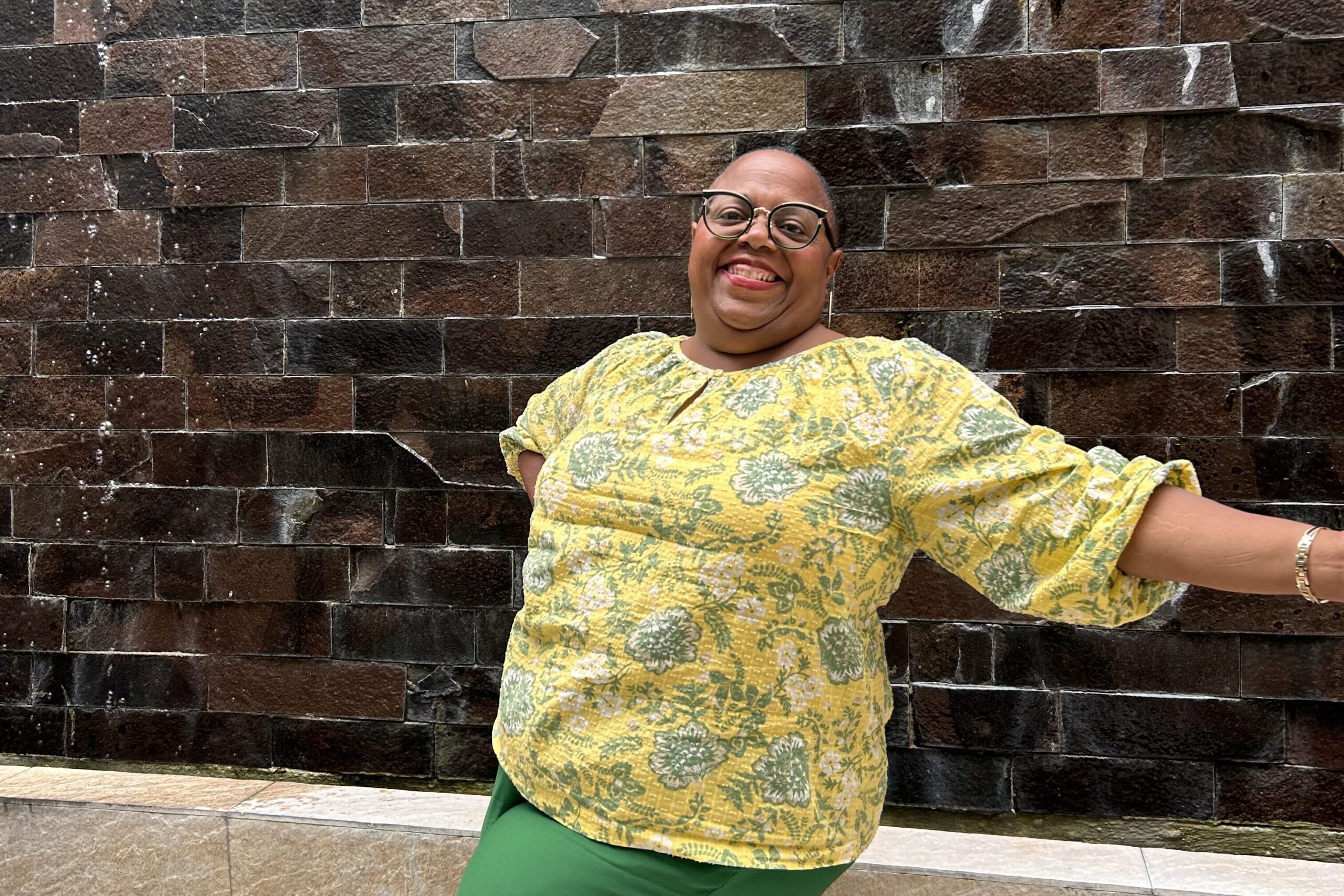
Guest blog by Michele Tedder, MSN, RN, Obesity Advocate
The Society for Women’s Health Research spoke with Michele Tedder, MSN, RN, about living with obesity; advocating for better obesity care; and her role serving as caregiver for both those living with obesity and as an individual with obesity. These responses have been edited for length and clarity.
How has living with obesity impacted your role as a caregiver—for your family and others?
In many ways, living with obesity has made me a better and more informed caregiver. My own experiences have helped me guide my children on their journeys by teaching them to understand obesity as a chronic disease and, just as importantly, how to advocate for themselves when seeking comprehensive obesity care.
As a mother, I want my children to understand that needing treatment for obesity is not a personal failure. They deserve access to evidence-based care, informed providers, and the full range of appropriate treatment options without shame or judgment.
Outside of traditional providers, who do you lean on for support while navigating obesity care, and how has living with obesity impacted the caregiving you receive or need?
My family has been an important source of support. I have also intentionally sought community through social media and relationships with friends and peers who are living with obesity.
There is something uniquely valuable about connecting with people who understand the lived experience of this disease.
Clinical care is essential, but so are community, shared experience, and the opportunity to talk openly with people who understand the emotional and practical realities of managing obesity over a lifetime.
We know there are sex differences in obesity, and we know that women perform the vast majority of formal and informal caregiving in this country. How does living as a woman with obesity uniquely impact your experience as a caregiver and person?
The intersection of being a woman, a person living with obesity, and a nurse has created a unique experience for me.
Because I am a nurse, friends and family often come to me for guidance about health concerns, including obesity. At the same time, my professional credentials have not insulated me from the challenges of navigating obesity care myself. I have had to learn how to navigate complex health care systems, first to better understand my own condition and then to advocate for the comprehensive care I needed.
Those experiences have shaped how I show up for other people. I frequently find myself advocating for others both personally and professionally, because I understand how difficult it can be to navigate a system in which weight bias and stigma can influence whether people are heard, believed, and offered appropriate treatment.
Women are so often expected to care for everyone else. Living with obesity has reinforced for me that women also deserve the time, resources, support, and quality care necessary to care for themselves.
Health needs change over time, particularly for women as they age. How are you navigating living with obesity as you age? How do you anticipate the caregiving you may need will change? What steps are you taking toward healthy aging while living with obesity?
At 63, I feel fortunate to be aging well, and I believe access to comprehensive obesity care has played an important role in that. I work with a trainer two to three times per week, focus on nutrition rather than dieting, and make a conscious effort to manage stress and protect my overall health. My goal is not simply weight loss. It is maintaining strength, mobility, metabolic health, independence, and quality of life as I age.
One of my greatest concerns is what happens to my access to treatment when I turn 65 and transition into a different insurance environment. Emerging efforts to expand access to GLP-1 medications for older adults are encouraging, but patients may still face complicated eligibility requirements and coverage rules.
Healthy aging should not mean losing access to treatment that has helped someone successfully manage a chronic disease. As I think about my own future caregiving needs, maintaining continuity of evidence-based obesity care is an important part of preserving my health and independence.
There have been great strides in obesity education, awareness, and care access in recent years. What additional change would you like to see in the obesity caregiving space in the next five years? Ten years?
I would like to see every health care discipline fully embrace the evidence that obesity is a chronic disease and treat it accordingly.
Despite everything we now know about the biology and complexity of obesity, access to comprehensive care continues to be influenced by systemic barriers, societal bias, and weight stigma. Obesity remains one of the few chronic diseases for which people are routinely expected to prove that they have tried hard enough or are somehow “worthy” of treatment. We would never make that the standard for someone seeking care for cancer, asthma, hypertension, or heart disease. It should not be the standard for obesity.
Over the next five to ten years, I want to see comprehensive obesity care become part of routine health care, not exceptional care. That means access to trained providers, nutrition support, behavioral health resources, appropriate medications, metabolic and bariatric surgery when indicated, and long-term follow-up. It also means supporting caregivers with accurate information so that they can encourage loved ones without reinforcing stigma or shame.
We are living through an extraordinary period in obesity science. Our understanding of the disease has evolved dramatically, and we now have more evidence and more effective treatment options than ever before. What we need now is for our systems and policies to catch up with the science. Innovation means very little if the people who need treatment cannot access it. My hope is that the next chapter of obesity care is not simply about developing better treatments, but about ensuring that people can actually receive them with dignity, without stigma, and without having to prove that they deserve care.
Do you have a health story to share? SWHR wants to hear from you! Share your story through SWHR’s Share Your Story portal, as part of SWHR’s Women’s Health Perspective series.