

By Monica Lefton, Communications Director
A rare disease is defined as affecting fewer than 200,000 people. Despite their small prevalence (compared to other diseases), their impact is anything but small. There are more than 10,000 known rare diseases impacting more than 30 million Americans, according to the U.S. Food and Drug Administration (FDA). A 2021 study published by the EveryLife Foundation for Rare Diseases found that the 2019 economic impact of rare diseases was estimated at $1 trillion in the United States, nearly 40% of which represented costs incurred directly by patients and their families, including $548 billion in indirect and non-medical costs and $418 billion in direct medical costs. Rare diseases are often treated as invisible conditions, leaving patients out of research, policy, and treatment.
Rare diseases are often discussed in a silo, but rarely is a patient managing just a single disease. Rare disease patients frequently have multiple diseases and conditions that can complicate care, obscure symptoms, limit treatment options, and impact research participation. “I don’t know a rare disease patient that doesn’t have more than one condition, but we don’t talk about that,” said Holly Jones, President and CEO of HERStory in Color. Rare diseases typically manifest across the body, not just in a single organ system. The majority of rare diseases are chronic, requiring care throughout a patient’s life, intersecting with puberty, reproductive years, menopause, and aging. Rare disease care can involve several different providers and caregivers, in addition to the patient themselves. Living with a rare disease can feel a “full-time job,” said Jones.
There is lacking data on the various potential impacts of rare disease on women compared to men, but we know that there are disproportionate impacts of rare disease on women, likely due to a variety of factors including socioeconomic status, caregiving burden, and life stage impacts. There is also a significant overlap between rare disease and autoimmune diseases, which disproportionately impact women with three in five autoimmune patients being women.
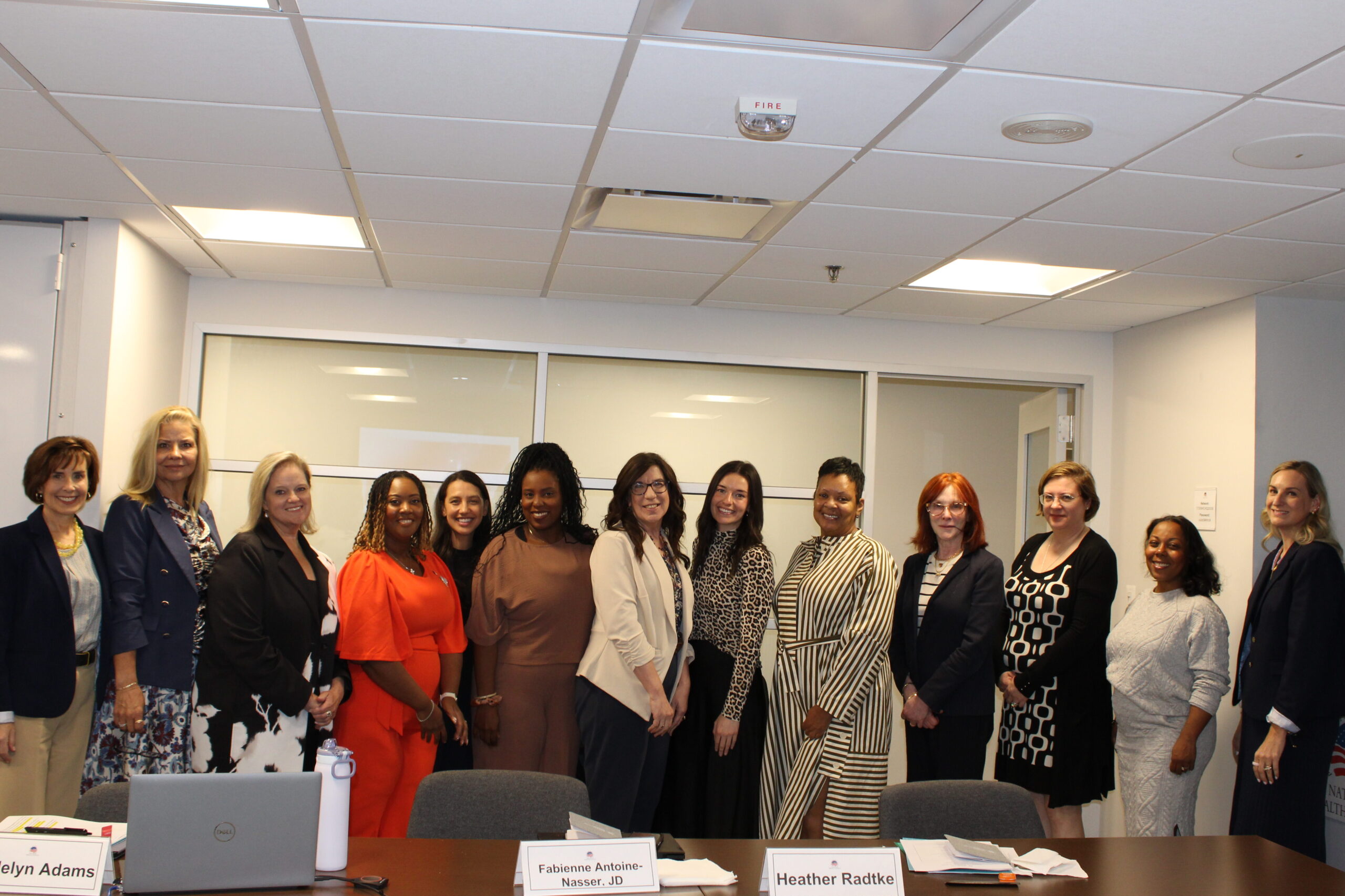
The Society for Women’s Health Research (SWHR) aims to bring light to the impact of rare diseases on women. SWHR convened an interdisciplinary rare disease roundtable to examine policy levers and research gaps; focus on how sex- and gender-specific factors shape research and access to care; and understand the downstream health outcomes for women living with rare diseases.
The Rare Disease Research Landscape
When discussing the state of rare disease research, roundtable participants agreed that rare disease research lags behind. Fewer than 5% of known rare diseases have approved therapies, according to the EveryLife Foundation for Rare Diseases. The roundtable recommended expanding research in several areas, such as sexual dimorphism; menstrual health (including protocols to ask about individual menstrual history during research); pregnancy and maternal health; and drug repurposing. Lilly Stairs, Founder and CEO of Chronic Boss, noted that some treatments already available for common autoimmune conditions may be strong candidates for rare disease research. The roundtable also discussed how existing data could be better coded, analyzed, and shared across patients and systems to advance research, with several individuals mentioning patient-owned platforms for health data. Working group members suggested exploring innovative ways to meet the research needs for rare disease, such as evaluating the risk-benefit analysis framework to identify opportunities for improving insights. Agencies like the FDA have a key role to play in working with patient groups to assess where appropriate levels of risk may be adopted in research and clinical trials to better meet the unique needs of rare disease patients.
Access to clinical trials was also a throughline. Working group members noted that research participation requires time and resources, so many women are unintentionally left out of research as their time and resources are spent elsewhere, such as in caregiving, working, or managing their own care. Clinical trials need to be more agile to allow for inclusion of women and rare disease patients, by providing childcare, covering transportation, offering hybrid options or schedule flexibility, and clarifying goals, expectations, and outcomes with participants up front. SWHR discussed these clinical trial needs at a recent congressional briefing.
Although rare disease research has come a long way, there is still progress to be made. A Women in Rare study provides a good example of research seeking to better understand the rare disease patient experience. The study, which included over 200 patients and 160 caregivers in Italy, showed that among the women surveyed, 25% believed that being female affected their diagnosis and 22% reported a delay in their care. The FDA Rare Disease Innovation Hub created in 2024 is also a valuable federal resource for rare disease research that needs continued focus and funding. Baby KJ Muldoon’s story was brought up during the roundtable as a case study for how innovative research, personalized gene therapy, and steadfast advocacy can work together for patients.
Advancing Rare Disease Policy
In the executive branch, several federal agencies and offices – including the Department of Defense, FDA, and National Institutes of Health (NIH) – are investing in rare priorities. The FDA Rare Disease Innovation Hub is a prime example of this. Meanwhile, in Congress, the Rare Disease Congressional Caucus and the Sickle Cell Disease Caucus illustrate bipartisan engagement in advancing rare disease legislation. There were several pieces of legislation mentioned during that roundtable that, if passed, could have positive impacts on rare disease patients: the Safe Step Act, the Maintaining Investments in New Innovation (MINI) Act, and Prescription Drug User Fee Act (PDUFA) reauthorization (as the program is currently authorized through 2027) are all bipartisan legislation that could make a difference in how rare disease patients access care. The Credit for Caregiving Act and Social Security Caregiver Credit Act were mentioned as additional bills that can alleviate the financial burdens associated with caregiving, particularly for rare disease caregivers.
These advancements in rare disease policy can largely be attributed to the power of advocacy. Advocacy groups like the Everylife Foundation, Rare and Black, Sick Cells and many others have transformed individual patient experiences into collective action, helping secure meaningful progress in research, awareness, and health care policy. However, while these developments are promising for the future of rare disease, now presents an opportune time to elevate the specific and unique needs of women living with rare disease in policy-driven conversations.
Working group members also discussed how state-level policy has improved care for rare disease patients, noting that state policies can serve as models for federal rare disease policy. For example, over half of all U.S. states have established – via state law – Rare Disease Advisory Councils (RDACs) to create a formalized pathway for state engagement with rare disease stakeholders. States can also serve as a model when it comes to insurance coverage and Medicaid policies for patient access to treatments like genetic testing. Visit the National Organization for Rare Disorders (NORD) State Report Card to learn more.
Seeking Care and Coverage
Research and policy are important, but only if they improve patients’ lives. Managing a rare disease requires significant coordination across the lifespan, body, and medical specialties. Women with rare disease wait about 5.4 years for a diagnosis – compared to 3.7 years for men – making care coordination especially important for preventing delayed diagnosis and treatment.
Women also have specific needs when it comes to rare disease care. For example, rare disease patients who are pregnant require careful and frequent monitoring – often more than a typical prenatal visit schedule may recommend, to ensure continuity of rare disease care while meeting their pregnancy needs. Several working group members said their own rare disease care felt fragmented and confusing, saying they wished their providers had coordinated care teams. Karen Mancera-Cuevas, DrPH, MS, MPH, MCHES, Senior Director of Health Equity at the National Health Council, noted that a rare disease diagnosis can be overwhelming, and people may need time and space to cope with a diagnosis before they are ready to begin care. Without support for patients starting from the time of diagnosis and throughout their care, “the system relies on patients to bridge the gap for their own care,” said Jones. Solutions to bridge this gap include offering mental health services, using social workers to provide additional support to patients and their families, and learning from the coordinated care systems deployed in pediatrics.
Improved provider education was raised during the conversation. Working group members called for bringing rare disease education to medical schools, residency programs, and hospital grand rounds (a traditional method of discussing patient cases among doctors, residents, and medical students). Dionne L. Stalling, Executive Director of Rare and Black brought up the need to ensure doctors understand that not all patients look or present the same, especially in rare diseases. The group discussed how to get rare disease topics included in medical school tests and board exams, which largely dictate what students study. Providers should also be educated on the rare presentations of common diseases; several members noted that these rare presentations may be removed from data, research, or academic literature since they present as outliers, and therefore providers may not know to look for them. “We need to lift the veil [on rare presentations] of more common conditions,” said Annie Kennedy, Chief Mission Officer at EveryLife Foundation.
Finally, the roundtable came back to concerns about how rare disease care is coded, billed, and paid for within the system. With fewer than 1,000 rare disease ICD-10-CM codes (the standardized system used to code diagnoses, symptoms, and injury), rare diseases may become ‘invisible’ when patients seek care. Maia Laing, MBA, shared an example: “I have sickle cell disease, and if I show up with pneumonia, they code me as having pneumonia, not as having sickle cell disease. But my treatment involves both my pneumonia and my sickle cell disease. They need to add additional codes.” (Sickle cell disease is classified as a rare disease as it affects an estimated 100,000 people in the United States.) The roundtable agreed that collecting patient data based primarily on how the treatment will be paid for leads to insufficient data, particularly for patients with multiple conditions and rare diseases; coding and billing must be separated within the system to effectively improve care for rare disease patients. This change could also help move the system away from incentivizing payment and towards centering patient care.
Rare Disease and Caregiving
A major thread throughout the roundtable was the intersection between rare diseases and caregiving – both being a caregiver for an individual with a rare disease and being a caregiver living with a rare disease. According to a 2018 report from the National Alliance for Caregiving, 87% of rare disease caregivers are women, 67% said providing care is emotionally stressful, and 59% said they have exhausted their personal savings due to caregiving. Half of respondents were ages 37 to 52, a group often referred to as the “sandwich generation” (that is, the population of adults who bear responsibility for not only caretaking for their children and dependents, but also caretaking for their parents) – several working group members also referred to this group as the “panini generation”, a newer term to illustrate the increasing pressure on this population. Women rare disease caregivers often face emotional and financial burdens, care navigation challenges, and access and treatment hurdles. Women may feel guilt, decision fatigue, and burnout as a caregiver; women can be forced to leave the workplace to manage caregiving responsibilities; and women are often left alone to navigate between providers, insurance companies, community services and school systems. Findings from a recent Women in Rare report on caregiving shared by Stairs and anecdotal stories from around the roundtable further reflected these themes. “Caregiving is an essential labor that requires expertise, but it is consistently unpaid and unsupported,” said Stairs.
Adults caring for children are not the only caregivers. Jones shared her own experience “raising two child caregivers,” as both her teenagers have learned to care for her. Jones said she often feels “mom guilt that they care for me. It breaks my heart because I should not be [their] responsibility.” Her experience reflects an under-supported population of caregivers – children. Working group members highlighted how younger generations may be coming home to parents or other adults who have chronic conditions, like rare diseases or autoimmune conditions, and have to care for them. Siblings are also a crucial caregiving population not always reflected in the literature.
While many valuable caregiving resources exist (check out the National Organization for Rare Disorders, National Alliance for Caregiving, Caregiver Action Network, AARP, and the Osteogenesis Foundation to begin), there is great potential to improve caregiving support. Passing legislation (like the Credit for Caregiving Act and the Social Security Caregiver Credit Act mentioned above) and bringing caregivers into coordinate care teams would go a long way in supporting caregivers and tangibly improving patient’s experiences.
Rare Disease Patient Experiences
The patient remains at the center of rare disease work. Patients’ lived experiences are not just personal stories; they should be treated as data and used to design care. Jones was one of several patients to share her rare disease story at the roundtable. In 2003, Jones was diagnosed with polymyositis and interstitial lung disease. She had to learn to speak up for herself and coordinate her own care. Eleven years after her rare disease diagnosis, in 2014, she was diagnosed with pulmonary hypertension and, in 2020, was diagnosed with congestive heart failure. She founded HERStory in Color to foster support for women of color living with multiple chronic illnesses. “Life does not stop when you have a rare disease,” Jones said. “Rare diseases affect family, community, and identity. For patients it touches every single aspect of life.”
The Society thanks all of the rare disease patients and caregivers who shared their stories. Patient stories are one of the most powerful tools we have to make positive change. SWHR remains committed to empowering every woman living with a rare disease to share their story and seek out the best care for them.
A Call to be a Rare Disease Advocate
Investing in rare disease patients means investing in all conditions. The roundtable closed with a call, to both those in the room and across the health ecosystem, to be rare disease advocates and speak up for advancing research, policy, and care for rare disease patients – and their caregivers. Rare disease impacts all of us. “Our power is in the intersections of the communities we work within,” said Kennedy. SWHR remains committed to advocating for women living with rare diseases and ensuring they can live healthy lives.