

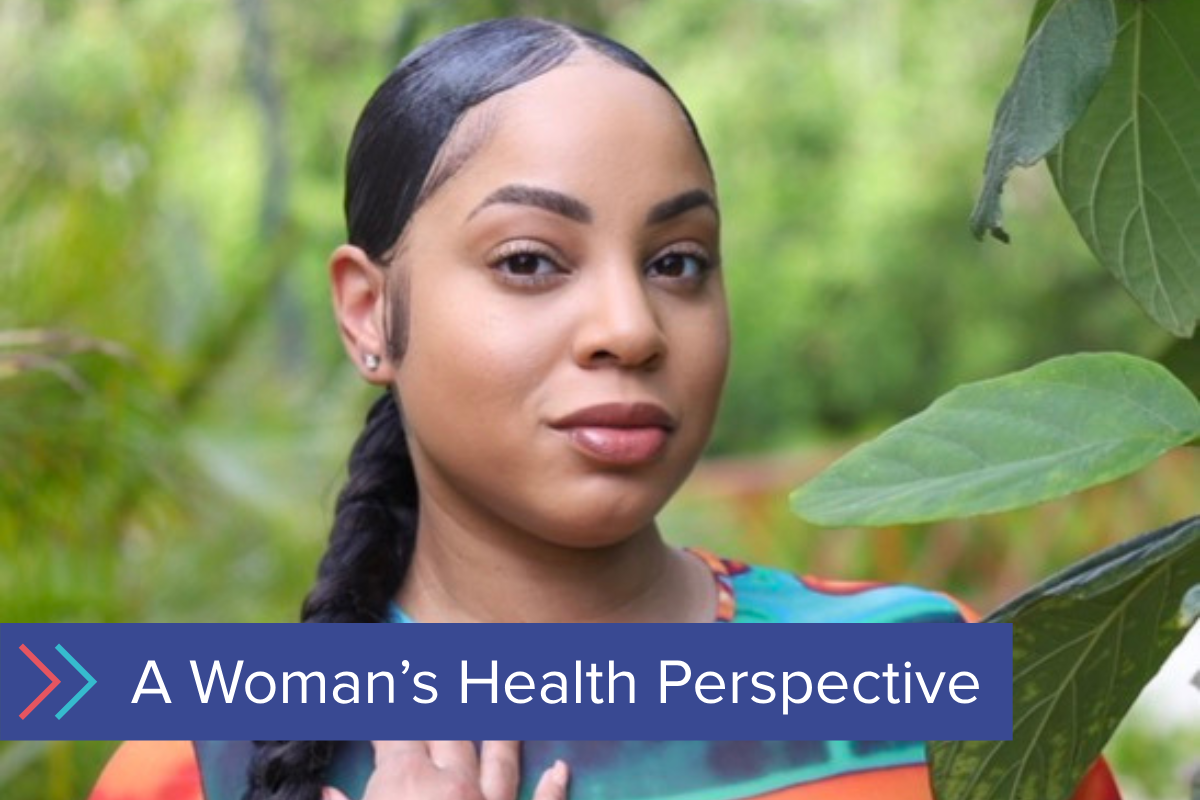
This is a firsthand account submitted through SWHR’s Share Your Story portal, as part of SWHR’s Women’s Health Perspective series.
In March of 2025, what started as a normal day quickly turned into a life-threatening medical emergency that changed my life forever. I had just finished working a shift as a nurse and came home planning to rest before studying for my LPN-to-RN program. I decided to take a short nap, expecting to wake up and continue my day like normal. Instead, when I woke up, I immediately knew something wasn’t right. I felt extremely weak in a way I had never experienced before. Hoping it would pass, I decided to take a shower. But by the time I stepped out of the shower, the weakness had gotten worse. My body felt heavy and drained, and I started questioning whether I should call an ambulance. Instead, I called a friend and asked if she could take me to the emergency room. By the time she arrived about ten minutes later, I could barely walk or even get dressed. Something was seriously wrong, and I could feel it. When we arrived at the ER, I was extremely lethargic and experiencing severe abdominal pain. Medical staff attempted to draw labs, but despite more than thirty attempts, they were unable to obtain blood. Doctors performed a CT scan, but the first scan didn’t reveal anything concerning.
As the hours passed, my condition continued to decline. Eventually, doctors placed a nasogastric tube to help decompress my stomach. By that point, I was drifting in and out of consciousness. At one point, a nurse entered my room and told me they were planning to discharge me. Even in the condition I was in, I knew something wasn’t right. I remember telling him there was no way I could leave the hospital until I had answers. Shortly after that conversation, the decision was made to transfer me by ambulance to a larger hospital downtown. That is the last thing I remember. The next thing I knew, I woke up days later in the intensive care unit. When I opened my eyes, I had a breathing tube, a nasogastric tube, a central line in my neck, and restraints on my arms to prevent me from pulling out the breathing tube. My husband was sitting besides my bed. He gently explained what had happened. I had undergone emergency surgery, actually two procedures, and I woke up with two ostomies. During surgery, doctors discovered two large masses on my intestines. Initially, my surgeon believed the masses were cancerous and feared he might have to remove my entire colon. Thankfully, that was not the case.
Instead, I was diagnosed with stage 4 endometriosis, a severe form of the disease that had spread beyond the reproductive organs and affected other parts of my body. The endometriosis had become so severe that it was pressing against my kidneys, requiring doctors to place a bladder stent. My surgery was also far more critical than I initially realized. During the procedure, my heart stopped. Medical staff performed three rounds of CPR and shocked my heart twice before successfully bringing me back. I spent a week in the ICU followed by another week recovering on the oncology floor. As a nurse, finding myself on the other side of the hospital bed was a surreal experience. I had spent years caring for patients, but suddenly I was the one relying on the care of others to survive.
Since then, my journey has continued. I underwent my first ostomy reversal surgery in October of 2025, and I successfully underwent my final ostomy reversal and a thyroidectomy in March 2026. Recovery has been a journey, but I’m incredibly grateful to now be healing, rebuilding my strength, and slowly returning to normal life after everything my body has endured. Looking back on everything that happened, I truly believe that God spared my life.
If there are two things I hope people take away from my story, it is this: listen to your body and advocate for yourself. Endometriosis is one of the most misunderstood and misdiagnosed conditions affecting women. Many people go years without receiving answers or a proper diagnosis. Sharing my story is a way of raising awareness.