
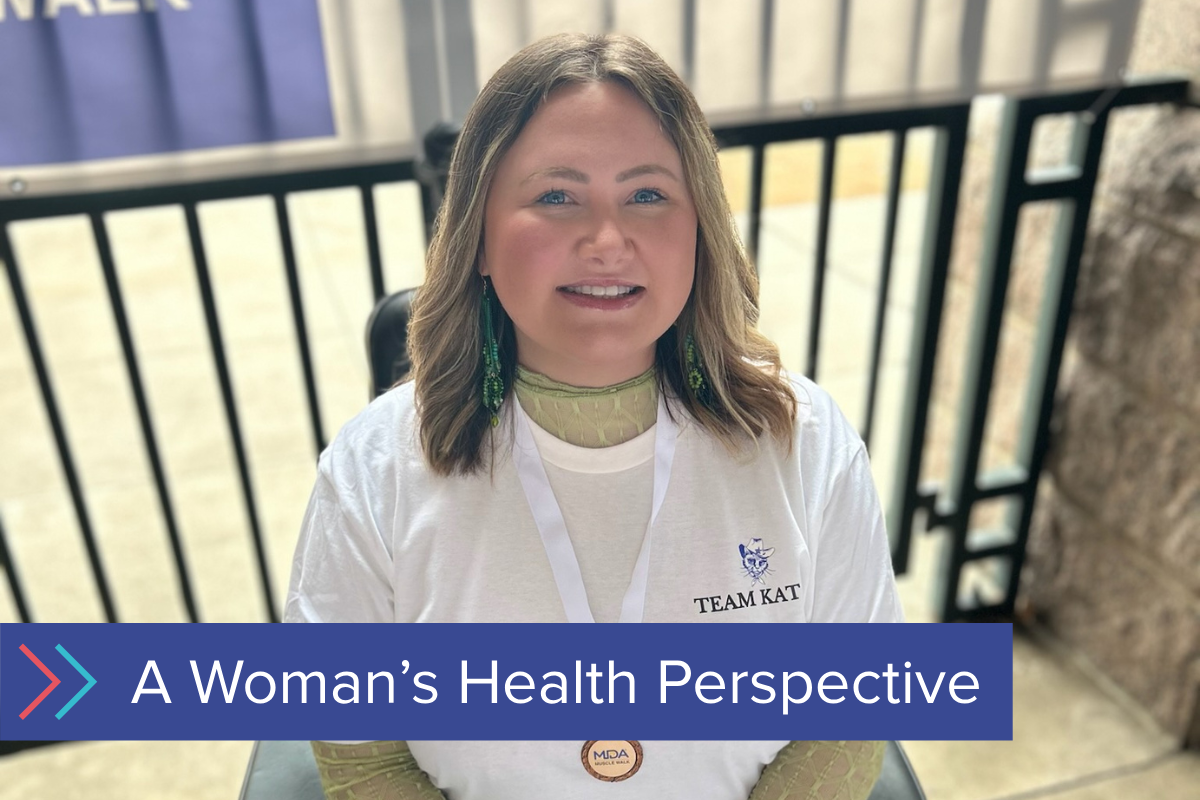
This is a firsthand account submitted through SWHR’s Share Your Story portal, as part of SWHR’s Women’s Health Perspective series.
My health journey began long before I realized I was on one. As a teenager, I noticed that stairs felt harder for me than they did for everyone else. In college, getting up from low chairs or climbing bleachers became something I quietly dreaded. I blamed myself for years, thinking I just wasn’t fit enough or disciplined enough, never imagining these early symptoms were signs of a neuromuscular disease.
At 22, after a weekend away with lots of stairs and low chairs, I finally sought medical help. What was supposed to bring clarity became the beginning of a long, painful diagnostic maze. I went through countless appointments; lab work; electromyography tests, or EMGs,which evaluate your skeletal function; nerve conduction studies; and a muscle biopsy. Even when my labs showed serious abnormalities, I was repeatedly dismissed by providers. One doctor told me flat out there was nothing wrong. Another told me to immediately start using a wheelchair and that physical therapy would not help. Both responses felt equally devastating.
For years, my symptoms worsened. I experienced progressive weakness, difficulty walking, frequent falls, and ultimately a severe injury that changed everything: I shattered my ankle in a fall. After surgery and recovery, I was no longer able to walk long distances and started relying more heavily on mobility aids and, eventually, a wheelchair.
Despite all of this, I still didn’t have a real diagnosis. Some providers labeled me with limb-girdle muscular dystrophy. Others suspected inflammatory disease. I was misdiagnosed with polymyositis at one point and given high-dose steroids, which only caused additional harm, including osteopenia. Each wrong turn left physical effects, but also emotional ones: exhaustion, shame, and the feeling that I was fighting the medical system alone.
It wasn’t until I was referred to the Mayo Clinic in Rochester that I finally felt heard. For the first time, a doctor took my symptoms seriously, reviewed all of my previous testing, and acknowledged the complexity of my case. Genetic testing for the most common forms of muscular dystrophy, Becker, Duchenne, and limb-girdle all came back negative. After years of uncertainty, I learned that my condition is so rare that the specific genetic mutation has not yet been identified, or so the Mayo Clinic said. It felt like another dead end. I recently got in touch with a doctor at Boston Children’s Hospital and have an appointment to be seen by their team next year, in 2026. They do extensive testing beyond anything I’ve ever had done before, and I’m hopeful they’ll be able to finally give me my diagnosis.
My care plan today is centered on preserving the strength I have, protecting my mobility, monitoring my cardiac health, and preventing further injuries. I use a wheelchair, and with ongoing care and the right accommodations, I’m able to maintain my independence as much as possible.
This journey has changed me in ways I never expected. I’ve learned that women, especially young women, are far too often dismissed, minimized, or blamed for their symptoms. I’ve learned that self-advocacy isn’t optional; it’s a survival skill. And I’ve learned that finding doctors who truly listen can make all the difference, even when they don’t have all the answers.
Today, I’m stepping into a new chapter. I’ve begun sharing my story publicly, getting involved with rare disease organizations, and advocating for others who feel lost in the health care system.
If I could share one piece of advice with other women going through something similar, it would be this: trust yourself. You know your body better than anyone. If something feels wrong, keep pushing for answers, no matter how many doors close in your face. Seek out doctors who respect you. Surround yourself with people who believe you. And know that your story, not just your diagnosis, has value.
My health journey is still unfolding, but I’m finally in a place where I feel hopeful, empowered, and connected to a larger community of women fighting similar challenges.