Calls to Action
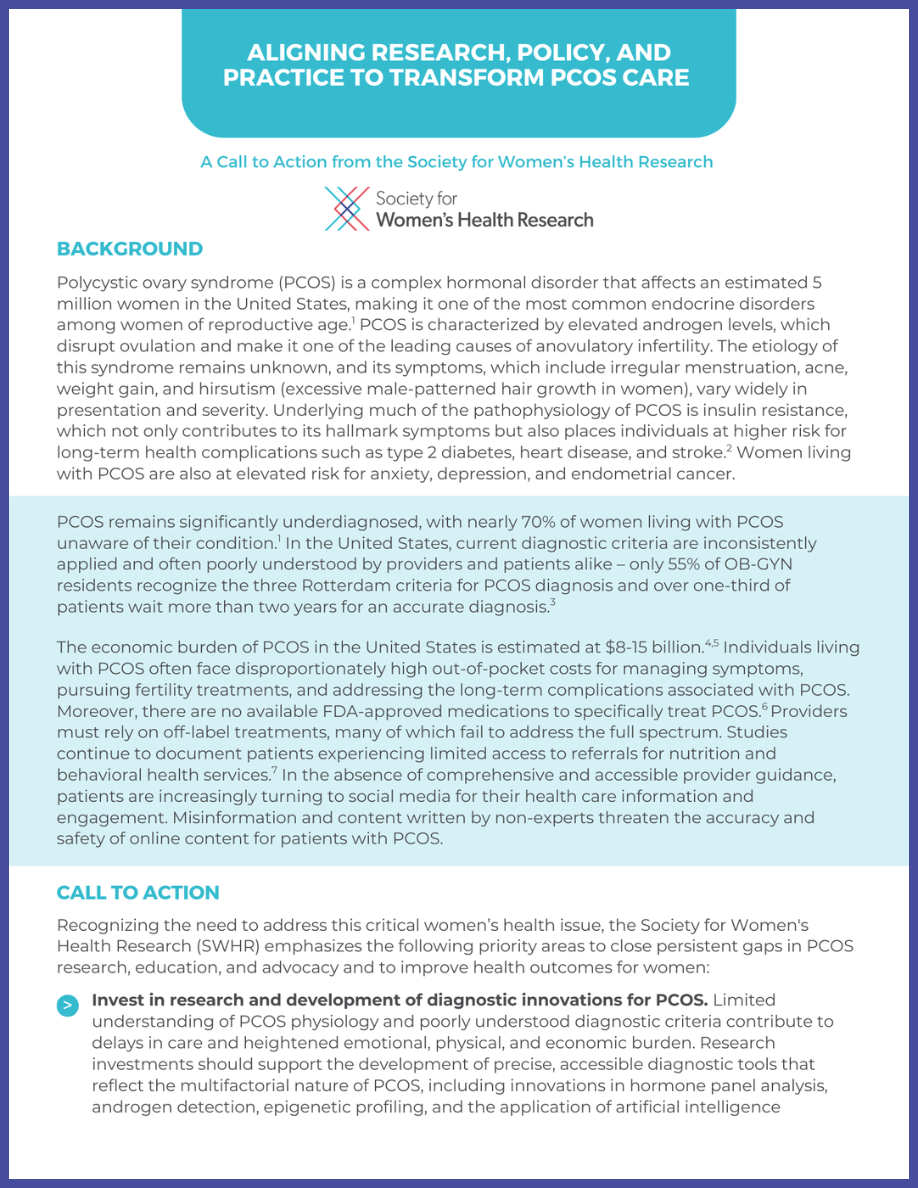
Polycystic ovary syndrome (PCOS) is a complex hormonal disorder that affects an estimated 5 million women in the United States, making it one of the most common endocrine disorders among women of reproductive age.
The Society for Women’s Health Research (SWHR) recognizes the need to address this women’s health issue and created a call to action to close persistent gaps in PCOS research, education, and advocacy – and to ultimately improve health outcomes for women.
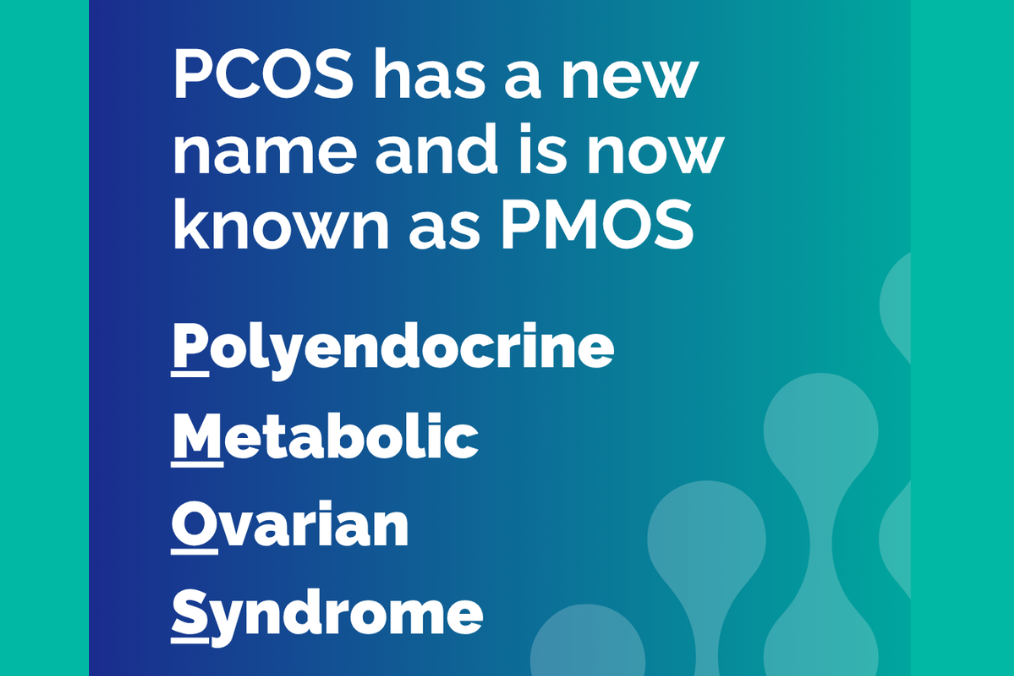
As of May 2026, Polyendocrine Metabolic Ovarian Syndrome (PMOS) is the new name for the condition previously known as Polycystic Ovary Syndrome (PCOS). PCOS reduced a complex, long term hormonal or endocrine disorder to a misunderstanding about ‘cysts’ and a focus on ovaries, contributing to missed diagnoses and inadequate treatment. PMOS will raise awareness and improve diagnosis and care. This name change will take place over a 3-year period. SWHR will use both PCOS and PMOS during this period.

To patients: If you feel that something is wrong, listen to your intuition, and keep searching until you find doctors who can help.
This rename is a meaningful step toward better diagnosis and care, and long-overdue recognition of all that this condition encompasses.
During a closed meeting hosted by SWHR, an interdisciplinary group of researchers, health care providers, and patient advocates discussed the impact of PCOS on women’s health.
I am a neuroscientist whose expertise is mapping the dynamic interplay between hormones and the brain.
This document is intended to serve as an educational and informative resource and is not intended or implied to serve as a substitute for medical or professional advice. The Society for Women’s Health Research does not make medical, diagnosis, or treatment recommendations, nor does it endorse or promote specific screening or diagnostic tests. Patients and consumers should confirm information and consult a professional health care provider to determine individual needs. The Society will not be liable for any direct, indirect, or other damages arising therefrom.
This material was created by the Society for Women’s Health Research (SWHR) and is intended to serve as a public educational and informative resource. This material may be cited or shared on external channels, websites, and blogs, with attribution given to SWHR, or printed and displayed in its original formatted version. SWHR encourages the sharing and reposting of its content in order to spread awareness around women’s health issues. For specific questions about sharing SWHR content, please reach out to communications@swhr.org.
Support for this educational program has been provided by Abbot. SWHR maintains independence and editorial control over program development, content, and work products.