Fact Sheets
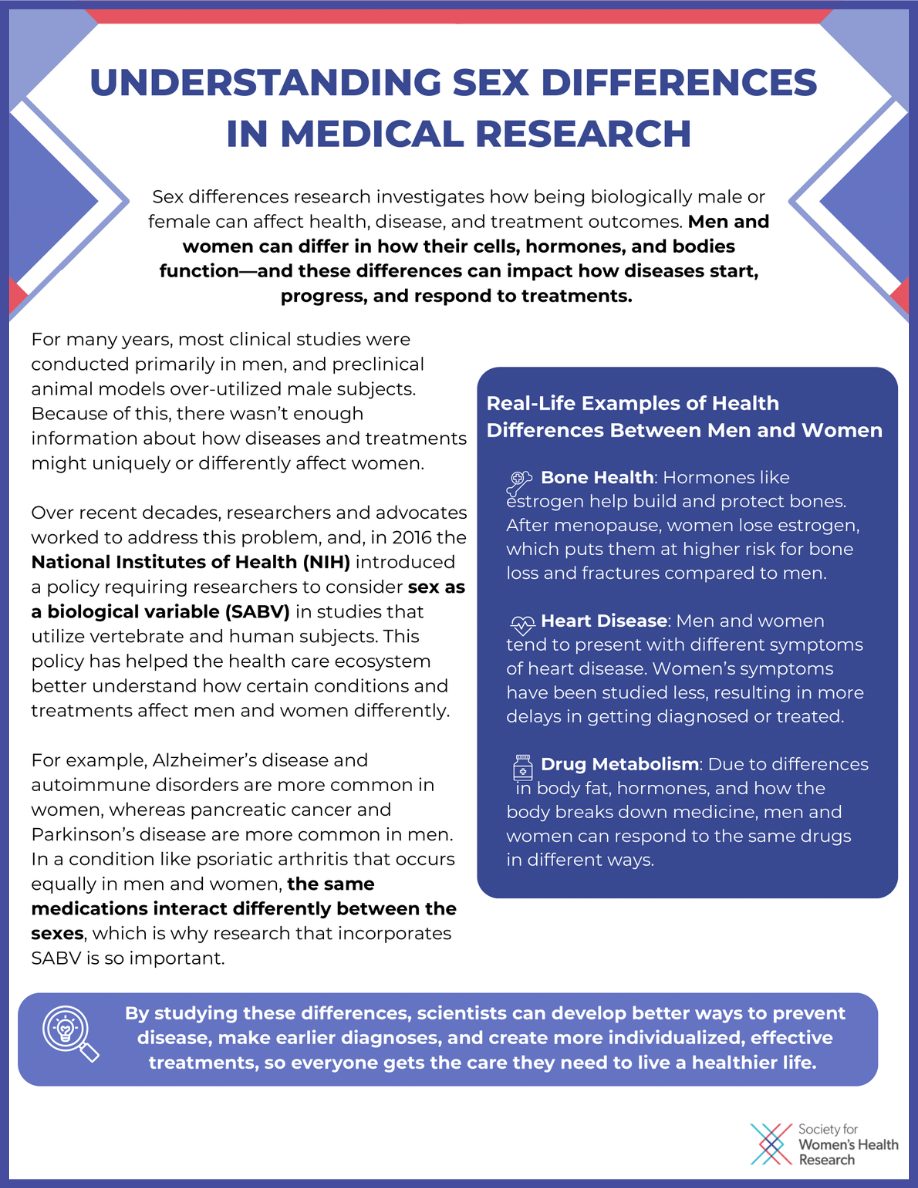
Sex differences research investigates how being biologically male or female can affect health, disease, and treatment outcomes.
By studying sex differences, scientists can develop better ways to prevent disease, make earlier diagnoses, and create more individualized, effective treatments, so everyone gets the care they need to live a healthier life.
The Society for Women’s Health Research is dedicated to promoting research on sex differences to optimize women’s health and raise awareness of diseases, conditions, and life stages that differently, disproportionately, or exclusively affect women. Learn more about this work in this fact sheet.
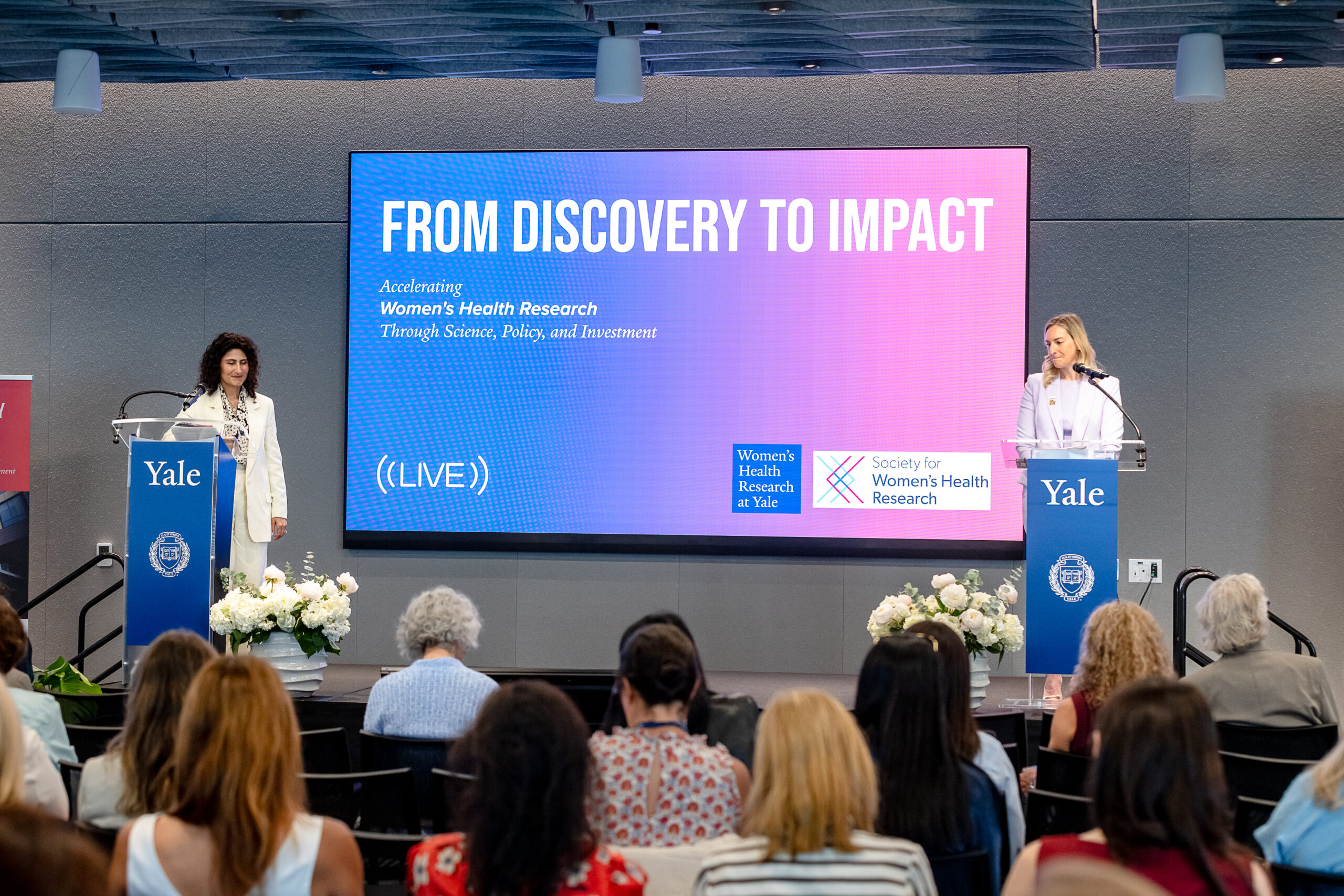
The collaborative symposium hosted by Women’s Health Research at Yale and SWHR welcomed more than 50 speakers, researchers from 28 departments across Yale, and gathered 350+ attendees for a day-long event.
SWHR presented a session titled “Advancing Sex Differences Science in a Changing Advocacy Environment,” at the OSSD Annual Meeting in Kona, Hawaii.
The Society for Women’s Health Research (SWHR) and Women’s Health Research at Yale are co-hosting the collaborative symposium: “From Discovery to Impact: Accelerating Women's Health Research Through Science, Policy, and Investment."
SWHR remains committed to advocating for women living with rare diseases and ensuring they can live healthy lives.
This document is intended to serve as an educational and informative resource and is not intended or implied to serve as a substitute for medical or professional advice. The Society for Women’s Health Research does not make medical, diagnosis, or treatment recommendations, nor does it endorse or promote specific screening or diagnostic tests. Patients and consumers should confirm information and consult a professional health care provider to determine individual needs. The Society will not be liable for any direct, indirect, or other damages arising therefrom.
This material was created by the Society for Women’s Health Research (SWHR) and is intended to serve as a public educational and informative resource. This material may be cited or shared on external channels, websites, and blogs, with attribution given to SWHR, or printed and displayed in its original formatted version. SWHR encourages the sharing and reposting of its content in order to spread awareness around women’s health issues. For specific questions about sharing SWHR content, please reach out to communications@swhr.org.