

In alignment with the Society for Women’s Health Research (SWHR) 35th anniversary this year, SWHR is pleased to introduce its first Women’s Health Research Agenda, published in the Journal of Women’s Health this January.
2025 SWHR Women’s Health Research Agenda: Prioritizing Uterine Fibroids, Lupus, and Metabolism highlights persistent areas of need in women’s health and serves as a roadmap for stakeholders looking to initiate engagement or increase current efforts in women’s health research.
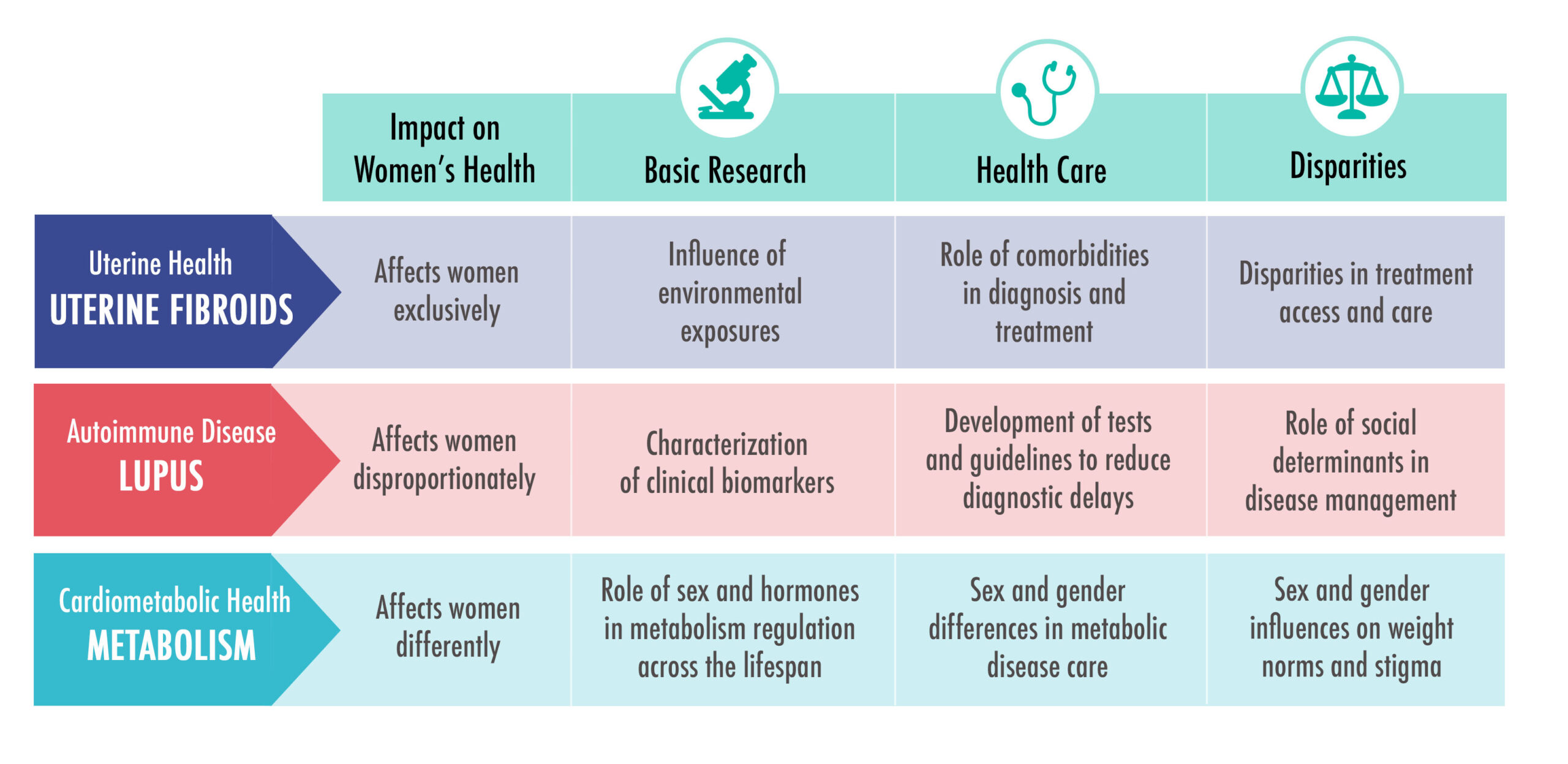
The 2025 Agenda focuses on uterine health, autoimmune disease, and cardiometabolic health, with special emphasis on uterine fibroids, lupus, and metabolism in women:
- There are more than 100 classified autoimmune diseases, and 80% of cases are diagnosed in women. Of the 1.5 million Americans with lupus specifically, 90% are women ages 15–44 years.
- Uterine fibroids are one of the most common gynecological conditions, affecting an estimated 26 million women, ages 15–50, in the United States. Despite their pervasiveness, many women go undiagnosed or may not seek medical care for their symptoms.
- Cardiometabolic health describes the combination of factors that affect the intersection between the body’s cardiovascular and metabolic systems. Disparities in cardiometabolic health have been reported in sex, race, and age.
These areas were selected due to the significant impact they have on women’s health morbidity and mortality across the lifespan.
With each focus, SWHR offers recommendations for ways to improve health outcomes and close the gender health gap for women living with these conditions, based on reviews of the state of science in each area as well as guidance from years of work with subject matter experts through the Society’s interdisciplinary science and policy networks.
“The unique health needs of women must elevate to a priority for research institutions, health care systems, and federal funding. As SWHR continues to address persistent gaps in women’s health knowledge and clinical care across areas such as maternal health, aging, infectious diseases, and technology innovations, we felt it important to highlight autoimmune, uterine, and cardiometabolic diseases as a reminder of the diverse yet interconnected conditions that impact the health of women, not just during their reproductive years, but throughout their life course. We offer this agenda as a springboard for specific areas in need of attention,” said Irene Aninye, PhD, Chief Science Officer.
“With the 2025 Research Agenda, SWHR continues its commitment to raising awareness, driving resources, and furthering research towards the disparate impact of uterine, autoimmune, and cardiometabolic diseases on women,” said Sarah Chew, MPH, Science Programs Manager.
This agenda parallels SWHR’s other policy agendas and calls to actions while also building on decades-long work in uterine health, autoimmune disease, and cardiometabolic health. Related work includes the uterine fibroids toolkit, lupus toolkit, autoimmune diseases and conditions policy agenda, obesity policy agenda, and ischemic heart disease call to action.
“Starting with uterine fibroids, lupus, and metabolism as focal points for conditions that exclusively, disproportionately, and differently affect women, we call on stakeholders throughout the health care ecosystem to join us and engage in tackling the challenges elevated in this agenda,” SWHR writes.