


SWHR Releases New Women’s Health Advocacy Guide
While women’s health remains far from mainstream, the field of women’s health seems to be gaining the long-overdue momentum it deserves. Public awareness is growing, policy is slowly catching up, and a new generation of advocates are reshaping the landscape of health care to be more responsive to the realities of women’s lives, on everything from menopause to chronic conditions.
These wins are encouraging, but women’s health continues to be overlooked and sidelined across policy, research and clinical practices. Take women’s health research for example: investments in women’s health research – which is critical for identifying the unique role of sex as a biological variable in disease onset and manifestation and treatment response — continue to fall short, with less than 10% of NIH funding currently dedicated to its research.
Since 1990, the Society for Women’s Health Research (SWHR) has worked to change this by meeting with lawmakers, submitting comments to federal agencies, and collaborating with leading experts and partners to push the field forward and ensure that women’s health gets the attention it deserves.
From this work, we know two things to be true: meaningful progress doesn’t happen overnight, and every breakthrough begins with individuals who care enough to take action.
Advocacy isn’t reserved for experts or policymakers – it starts with individuals who care deeply and are willing to speak up and champion the causes they care about.
How Can I Get Involved?
Whether you’re a patient navigating the health care system, a provider on the front lines of health care, a researcher exploring new biomedical breakthroughs, a caregiver supporting a loved one, or someone who simply believes in the value of accounting for biological sex differences between men in women in research and health care, you have a role to play in shaping the future of women’s health. Your voice is powerful and your experiences and insights matter. And when you speak up — whether by sharing your story, contacting your representatives, or simply raising awareness — you’re helping to build a better, healthier future for women, and all individuals, everywhere.
However, getting involved in advocacy can feel overwhelming, especially if you don’t know where to start. That’s exactly why SWHR created a new resource to guide you through the process and help you take that first step with confidence.
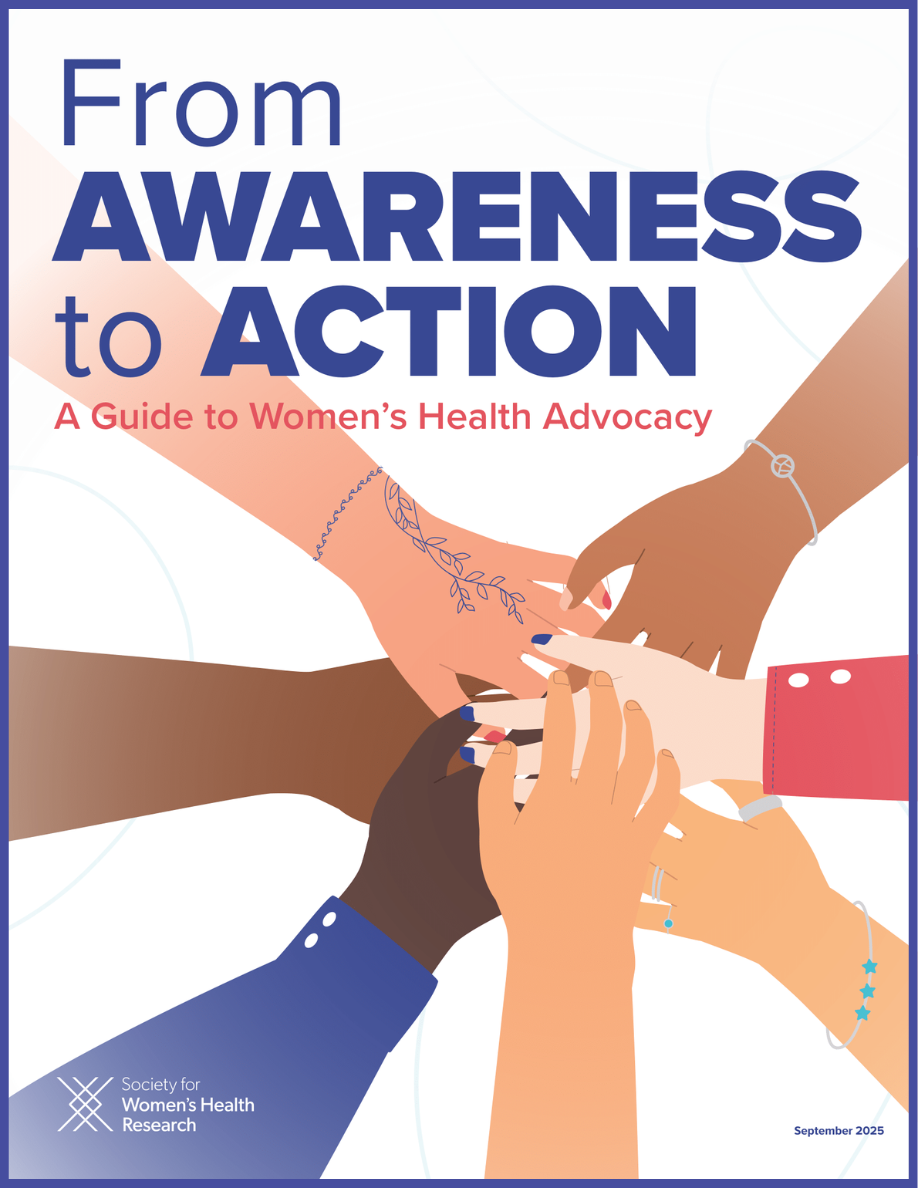 From Awareness to Action: A Guide to Women’s Health Advocacy is a comprehensive, easy-to-use resource designed for advocates at every level. Whether you’re brand new to advocacy or looking to expand your efforts, the guide walks you through the basics of advocacy, explains how to effectively engage with elected officials, and offers planning templates and sample emails to help you create and carry out your own advocacy strategy. Best of all, it’s free and accessible online.
Check out sections like:
- What is Advocacy?
- Advocacy v. Lobbying
- Ways to Advocate
- Getting Started: Plan with Purpose
- How to Schedule a Meeting with a Member of Congress
- How to Contact Your Legislators via Email
- And much more!
Looking for More Ways to Use Your Voice?
In addition to this free-to-access guide, SWHR offers a range of specialized resources to support your advocacy journey:
The Endometriosis Advocacy Toolkit provides information and strategies for raising awareness and advancing policy change around endometriosis care.
The Heart Health Advocacy Toolkit equips you with tools to advocate for improved cardiovascular care for women.
The SWHR Legislative Tracker is a great place to monitor key bills related to women’s health and research. It’s updated regularly and designed to keep you informed and ready to act.
Regardless of how you advocate, remember the importance of incorporating your own health care story—whether it’s something you experienced personally or something you’ve seen happen to someone you care for. Your story is integral to creating policy change, informing health care decision makers and potentially inspiring them to take action. Consider sharing your story with SWHR here, on our Women’s Health Perspectives portal.
No matter how you choose to engage, know that your voice makes a difference.
Unless we speak out, loudly and together, women’s health risks being sidelined. Through collective action, we can ensure that women’s health becomes and remains a national priority. The first step starts with you. View the women’s health advocacy guide and start your women’s health advocacy journey today!